
Introduction
Finding the Best Wooden Pencils for Drawing isn’t just about picking a well-known brand—it’s about choosing a pencil that matches the way you draw. The right graphite pencil should feel balanced in your hand, sharpen cleanly, hold a dependable point, and respond naturally to changes in pressure. Whether you’re sketching loose gestures, refining a portrait, or building rich tonal values through layering, a quality wooden pencil can make the entire drawing process more enjoyable.
One of the reasons many artists continue to prefer wooden drawing pencils over other options is the connection they offer between the artist and the paper. A well-made graphite pencil provides immediate feedback, allowing you to adjust line weight, edge control, and shading with subtle changes in hand pressure. That level of control is invaluable whether you’re blocking in construction lines for a figure drawing or rendering intricate textures in a finished illustration.
The challenge is that there are dozens of excellent graphite drawing pencils on the market. Brands like Staedtler, Faber-Castell, Tombow, Mitsubishi, and Caran d’Ache all produce exceptional pencils, but each has its own personality. Some are known for crisp, clean line quality and excellent point retention, while others excel at producing deep, velvety tones that blend effortlessly on paper. Choosing the right pencil often depends on the type of artwork you create rather than simply selecting the most expensive option.
In this guide, we’ve carefully selected the Best Wooden Pencils for Drawing based on graphite consistency, point retention, shading performance, craftsmanship, and overall drawing experience. The recommendations include trusted brands that are widely respected by artists around the world and readily available from major U.S. art retailers.
Whether you’re filling pages in a sketchbook, preparing for a college art course, practicing portrait drawing, or building a professional studio toolkit, this guide will help you compare the Best Wooden Pencils for Drawing with confidence. By the end, you’ll know which pencils excel at fine detail, which create the richest tonal range, and which deserve a place in your collection as dependable artist-grade pencils for years to come.
Quick Comparison Table
Before diving into the detailed reviews, here’s a side-by-side comparison of our top picks. Each of these Best Wooden Pencils for Drawing offers something unique, whether you’re looking for exceptional point retention, buttery-smooth graphite, rich tonal values, or the best overall value for your money.
| Wooden Pencil | Best For | Graphite Grades | Price | Key Strength |
|---|---|---|---|---|
| Staedtler Mars Lumograph | Best Overall | 6H–8B | Mid-Range | Excellent balance of precision, durability, and shading |
| Faber-Castell 9000 | Best Value | 8H–16B | Mid-Range | Outstanding graphite quality at an affordable price |
| Tombow Mono 100 | Professional Artists | 9H–6B | Premium | Ultra-refined graphite with exceptional line quality |
| Mitsubishi Hi-Uni | Smoothest Graphite | 10H–10B | Premium | Silky graphite with remarkable tonal consistency |
| Caran d’Ache Grafwood | Premium Choice | 9H–9B | Luxury | Precision-crafted Swiss pencil with excellent control |
| Derwent Graphic | Shading & Rendering | 9H–9B | Mid-Range | Rich tonal range and expressive shading performance |
| Koh-I-Noor Toison d’Or 1900 | Budget Professional | 10H–8B | Budget | Reliable performance and excellent value |
| Blackwing 602 | Everyday Sketching | Firm Graphite | Premium | Iconic design with outstanding balance and versatility |
At a Glance
- Best Overall: Staedtler Mars Lumograph
- Best Value: Faber-Castell 9000
- Best for Professional Artists: Tombow Mono 100
- Smoothest Graphite: Mitsubishi Hi-Uni
- Best Premium Choice: Caran d’Ache Grafwood
- Best for Shading: Derwent Graphic
- Best Budget Professional Pencil: Koh-I-Noor Toison d’Or 1900
- Best for Everyday Sketching: Blackwing 602
Every pencil featured in this guide has earned its place through a combination of craftsmanship, graphite quality, and real-world performance. Rather than focusing solely on brand reputation, we’ve selected wooden drawing pencils that consistently deliver excellent results across different drawing styles—from quick gesture sketches and urban sketching to highly detailed portrait work and professional illustration.
1. Staedtler Mars Lumograph – Best Overall
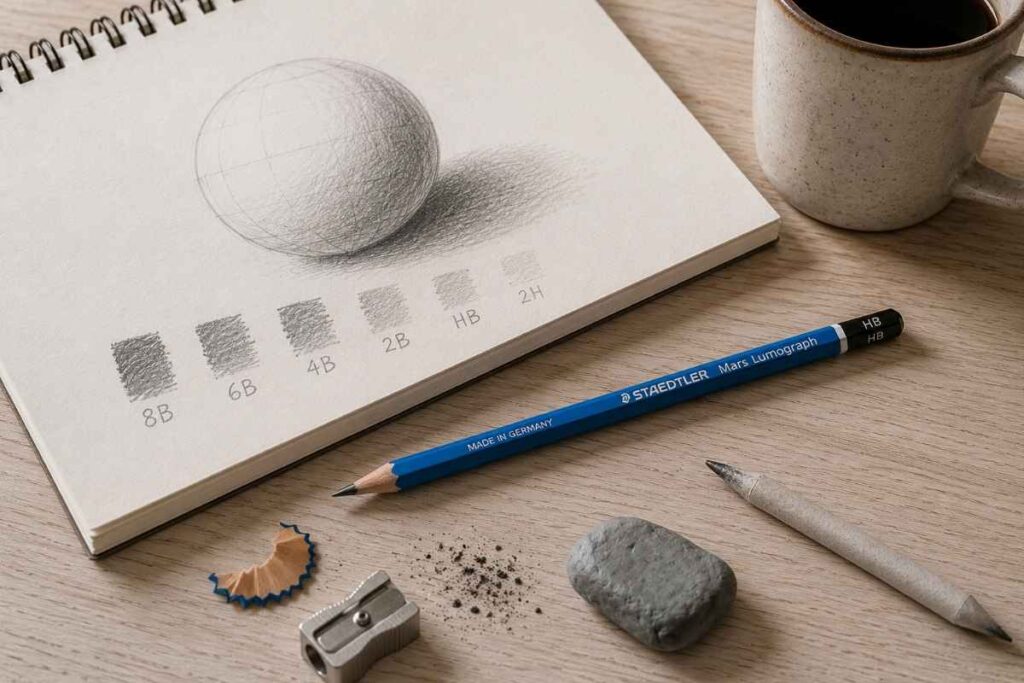
When artists discuss the Best Wooden Pencils for Drawing, the Staedtler Mars Lumograph almost always finds its way into the conversation. There’s a good reason for that. Rather than excelling in just one area, it offers a balance of precision, graphite consistency, point retention, and durability that few pencils can match. Whether you’re a beginner learning fundamental drawing techniques or a professional illustrator working on detailed commissions, the Mars Lumograph is a pencil you can rely on every day.
Overview
Made in Germany, the Staedtler Mars Lumograph has earned a reputation for producing clean, predictable lines across its entire graphite range. Available from 6H to 8B, it gives artists the flexibility to switch effortlessly between light construction lines, detailed rendering, and deep expressive shading without changing brands.
What makes this pencil particularly dependable is the consistency between grades. An HB feels exactly like an HB should, while the transition to softer grades such as 2B, 4B, and 6B is smooth and predictable. That consistency makes it easier to build muscle memory, especially during long sketching sessions or studio work.
What Makes It Stand Out
One of the Mars Lumograph’s greatest strengths is its point retention. Compared with many softer graphite pencils, it maintains a sharp tip longer, making it an excellent choice for detailed illustrations, architectural sketching, and technical drawing.
The graphite also responds exceptionally well to changes in pressure. A light touch creates crisp, clean lines, while gradually increasing pressure produces darker values without feeling scratchy or uneven. Artists who enjoy cross-hatching, contour drawing, or controlled rendering will appreciate how easy it is to build tonal values gradually instead of creating harsh transitions.
Unlike some graphite pencils that become noticeably glossy in darker areas, the Lumograph maintains a clean appearance while producing rich blacks in its softer grades. This makes blending smoother and helps preserve subtle textures in portrait work and realistic drawings.
Key Features
- Available in 6H to 8B graphite grades
- Premium break-resistant bonded graphite core
- Excellent point retention for detailed work
- High-quality cedar wood barrel for clean sharpening
- Comfortable hexagonal design that prevents rolling
- Suitable for sketching, illustration, drafting, shading, and technical drawing
Pros
- Consistent graphite quality across every grade
- Excellent control for both line work and shading
- Holds a sharp point longer than many comparable pencils
- Sharpens cleanly with minimal graphite breakage
- Versatile enough for almost every traditional drawing style
Cons
- Slightly firmer feel than some Japanese graphite pencils
- Premium sets cost more than entry-level alternatives
Who Should Buy It?
The Staedtler Mars Lumograph is an outstanding choice for artists who want one pencil range that can handle almost everything. It’s equally at home in a college life drawing class, a professional design studio, or a sketchbook carried on weekend urban sketching trips. If you prefer switching between precise line work and expressive shading without changing pencil brands, this series delivers exceptional versatility.
Why We Recommend It
Among the Best Wooden Pencils for Drawing, the Staedtler Mars Lumograph remains one of the easiest pencils to recommend because it performs consistently across virtually every drawing style. It doesn’t rely on flashy features or marketing claims—it simply offers dependable graphite quality that artists can trust. If you’re building your first serious drawing kit or upgrading your existing supplies, this is one of the finest wooden drawing pencils you can own and an excellent benchmark against which other graphite drawing pencils are often judged.
2. Faber-Castell 9000 – Best Value
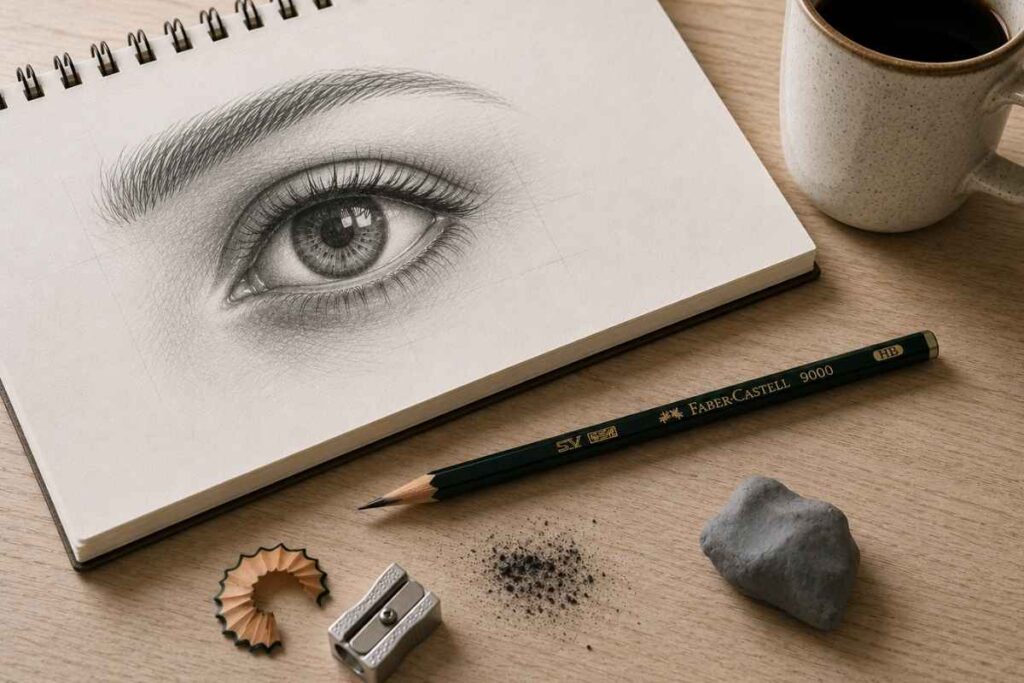
Few drawing pencils have earned the trust of artists quite like the Faber-Castell 9000. Introduced in 1905, this classic German pencil has remained a staple in art schools, design studios, and professional workspaces for generations. If you’re looking for the Best Wooden Pencils for Drawing without stretching your budget, the Faber-Castell 9000 offers an impressive balance of performance, reliability, and value.
Overview
The first thing many artists notice about the Faber-Castell 9000 is how controlled the graphite feels on paper. It doesn’t feel overly soft or overly firm, giving you excellent feedback as you draw. That makes it especially forgiving for beginners while still offering the precision experienced artists expect.
Available in an extensive range from 8H to 16B, the 9000 series covers virtually every drawing application. Hard grades produce crisp construction lines that erase cleanly, while softer grades build rich tonal values that are ideal for portraits, landscapes, and expressive sketching.
What Makes It Stand Out
What truly sets the Faber-Castell 9000 apart is its excellent balance between point retention and smoothness. While some premium Japanese pencils feel creamier on paper, the 9000 holds its point slightly longer, making it a dependable choice for artists who spend hours refining details.
Its graphite also responds well to layering. Instead of laying down heavy values immediately, it allows artists to gradually build darker tones with controlled pressure. This is especially helpful when working on realistic shading, where subtle transitions often create more convincing forms than bold, heavy strokes.
Compared with the Staedtler Mars Lumograph, the Faber-Castell 9000 offers a slightly softer drawing feel in equivalent grades, making blending a little easier while still maintaining clean line quality.
Key Features
- Available in 8H to 16B graphite grades
- Finely milled graphite for consistent performance
- Premium cedar wood barrel for smooth sharpening
- Break-resistant bonded graphite core
- Comfortable hexagonal design
- Suitable for sketching, illustration, shading, drafting, and mixed drawing techniques
Pros
- Outstanding value for the quality offered
- Wide graphite range suitable for every drawing style
- Excellent balance of smoothness and point retention
- Sharpens cleanly with minimal waste
- Readily available individually or in drawing sets
Cons
- Softer grades wear down faster during heavy shading
- Matte finish is simpler than some premium competitors
Who Should Buy It?
The Faber-Castell 9000 is ideal for artists who want dependable graphite drawing pencils without paying premium prices. It’s an excellent option for beginners building their first drawing kit, college art students working through foundation courses, and experienced artists who need reliable pencils for everyday sketchbook practice.
Why We Recommend It
The Faber-Castell 9000 continues to earn its place among the Best Wooden Pencils for Drawing because it consistently delivers professional-quality results at a reasonable price. It performs well across a wide variety of drawing techniques, from gesture sketches and architectural studies to highly rendered illustrations. If you’re looking for wooden drawing pencils that combine quality, versatility, and long-term value, it’s difficult to find a better choice in this price range.
3. Tombow Mono 100 – Best for Professional Artists
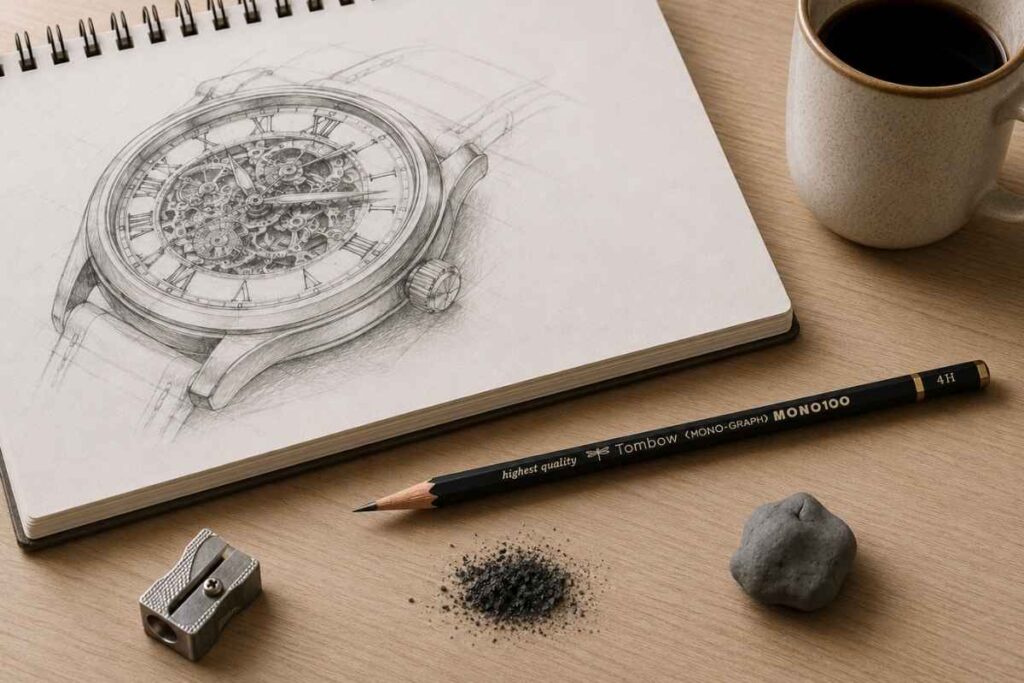
When precision matters as much as creativity, the Tombow Mono 100 stands in a class of its own. Often regarded as one of the Best Wooden Pencils for Drawing, this Japanese-made pencil is prized for its exceptionally refined graphite, remarkable consistency, and effortless drawing feel. It’s a favorite among illustrators, industrial designers, architects, and fine artists who rely on predictable performance for highly detailed work.
Overview
Unlike pencils that prioritize bold, dark marks, the Tombow Mono 100 is all about control. Every graphite grade feels carefully calibrated, making transitions from hard to soft grades remarkably consistent. This predictability is especially valuable when you’re rendering realistic subjects, where subtle changes in value can define form, depth, and texture.
Available in 9H to 6B, the Mono 100 offers a practical range for both technical drawing and expressive artwork. While it doesn’t extend into ultra-soft grades like some competitors, its existing range covers nearly every technique used in traditional graphite drawing.
What Makes It Stand Out
The Mono 100’s greatest strength is its graphite refinement. The graphite feels exceptionally clean on paper, producing crisp lines with very little grain. This makes it particularly well suited for smooth papers, where every pencil mark becomes more visible.
Compared with the Faber-Castell 9000, the Mono 100 has a creamier feel and lays down graphite with less pressure. Artists who enjoy building smooth gradients for portrait work or realistic rendering often appreciate how easily it creates soft tonal transitions without excessive layering.
Its point retention is also impressive. Even when working on detailed cross-hatching or architectural line work, the graphite maintains a sharp tip long enough to reduce constant sharpening, allowing you to stay focused on the drawing rather than your tools.
Key Features
- Available in 9H to 6B graphite grades
- Ultra-refined, high-density graphite core
- Premium cedar wood barrel for effortless sharpening
- Excellent graphite consistency across every grade
- Strong point retention for fine detail work
- Ideal for illustration, portrait drawing, drafting, and technical rendering
Pros
- Exceptionally smooth graphite with outstanding control
- Produces clean, refined line quality
- Excellent for detailed rendering and realistic shading
- Holds a sharp point surprisingly well
- Premium craftsmanship throughout the entire range
Cons
- Premium price compared to most graphite pencils
- Maximum softness stops at 6B, which may not satisfy artists who prefer extremely dark graphite
Who Should Buy It?
The Tombow Mono 100 is an excellent choice for professional artists, illustrators, architects, and anyone who values precision over sheer softness. It’s especially well suited for realistic portraits, botanical illustration, product design sketches, and detailed studio work where consistency is essential.
Why We Recommend It
If your goal is to own one of the Best Wooden Pencils for Drawing, the Tombow Mono 100 deserves serious consideration. Its refined graphite, outstanding point retention, and exceptional line quality make it one of the finest artist-grade pencils available today. While it comes at a premium price, artists who prioritize precision, clean rendering, and beautifully controlled graphite application will quickly understand why the Mono 100 has become a benchmark among professional wooden drawing pencils.
4. Mitsubishi Hi-Uni – Smoothest Graphite
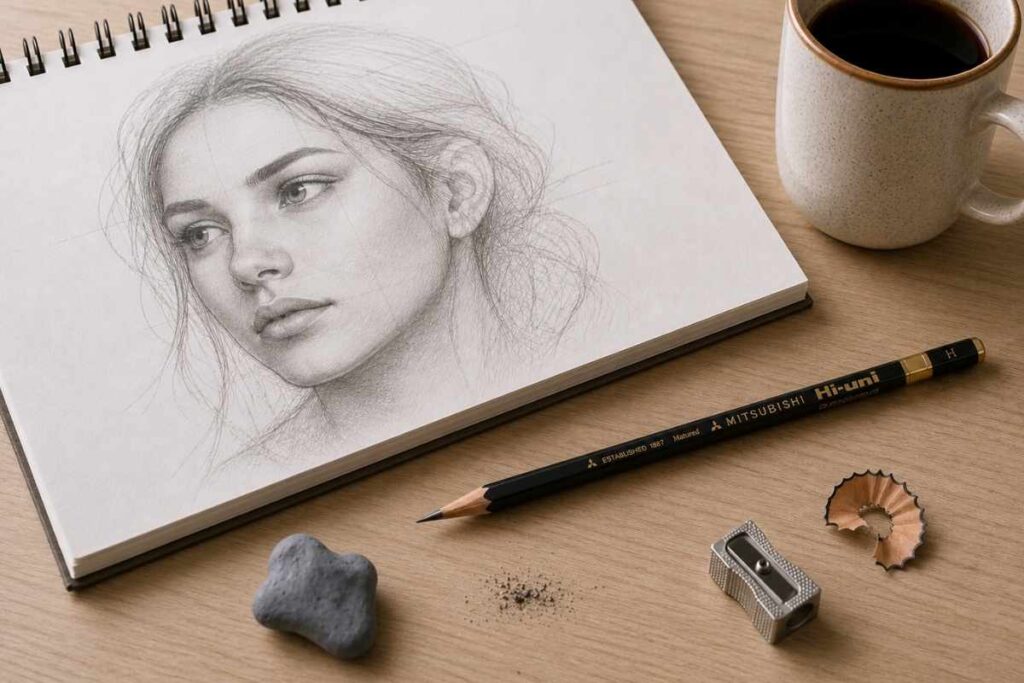
If there’s one pencil that consistently impresses artists with its luxurious drawing feel, it’s the Mitsubishi Hi-Uni. Considered by many to be among the Best Wooden Pencils for Drawing, this premium Japanese pencil is known for its incredibly refined graphite, exceptional consistency, and rich tonal range. It’s a favorite for artists who enjoy slow, deliberate rendering where every subtle shift in value matters.
Overview
The Hi-Uni isn’t designed to be flashy—it excels through refinement. From the moment the graphite touches the paper, it produces a remarkably smooth, controlled line that feels effortless without sacrificing precision. The graphite is finely processed, resulting in minimal grain and a clean appearance even after multiple layers.
Available in an impressive 10H to 10B range, the Hi-Uni offers one of the widest graphite selections available. Whether you’re drafting clean construction lines with harder grades or creating deep, velvety shadows with 6B, 8B, or 10B, every pencil feels consistent and predictable.
What Makes It Stand Out
The standout feature of the Mitsubishi Hi-Uni is its graphite consistency. Softer grades produce rich, dark values while maintaining excellent control, making it easier to build depth gradually instead of creating muddy areas. This characteristic is particularly valuable for portrait artists, wildlife illustrators, and anyone who spends time refining subtle transitions.
Compared with the Tombow Mono 100, the Hi-Uni feels slightly softer and produces darker values with less pressure. Artists who enjoy expressive shading and broad tonal ranges often prefer this slightly creamier graphite, especially when working on medium- or rough-textured paper.
Another area where the Hi-Uni shines is blending. The graphite layers beautifully with blending stumps, tissues, or soft brushes while still preserving enough tooth in the paper to continue adding graphite. This makes it an excellent choice for realistic rendering techniques.
Key Features
- Available in 10H to 10B graphite grades
- Exceptionally refined graphite for smooth application
- Premium cedar wood barrel with excellent sharpening performance
- Strong, break-resistant graphite core
- Excellent tonal range for detailed rendering
- Ideal for portraits, illustration, sketching, and fine art
Pros
- One of the smoothest graphite pencils available
- Produces rich, even tonal values
- Excellent blending and layering performance
- Consistent graphite quality throughout every grade
- Comfortable balance for long drawing sessions
Cons
- Premium pricing may not suit every budget
- Harder to find in local craft stores than mainstream brands
Who Should Buy It?
The Mitsubishi Hi-Uni is an outstanding choice for artists who enjoy realistic rendering, portrait drawing, wildlife illustration, and any artwork that depends on smooth tonal transitions. If your workflow emphasizes shading, blending, and careful value control rather than rapid sketching, this pencil is likely to become a favorite.
Why We Recommend It
The Mitsubishi Hi-Uni earns its place among the Best Wooden Pencils for Drawing because it offers one of the most refined graphite experiences available today. Its ability to produce smooth gradients, deep blacks, and consistent line quality makes it a premium tool for serious artists. If you’re looking for graphite drawing pencils that prioritize subtlety, control, and exceptional shading performance, few wooden drawing pencils can match what the Hi-Uni brings to the drawing table.
5. Caran d’Ache Grafwood – Best Premium Choice
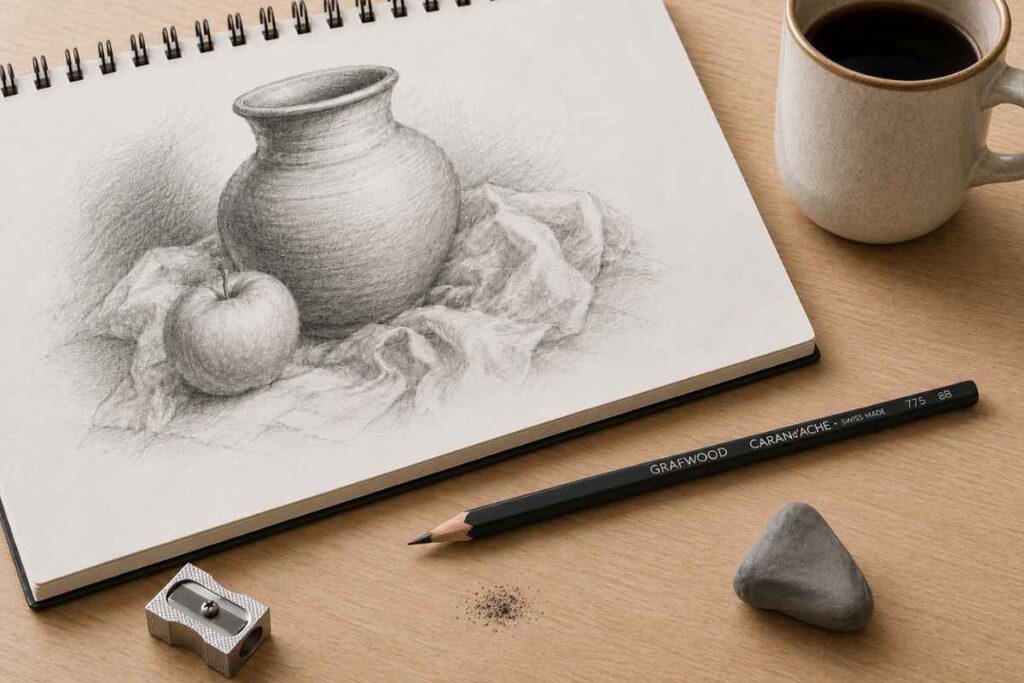
For artists who appreciate precision engineering and exceptional craftsmanship, the Caran d’Ache Grafwood is one of the Best Wooden Pencils for Drawing available today. Made in Switzerland, this premium pencil series is designed for artists who demand consistency, accuracy, and complete control over every mark they make. From detailed technical illustrations to expressive fine art, the Grafwood performs with a level of refinement that’s immediately noticeable.
Overview
The Caran d’Ache Grafwood isn’t a pencil that tries to impress with ultra-soft graphite or bold marketing claims. Instead, its strength lies in predictability. Every graphite grade behaves exactly as expected, making it easier to transition between pencils while maintaining consistent line quality and tonal control throughout an entire drawing.
Available in grades from 9H to 9B, the Grafwood series offers a balanced range suitable for technical drafting, architectural sketching, illustration, and realistic rendering. Each pencil is color-coded by graphite grade, allowing artists to quickly identify the right hardness without interrupting their workflow—a thoughtful detail that’s surprisingly useful during longer drawing sessions.
What Makes It Stand Out
What separates the Grafwood from many competitors is its precision. The graphite produces crisp, clean edges and responds exceptionally well to controlled pressure, making it a favorite for artists who enjoy meticulous line work.
Compared with the Mitsubishi Hi-Uni, the Grafwood feels slightly firmer, offering greater control during detailed rendering. While the Hi-Uni excels at creating creamy tonal transitions, the Grafwood provides sharper edge definition and cleaner hatching, making it particularly effective for architectural drawings, product sketches, and highly detailed illustrations.
Its point retention is another highlight. Even during extended sessions of cross-hatching or fine rendering, the pencil maintains a usable tip longer than many softer graphite pencils, reducing interruptions for sharpening.
Key Features
- Available in 9H to 9B graphite grades
- Premium Swiss-made graphite with excellent consistency
- Color-coded barrel for quick graphite grade identification
- High-quality cedar wood casing
- Strong, break-resistant graphite core
- Ideal for illustration, drafting, technical drawing, and realistic rendering
Pros
- Exceptional craftsmanship and build quality
- Highly consistent graphite across every grade
- Excellent point retention for detailed work
- Color-coded design improves workflow
- Produces clean, controlled line quality
Cons
- One of the most expensive graphite pencil ranges
- Premium price may be unnecessary for casual hobbyists
Who Should Buy It?
The Caran d’Ache Grafwood is best suited for professional illustrators, architects, industrial designers, and fine artists who value precision above everything else. It’s also an excellent choice for artists who frequently alternate between multiple graphite grades and appreciate predictable, repeatable performance.
Why We Recommend It
Among the Best Wooden Pencils for Drawing, the Caran d’Ache Grafwood stands out as a premium tool built for artists who demand accuracy and consistency. Its refined graphite, impressive point retention, and thoughtful design make it an excellent investment for serious creative work. If you’re looking for artist-grade pencils that deliver exceptional control and professional-level performance, the Grafwood easily earns its place among the finest wooden drawing pencils available.
6. Derwent Graphic – Best for Shading
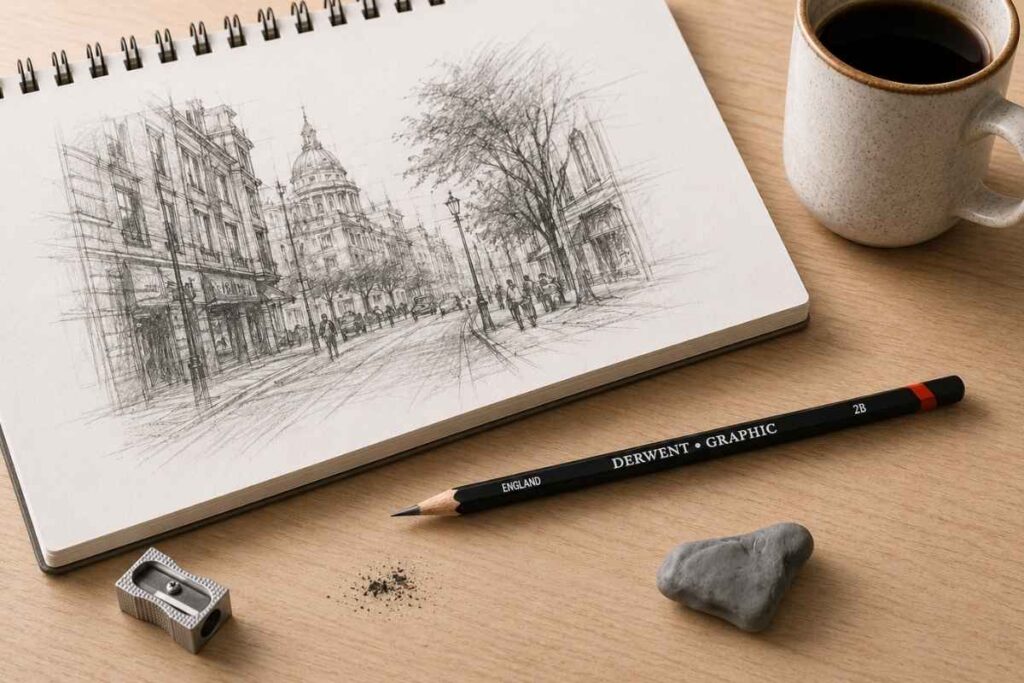
When your artwork depends on rich shadows, smooth gradients, and expressive tonal range, the Derwent Graphic is one of the Best Wooden Pencils for Drawing to consider. Manufactured in the United Kingdom, this long-established pencil series is especially popular among artists who enjoy portrait drawing, still life, figure studies, and other subjects where realistic shading plays a central role.
Overview
Unlike pencils that focus primarily on crisp line work, the Derwent Graphic is designed to help artists build depth and atmosphere. The graphite has a pleasantly soft feel that responds well to gradual pressure changes, making it easier to transition from light midtones to deep shadows without abrupt jumps in value.
The range includes 9H to 9B grades, giving artists enough flexibility for everything from initial construction lines to richly rendered final drawings. While the harder grades perform well for layout work, it’s the softer pencils—especially 2B through 8B—that truly showcase what this series does best.
What Makes It Stand Out
The Derwent Graphic excels at tonal rendering. Softer grades produce deep, matte blacks that layer beautifully without becoming overly reflective, a characteristic many portrait artists appreciate when working on facial features, hair, or fabric textures.
Compared with the Caran d’Ache Grafwood, the Derwent Graphic feels noticeably softer and more forgiving during shading. It sacrifices a bit of point retention in exchange for richer graphite application, making it a better choice for artists who prioritize expressive value studies over extremely fine line work.
Another advantage is how naturally the graphite blends. Whether you’re using a blending stump, tissue, or soft brush, transitions remain smooth while preserving enough texture to continue building additional layers.
Key Features
- Available in 9H to 9B graphite grades
- Smooth graphite formulated for expressive shading
- High-quality wooden barrel for reliable sharpening
- Strong graphite core with good break resistance
- Comfortable hexagonal shape
- Ideal for portraits, figure drawing, landscapes, and illustration
Pros
- Excellent tonal range for realistic shading
- Blends smoothly without becoming overly glossy
- Produces rich, dark values with softer grades
- Comfortable for extended drawing sessions
- Widely available as individual pencils or complete sets
Cons
- Softer grades require more frequent sharpening
- Doesn’t hold a fine point as long as firmer graphite pencils
Who Should Buy It?
The Derwent Graphic is an excellent choice for artists who spend more time rendering than outlining. If your work involves portraits, wildlife, still life, or any subject that relies on subtle value transitions, you’ll appreciate the pencil’s ability to create soft, natural-looking shading with minimal effort.
Why We Recommend It
The Derwent Graphic earns its place among the Best Wooden Pencils for Drawing because it makes tonal work feel effortless. Rather than emphasizing technical precision alone, it encourages expressive drawing through smooth graphite application and excellent blending performance. For artists searching for wooden drawing pencils that excel at shading and realistic rendering, the Derwent Graphic remains one of the most dependable choices in its class.
7. Koh-I-Noor Toison d’Or 1900 – Best Budget Professional Choice
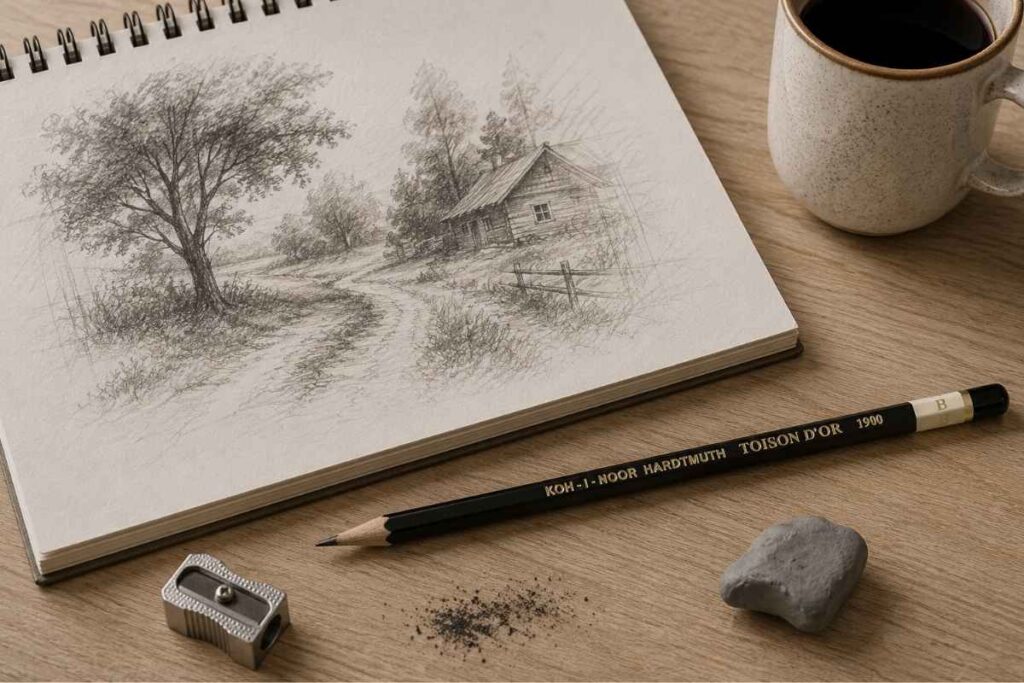
Not every exceptional drawing pencil comes with a premium price tag. The Koh-I-Noor Toison d’Or 1900 has been trusted by artists for decades because it delivers reliable performance, a wide graphite range, and impressive craftsmanship at a price that’s accessible to students and professionals alike. If you’re looking for the Best Wooden Pencils for Drawing that offer outstanding value, this classic Czech-made pencil deserves serious consideration.
Overview
The Toison d’Or 1900 strikes a balance that many artists appreciate. It feels dependable rather than overly specialized, making it equally suitable for quick sketchbook studies, classroom assignments, finished illustrations, and everyday studio work.
Available in an extensive range from 10H to 8B, the series allows artists to move comfortably from crisp construction lines to rich, expressive shading. The graphite is well-balanced—firm enough to maintain control but soft enough to produce satisfying tonal depth in the darker grades.
What Makes It Stand Out
One of the biggest strengths of the Toison d’Or 1900 is its consistency across the entire graphite range. While many budget-friendly pencils perform well in only a few grades, this series maintains predictable line quality from the hardest pencils to the softest ones.
Compared with the Derwent Graphic, the Koh-I-Noor feels slightly firmer and produces cleaner line work, making it a better fit for artists who divide their time between sketching and detailed rendering. Although it doesn’t create quite the same velvety blacks as the softer Derwent grades, it rewards careful pressure control with smooth, even tonal transitions.
Its point retention is another pleasant surprise. During cross-hatching, architectural sketches, and figure studies, the graphite wears evenly, allowing you to spend more time drawing and less time reaching for the sharpener.
Key Features
- Available in 10H to 8B graphite grades
- Smooth, well-balanced graphite formulation
- Durable lacquered wooden barrel
- Strong, break-resistant graphite core
- Comfortable hexagonal design
- Suitable for sketching, drafting, illustration, and shading
Pros
- Excellent performance for the price
- Wide graphite range for versatile drawing techniques
- Consistent line quality across multiple grades
- Good point retention during detailed work
- Easy to sharpen with minimal graphite breakage
Cons
- Softest grades aren’t quite as rich as premium Japanese pencils
- Premium finish is simpler than higher-end competitors
Who Should Buy It?
The Koh-I-Noor Toison d’Or 1900 is an excellent option for art students, hobbyists, educators, and professional artists who want dependable graphite drawing pencils without paying luxury prices. It’s also a smart choice for anyone assembling a complete graphite set with multiple hardness grades.
Why We Recommend It
The Koh-I-Noor Toison d’Or 1900 proves that exceptional drawing tools don’t always have to be expensive. Its dependable graphite, broad grade selection, and impressive overall performance make it one of the Best Wooden Pencils for Drawing in its price category. If you’re searching for wooden drawing pencils that deliver professional-level results while offering outstanding value, this classic series is difficult to overlook.
8. Blackwing 602 – Best for Everyday Sketching
Few pencils have achieved the cult following of the Blackwing 602. Originally introduced in the early 20th century and later revived for a new generation of artists and creatives, the 602 has become a favorite among illustrators, designers, animators, architects, and sketchbook enthusiasts. While it doesn’t follow the traditional graphite grading system, it easily earns its place among the Best Wooden Pencils for Drawing thanks to its distinctive feel, premium craftsmanship, and exceptional versatility.
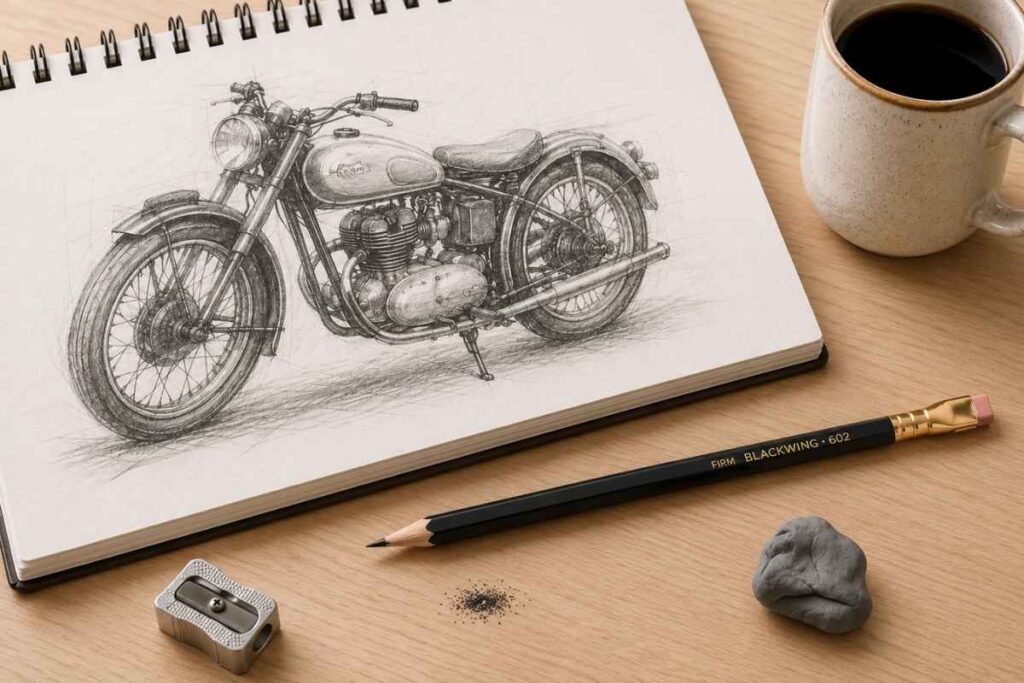
Overview
The Blackwing 602 is built around a proprietary firm graphite formulation that sits comfortably between the hardness and softness of traditional grades. The result is a pencil that produces crisp, controlled lines while still allowing enough graphite to build convincing shadows and subtle tonal transitions.
Rather than encouraging artists to constantly switch between multiple pencils, the 602 is designed to handle a wide variety of drawing tasks on its own. From quick gesture sketches and thumbnail compositions to detailed concept art and observational drawing, it performs consistently across different styles and paper surfaces.
What Makes It Stand Out
What makes the Blackwing 602 unique isn’t just its graphite—it’s the overall drawing experience. The pencil feels exceptionally balanced in the hand, making long sketching sessions surprisingly comfortable. Combined with its California incense cedar barrel and iconic replaceable rectangular eraser, it offers a level of refinement that’s immediately noticeable.
Compared with the Koh-I-Noor Toison d’Or 1900, the Blackwing 602 feels smoother and more responsive under light pressure, making it an excellent choice for loose sketching and creative exploration. While the Koh-I-Noor offers a broader graphite range for technical work, the 602 excels as a versatile everyday pencil that adapts naturally to changing drawing styles.
The graphite also develops values gradually, allowing artists to build depth without creating harsh transitions. This makes it particularly enjoyable for urban sketching, travel journals, concept development, and sketchbook practice where flexibility matters more than technical precision.
Key Features
- Proprietary firm graphite formulation
- Premium California incense cedar barrel
- Replaceable rectangular eraser
- Excellent point retention for everyday drawing
- Comfortable semi-hexagonal design
- Ideal for sketching, illustration, concept art, and creative exploration
Pros
- Beautiful balance between precision and smoothness
- Comfortable for extended sketching sessions
- Premium materials and craftsmanship
- Excellent all-around performance
- Iconic design appreciated by artists and designers worldwide
Cons
- Premium price for a single graphite pencil
- Limited graphite options compared with traditional graded pencil sets
Who Should Buy It?
The Blackwing 602 is an excellent choice for artists who spend a lot of time sketching ideas rather than producing only finished artwork. It’s ideal for illustrators, concept artists, designers, architects, and anyone who enjoys carrying a reliable pencil in a sketchbook or everyday creative kit.
Why We Recommend It
The Blackwing 602 rounds out our list of the Best Wooden Pencils for Drawing because it offers something different from every other pencil featured in this guide. Instead of specializing in one area, it provides an exceptionally enjoyable and versatile drawing experience that encourages creativity. If you’re looking for wooden drawing pencils that feel just as comfortable during quick idea sketches as they do during polished illustrations, the Blackwing 602 is a pencil you’ll likely reach for again and again.
How We Chose the Best Wooden Pencils for Drawing
Choosing the Best Wooden Pencils for Drawing isn’t as simple as picking the most expensive brand or the pencil with the widest graphite range. Every artist works differently. Some prioritize razor-sharp line work for architectural sketches, while others prefer soft graphite that blends effortlessly for portraits and realistic shading. That’s why this guide evaluates each pencil based on the qualities that have the greatest impact on the overall drawing experience.
Graphite Quality & Consistency
The heart of every wooden pencil is its graphite core. High-quality graphite drawing pencils produce clean, predictable marks with minimal grain and maintain consistent performance across every hardness grade.
Consistency is especially important when switching between pencils. A well-made 2B should feel noticeably softer than an HB without behaving unpredictably. Reliable graphite makes it easier to build muscle memory and achieve consistent results from one drawing session to the next.
Point Retention
A pencil that constantly needs sharpening can interrupt your workflow. We looked for pencils that maintain a fine point long enough for detailed rendering, cross-hatching, technical drawing, and intricate illustrations.
Good point retention doesn’t just reduce sharpening—it also helps maintain cleaner line quality throughout extended drawing sessions.
Shading & Tonal Range
Some pencils are designed for precision, while others excel at producing rich, expressive values. We evaluated how well each pencil handles gradual tonal transitions, deep shadows, and subtle layering.
The Best Wooden Pencils for Drawing should allow artists to create smooth gradients without producing patchy or uneven graphite deposits. Strong blending performance is particularly valuable for portrait artists, wildlife illustrators, and anyone creating realistic graphite artwork.
Wood Quality & Sharpening
The quality of the wooden barrel is often overlooked, yet it plays a significant role in the drawing experience. Premium cedar wood sharpens cleanly, produces long, even points, and helps reduce unnecessary graphite breakage.
Every pencil featured in this guide uses high-quality wood that supports reliable sharpening and comfortable everyday use.
Comfort & Control
Drawing sessions often last for hours, making comfort an important consideration. We favored pencils that feel balanced in the hand, offer secure grip without causing fatigue, and provide excellent control during both detailed rendering and loose sketching.
Small design details—such as barrel shape and overall balance—can make a noticeable difference over time.
Versatility
Some wooden drawing pencils are highly specialized, while others adapt effortlessly to a variety of techniques. We considered how each pencil performs across multiple applications, including:
- Gesture drawing
- Figure drawing
- Portraits
- Urban sketching
- Architectural drawing
- Technical illustration
- Realistic rendering
- Everyday sketchbook practice
Pencils that performed consistently across several disciplines ranked higher than those suited to only one specific task.
Value for Money
Price alone doesn’t determine quality. Some premium pencils justify their cost through exceptional craftsmanship, while others offer remarkable performance at a more accessible price.
Rather than focusing on the cheapest or most expensive option, we looked for artist-grade pencils that provide lasting value, dependable performance, and a drawing experience worthy of their price point.
Ultimately, the Best Wooden Pencils for Drawing are the ones that inspire confidence every time they touch the paper. Whether you’re filling a sketchbook with daily studies, refining a detailed illustration, or practicing life drawing, the right pencil should feel like a natural extension of your hand—not something that gets in the way of your creativity.
Buying Guide: How to Choose the Best Wooden Pencils for Drawing
With so many excellent wooden drawing pencils available, choosing the right one can feel overwhelming. The truth is, there isn’t a single pencil that’s perfect for every artist. The Best Wooden Pencils for Drawing depend on your drawing style, preferred graphite grades, and the type of artwork you create most often.
Here’s what to consider before adding a new pencil to your art supplies.
Understand Graphite Grades
The first thing you’ll notice when shopping for graphite drawing pencils is the range of graphite grades. These grades determine how hard or soft the graphite is, which directly affects line quality, shading, and point retention.
- H Grades (9H–H): Hard graphite that creates light, crisp lines. Ideal for construction lines, technical drawing, architectural sketches, and detailed layouts.
- HB & F: Balanced grades that combine precision with moderate darkness. They’re excellent everyday choices for sketching and general drawing.
- B Grades (B–9B): Softer graphite that produces darker marks with less pressure. These grades are perfect for shading, blending, portraits, and expressive artwork.
Many artists find that a small selection of HB, 2B, 4B, and 6B covers most traditional drawing techniques, offering a practical balance between fine detail and rich tonal values.
Consider Your Drawing Style
Different drawing styles place different demands on a pencil.
- Portrait Artists often prefer smooth graphite that layers easily and creates subtle skin tones.
- Architects and Designers usually benefit from firmer grades with excellent point retention for precise line work.
- Urban Sketchers often appreciate versatile pencils that can quickly shift between loose sketches and detailed rendering.
- Illustrators and Concept Artists generally look for pencils that balance clean lines with expressive shading.
Choosing a pencil that complements your workflow will have a greater impact than simply buying the most expensive option.
Look for Good Point Retention
A pencil that maintains a sharp point allows you to stay focused on your drawing instead of constantly reaching for the sharpener.
If your work includes intricate cross-hatching, architectural details, or technical illustrations, stronger point retention can significantly improve efficiency. Artists who primarily create broad shading may place less importance on this feature, as softer graphite naturally wears faster.
Pay Attention to Graphite Feel
Every graphite formulation feels slightly different on paper.
Some pencils provide a firmer, more controlled drawing experience that rewards careful pressure control, while others glide more smoothly and produce darker values with minimal effort.
Neither approach is inherently better. The ideal choice depends on whether you prioritize crisp line work, expressive shading, or a balance of both.
Wood Quality Matters
A high-quality wooden barrel isn’t just about appearance. Premium woods—particularly cedar—sharpen more cleanly, reduce graphite breakage, and make it easier to achieve a long, durable point.
Poor-quality wood can splinter during sharpening and lead to unnecessary frustration, especially during long drawing sessions.
Individual Pencils vs. Pencil Sets
If you’re new to drawing, purchasing a graphite pencil set is often the most practical choice. A set allows you to experiment with different hardness grades and discover which pencils best suit your drawing style.
Experienced artists, however, often replace only the grades they use most frequently. Portrait artists, for example, may go through several 2B and 4B pencils before needing to replace harder grades.
Which Pencil Is Right for You?
If you’re still deciding, these recommendations can help narrow your choices.
- Best Overall: Staedtler Mars Lumograph
- Best Value: Faber-Castell 9000
- Best for Professionals: Tombow Mono 100
- Smoothest Graphite: Mitsubishi Hi-Uni
- Best Premium Choice: Caran d’Ache Grafwood
- Best for Shading: Derwent Graphic
- Best Budget Professional Pencil: Koh-I-Noor Toison d’Or 1900
- Best for Everyday Sketching: Blackwing 602
Ultimately, the Best Wooden Pencils for Drawing are the ones that complement your technique rather than forcing you to adapt to the tool. Whether your focus is precise drafting, expressive sketching, or highly detailed realistic rendering, investing in quality artist-grade pencils will make the drawing process more enjoyable and help you achieve more consistent results.
Frequently Asked Questions
What are the Best Wooden Pencils for Drawing?
The Best Wooden Pencils for Drawing depend on your drawing style and experience level. If you’re looking for an all-around performer, the Staedtler Mars Lumograph is an excellent choice because it offers outstanding graphite consistency, reliable point retention, and a wide range of graphite grades. Other top options include the Faber-Castell 9000 for value, Tombow Mono 100 for precision, and Mitsubishi Hi-Uni for exceptionally smooth shading.
Which graphite grade is best for drawing?
There isn’t a single graphite grade that works for every drawing. Most artists regularly use HB, 2B, 4B, and 6B because these grades provide a versatile balance between fine detail and rich shading. Harder grades like H and 2H are ideal for light construction lines, while softer grades such as 4B and 6B produce darker values for realistic rendering and expressive sketching.
Are wooden pencils better than mechanical pencils for drawing?
Both have their strengths, but many artists prefer wooden drawing pencils because they offer a broader range of graphite grades, richer tonal variation, and a more natural drawing experience. Mechanical pencils excel at maintaining a consistent line width, making them popular for drafting and technical drawing, whereas wooden graphite pencils provide greater flexibility for shading and expressive mark-making.
Which wooden pencil is best for beginners?
For beginners, the Faber-Castell 9000 and Staedtler Mars Lumograph are excellent starting points. Both series offer dependable graphite quality, predictable performance, and a wide selection of grades, making it easy to learn fundamental techniques such as line control, shading, and cross-hatching.
Which wooden pencil is best for realistic portraits?
Artists creating realistic portraits often prefer pencils with smooth graphite and excellent blending performance. The Mitsubishi Hi-Uni, Tombow Mono 100, and Derwent Graphic are outstanding choices because they produce subtle tonal transitions, rich shadows, and clean line quality while responding well to gradual pressure changes.
Do expensive drawing pencils make a difference?
Premium pencils often provide better graphite consistency, cleaner sharpening, improved point retention, and a more refined drawing experience. While a beginner can create impressive artwork with affordable pencils, experienced artists may notice the smoother graphite, improved control, and predictable performance that higher-end artist-grade pencils offer.
Should I buy individual pencils or a drawing set?
If you’re just starting out, a graphite pencil set is usually the better investment because it lets you experiment with different hardness grades. More experienced artists often purchase individual pencils to replace the grades they use most frequently, such as HB, 2B, or 4B.
How long do wooden drawing pencils last?
The lifespan of a wooden drawing pencil depends on how often you draw, the graphite grade, and your sharpening habits. Harder grades generally last longer because they wear more slowly, while softer graphite pencils used for heavy shading naturally become shorter more quickly. Using a quality sharpener can also help reduce unnecessary waste and extend the life of your pencils.
Final Verdict
Choosing the Best Wooden Pencils for Drawing ultimately comes down to the way you like to create. Every pencil featured in this guide has earned its reputation through consistent performance, thoughtful craftsmanship, and the ability to help artists turn ideas into finished artwork. Rather than searching for a single “perfect” pencil, it’s more valuable to find one that complements your drawing style, preferred graphite grades, and creative workflow.
If you’re looking for the best all-around performer, the Staedtler Mars Lumograph is difficult to beat. Its excellent graphite consistency, dependable point retention, and versatile range of grades make it a reliable choice for everything from quick sketchbook studies to highly detailed illustrations.
Artists who want outstanding value without compromising quality should take a close look at the Faber-Castell 9000. It offers professional-level performance at a reasonable price, making it an excellent choice for students, hobbyists, and experienced artists alike.
If your work revolves around precision and fine detail, the Tombow Mono 100 delivers exceptional control and beautifully refined line quality. For artists who enjoy building rich tonal values and smooth gradients, the Mitsubishi Hi-Uni provides one of the most satisfying graphite experiences available today.
Those looking for premium craftsmanship will appreciate the Caran d’Ache Grafwood, while artists who focus on expressive shading should consider the Derwent Graphic. If value is your priority, the Koh-I-Noor Toison d’Or 1900 offers impressive performance without the premium price tag. And for everyday creativity, the Blackwing 602 remains one of the most enjoyable wooden drawing pencils for sketching, brainstorming, and visual note-taking.
The good news is that you don’t need to limit yourself to just one pencil. Many artists keep several graphite drawing pencils on hand because each one offers a slightly different feel, line quality, and shading experience. Experimenting with different brands and graphite grades is often the best way to discover the tools that naturally fit your artistic style.
No matter where you are in your creative journey, investing in the Best Wooden Pencils for Drawing is an investment in your skills. A well-made pencil won’t draw for you, but it will respond predictably, sharpen cleanly, and stay out of your way—allowing you to focus on what truly matters: developing your technique, exploring new ideas, and enjoying the process of drawing.
Whether you’re filling a sketchbook with daily studies, preparing for a college art class, creating commissioned illustrations, or simply drawing for the joy of it, the right wooden drawing pencils can make every line feel a little more confident and every finished piece a little more rewarding.