

Autumn is one of the best seasons to explore watercolor painting. Warm golden leaves, pumpkins, cozy cabins, misty forests, quiet lakes, and soft fall sunlight all provide simple subjects that can be turned into beautiful paintings.
These 17 autumn watercolor art ideas are designed for beginners and anyone looking for relaxing seasonal painting inspiration. You can paint them as individual studies on loose watercolor paper or use them as ideas for filling your sketchbook with a collection of fall-inspired artwork.
The collection also fits naturally with current Pinterest interest in slow, hands-on nature art. Pinterest’s 2026 Hobbies Trend Report highlights watercolor sketchbooks, illustrated field guides, mushroom studies, pressed flowers, and outdoor sketching as part of its “Backyard Botanist” trend.
For the best results, don’t worry about making every painting perfectly detailed. Let the watercolor washes remain slightly loose, allow some paper texture to show through, and use color variation to create a natural handmade feel.
1. Autumn Tree Watercolor Study
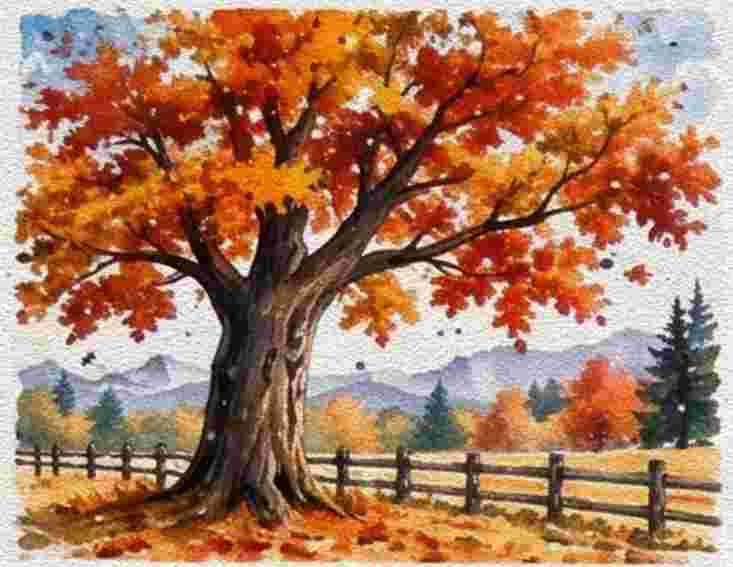
Paint a large autumn tree with a strong trunk and a rounded canopy filled with red, orange, yellow, and muted green leaves.
Start with a light pencil outline for the trunk and major branches. Use a mixture of warm colors for the foliage rather than filling the entire canopy with one flat shade. Dab different watercolor tones together while they are still slightly wet so they blend naturally.
Add a simple field, fence, or distant trees underneath the main tree to give the composition depth. Leave some areas of white paper visible between branches and leaves for a lighter watercolor effect.
2. Cozy Cabin in the Fall Forest
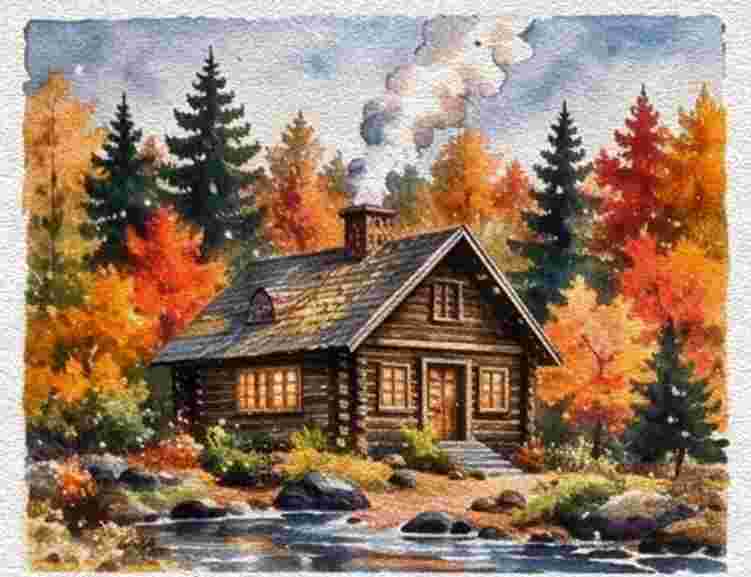
Create a small wooden cabin surrounded by colorful autumn trees.
Begin with the cabin’s basic geometric shapes before adding the roof, windows, chimney, door, and logs. Keep the cabin relatively simple so the surrounding fall forest becomes part of the composition.
Use darker greens and browns for the distant evergreen trees and brighter orange and yellow washes for the foreground foliage. A small warm glow in the windows can make the cabin feel especially cozy.
3. Pumpkin Patch at Sunset
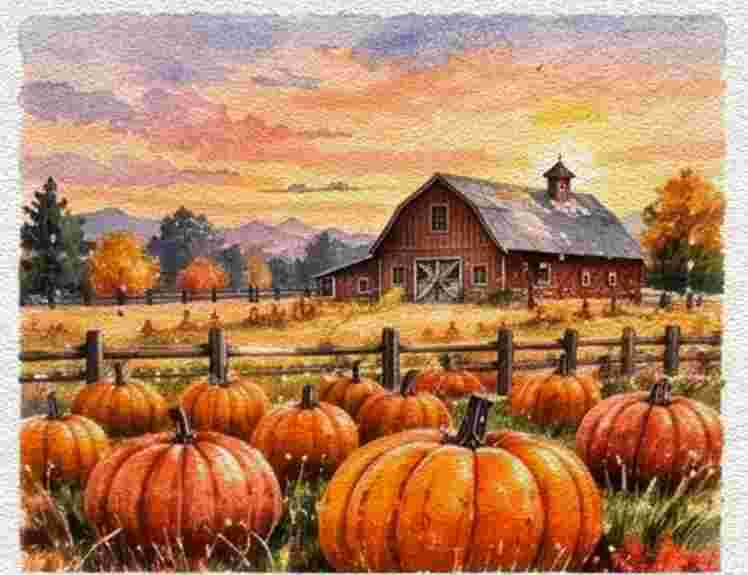
Paint a pumpkin field beneath a warm autumn sunset.
Place several pumpkins of different sizes in the foreground rather than making them identical. Begin each pumpkin with a rounded shape, then add subtle curved lines to suggest its sections.
Use orange, yellow, and red-orange washes for the pumpkins. Behind them, paint a simple barn, fence, distant trees, and a soft sunset sky. Allow the colors in the sky to blend gently from warm yellow near the horizon into deeper evening tones.
4. Rainy Autumn Window

Paint a cozy indoor scene viewed beside a rainy autumn window.
The main focus can be a window covered with small rain streaks, with colorful trees visible outside. Add a mug, books, lantern, or small vase near the window to create a comfortable fall atmosphere.
Keep the outside landscape slightly softer and less detailed than the objects indoors. This contrast helps create the feeling of looking through wet glass.
5. Misty Fall Forest Path
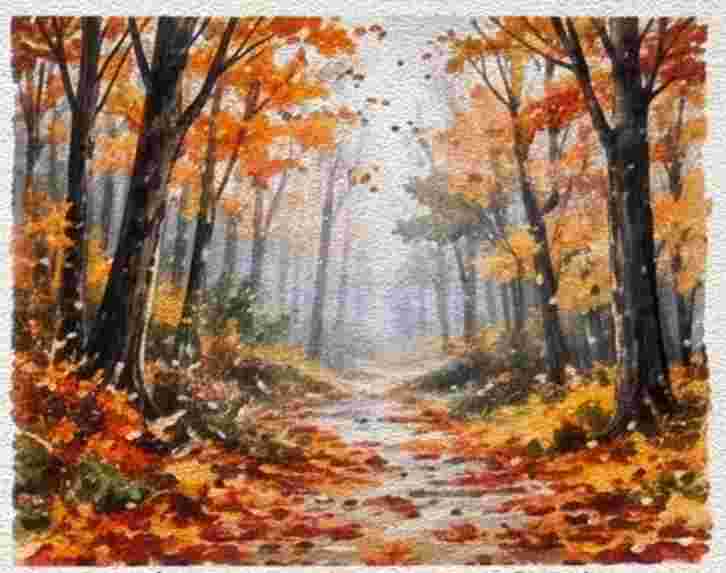
Create a winding path disappearing into a colorful autumn forest.
Start by drawing the path wider in the foreground and gradually narrower toward the background. This simple perspective trick immediately creates depth.
Use stronger orange and brown colors for nearby trees and softer, lighter washes for the distant forest. Add a little gray-blue or pale violet into the background to create a misty atmosphere.
Keep the center of the path relatively light so the viewer’s eye naturally follows it into the forest.
6. Autumn Lake with Reflections
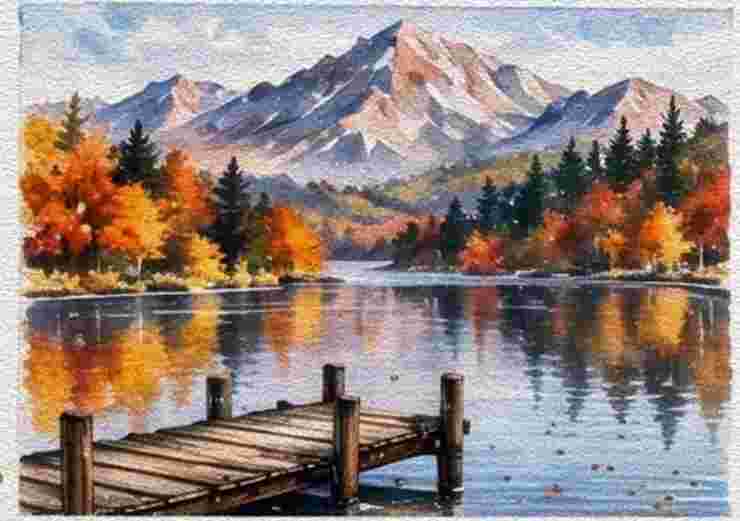
Paint a peaceful mountain lake surrounded by fall trees.
Begin with the mountain shapes in the background, followed by the tree line and shoreline. Keep the distant mountains lighter than the foreground to create atmospheric depth.
For the water, use horizontal watercolor strokes rather than trying to paint a perfectly smooth surface. Reflect the main colors of the mountains and autumn trees with broken horizontal washes.
A small wooden dock in the foreground can add an interesting focal point.
7. Golden Leaves and Acorns Study
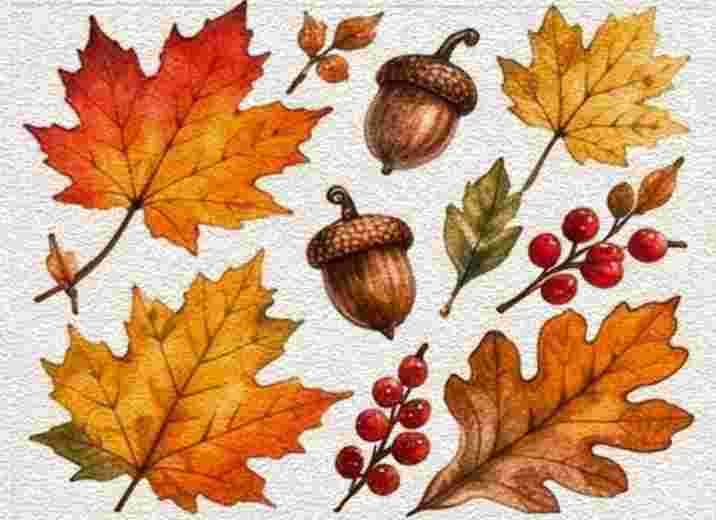
Create a simple botanical-style watercolor study featuring different autumn leaves, acorns, berries, and small branches.
This is an excellent subject for practicing individual watercolor elements. Paint each leaf separately and experiment with different combinations of yellow, ochre, orange, red, and brown.
Use a light pencil outline before painting, then add darker veins and stems after the main washes have dried. Leave some areas of each leaf lighter so the watercolor has natural variation.
8. Autumn Mushroom Collection
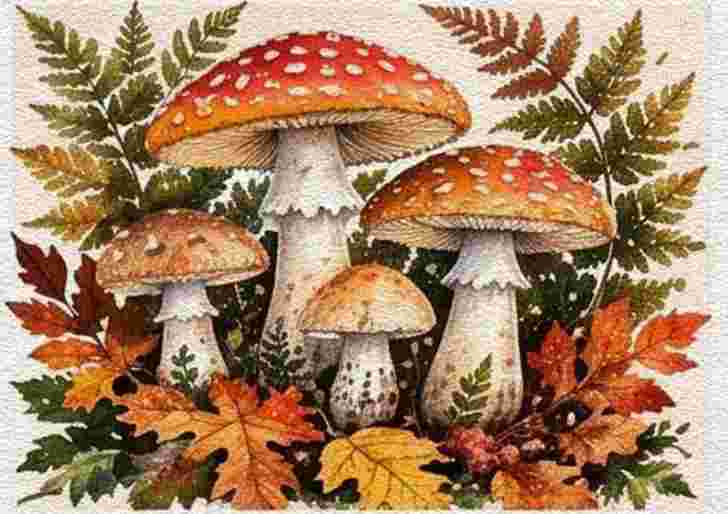
Paint a small collection of woodland mushrooms surrounded by leaves, moss, and tiny plants.
Choose several mushroom shapes with different caps and stems rather than repeating the same form. Use warm browns, creams, reds, and muted greens to create variety.
Start with the mushroom caps, then add stems and small surrounding plants. A few loose splatters around the base can suggest forest soil and make the painting feel more organic.
This type of observational nature study works particularly well for a watercolor sketchbook.
9. Rustic Basket of Fall Apples

Paint a woven basket filled with colorful autumn apples.
Begin with the overall basket shape and then add the individual apples. They don’t need to be perfectly round—slight differences make the composition feel more natural.
Use reds, greens, yellows, and warm browns for the apples. Add darker watercolor underneath the fruit and inside the basket to create depth.
A loosely painted blanket or a few fallen leaves beside the basket can complete the cozy autumn arrangement.
10. Cozy Mug with Autumn Leaves

Paint a warm mug surrounded by autumn leaves, small fruits, and a few cozy objects.
Keep the mug as the main focal point. Sketch its basic cylindrical shape first, then add the handle and simple details.
Use warm cream, brown, orange, and red tones. Add gentle steam above the mug using very light watercolor or leave parts of the paper untouched.
Surrounding the mug with fallen leaves and a small stack of books can create an inviting seasonal composition.
11. Autumn Mountain Landscape
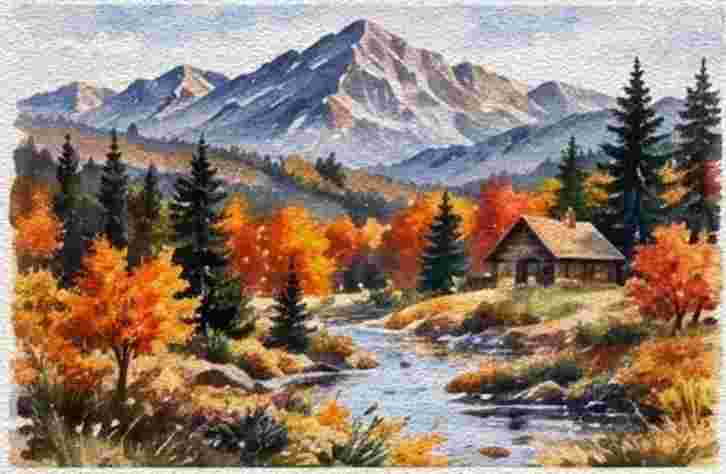
Paint a peaceful mountain landscape surrounded by colorful fall trees.
Start with the mountain silhouette in the background and use lighter, cooler colors for distant peaks. Gradually introduce stronger colors as you move toward the foreground.
Add a small cabin, fence, path, or group of trees near the bottom of the composition to give the landscape a sense of scale.
Don’t outline every mountain detail. Use a few darker watercolor strokes to suggest rocks and shadows while allowing the washes to remain loose.
12. Wooden Bridge in a Fall Forest
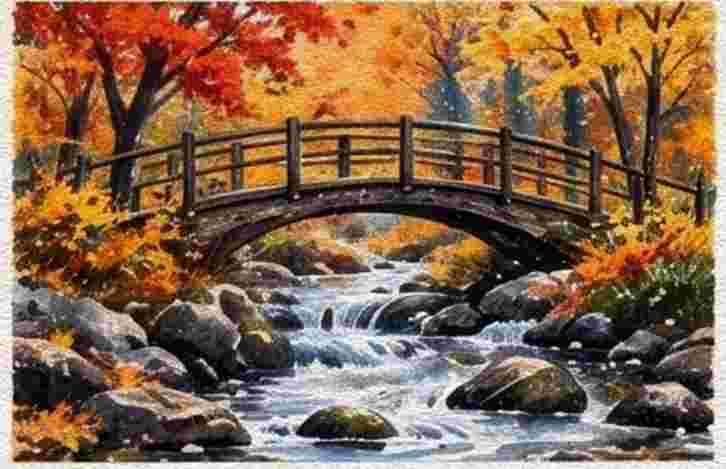
Create a small wooden bridge crossing a stream in an autumn forest.
Use the bridge as the main perspective element. Its rails can guide the viewer’s eye toward the background.
Paint the surrounding trees with layered washes of orange, yellow, brown, and muted green. For the stream, use horizontal and diagonal strokes with small areas of white paper to suggest moving water.
A few rocks beneath the bridge can add additional texture and depth.
13. Autumn Deer in the Woods
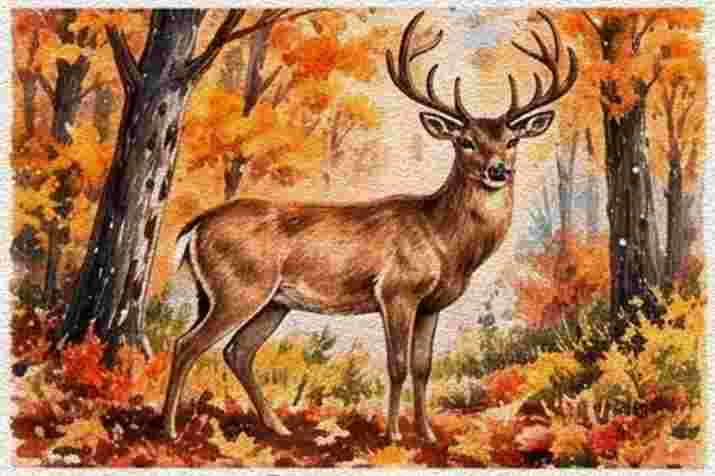
Paint a deer standing quietly among autumn trees and fallen leaves.
Start with a simple body shape before adding the legs, neck, head, and antlers. Keep the anatomy relatively simple and focus on capturing a calm standing pose.
Use warm brown watercolor for the deer and slightly darker tones around the legs and underside of the body. Surround it with orange leaves and soft woodland shadows.
Keep the background less detailed so the deer remains the focal point.
14. Fall Wildflower and Seed Pod Study
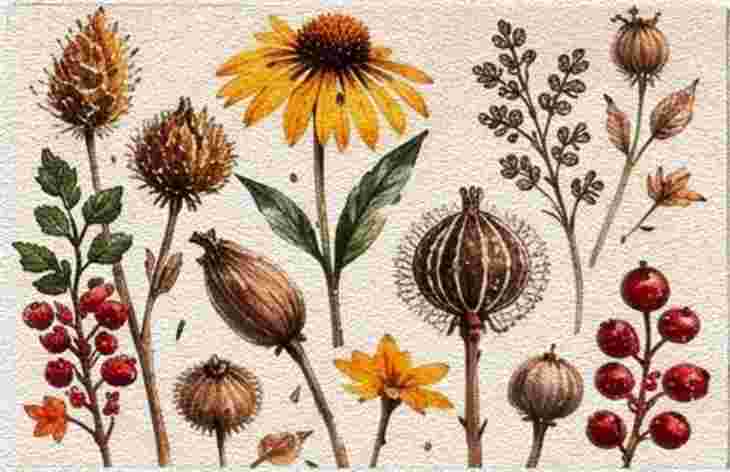
Create a botanical watercolor collection featuring autumn wildflowers, dried flowers, seed pods, berries, and delicate stems.
Arrange the individual plants vertically and diagonally across the page rather than placing everything in a rigid row.
Use muted autumn colors such as ochre, rust, dusty red, olive green, and warm brown. Paint the flowers with lighter washes and add darker details only after the first layer has dried.
This makes a beautiful nature-study page for a watercolor sketchbook.
15. Autumn Bicycle by a Country Road
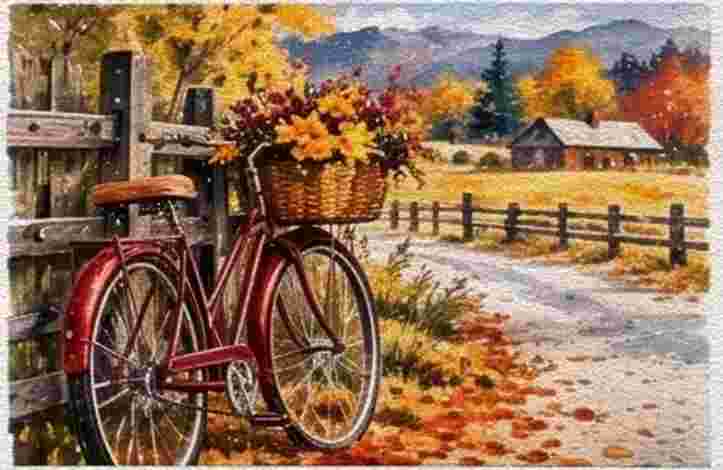
Paint an old-fashioned bicycle resting beside a quiet country road during fall.
Begin with the two wheels as your main construction shapes. Add the frame, handlebars, seat, and basket using simple lines.
Fill the basket with a few autumn flowers or leaves for extra seasonal character. Behind the bicycle, paint a country road disappearing toward distant trees or a small farmhouse.
Use stronger colors on the bicycle and foreground while keeping the distant landscape softer.
16. Window Box with Fall Flowers and Pumpkins
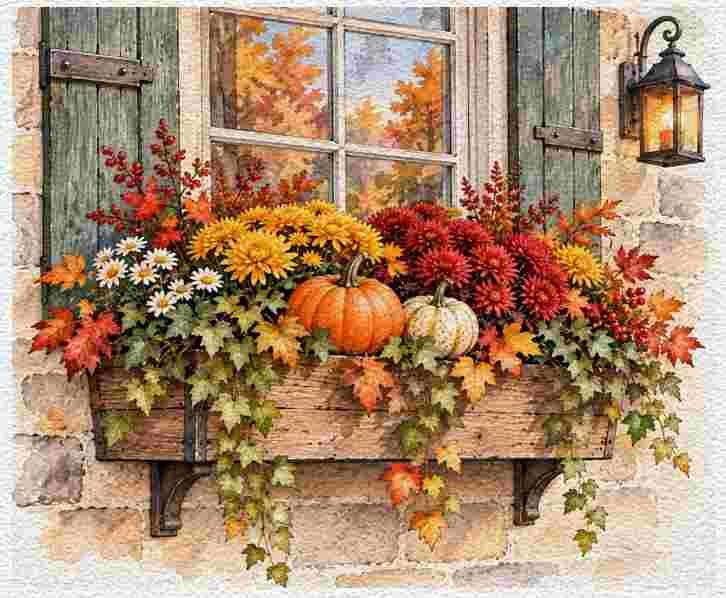
Paint a rustic window box overflowing with autumn flowers, leaves, and small pumpkins.
Start with the wooden planter and then build the composition using flowers of different heights. Add pumpkins between the flowers to introduce recognizable fall shapes.
Use warm yellows, oranges, reds, and muted greens. Let some leaves overlap the edge of the planter to make the arrangement feel fuller.
For the background, keep the window and wall relatively simple so the colorful planter becomes the main subject.
17. Falling Leaves in a Quiet Autumn Park
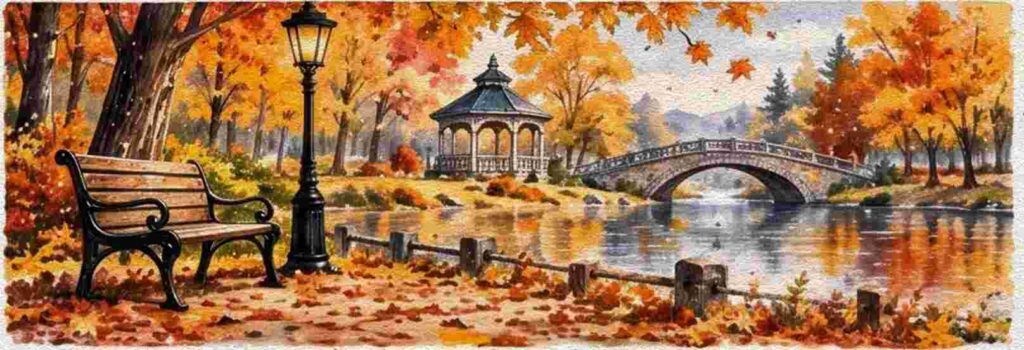
Paint a peaceful park with a bench, large trees, a pond, and falling autumn leaves.
Place the bench or pathway in the foreground and use the trees to frame the scene. A small bridge or gazebo in the distance can create another focal point.
Use warm orange, yellow, and red washes throughout the trees and foreground. Add individual falling leaves with small brushstrokes rather than painting every leaf in detail.
Leave some open areas of paper around the pond and pathway to balance the stronger colors.
Autumn watercolor art doesn’t have to be complicated to look beautiful. Simple subjects such as a single tree, pumpkin patch, mushroom collection, cozy mug, or quiet forest path can become expressive seasonal paintings with just a few watercolor washes.
When working through these ideas, focus on simple shapes, warm fall colors, loose brushwork, and natural imperfections rather than trying to make every detail perfect. You can also combine several small studies into a single watercolor sketchbook collection.
For a more authentic handmade look, experiment with wet-on-wet washes, dry-brush texture, watercolor splatters, layered transparent colors, and areas of untouched paper. The goal is to capture the calm feeling of autumn while developing your own painting style.