
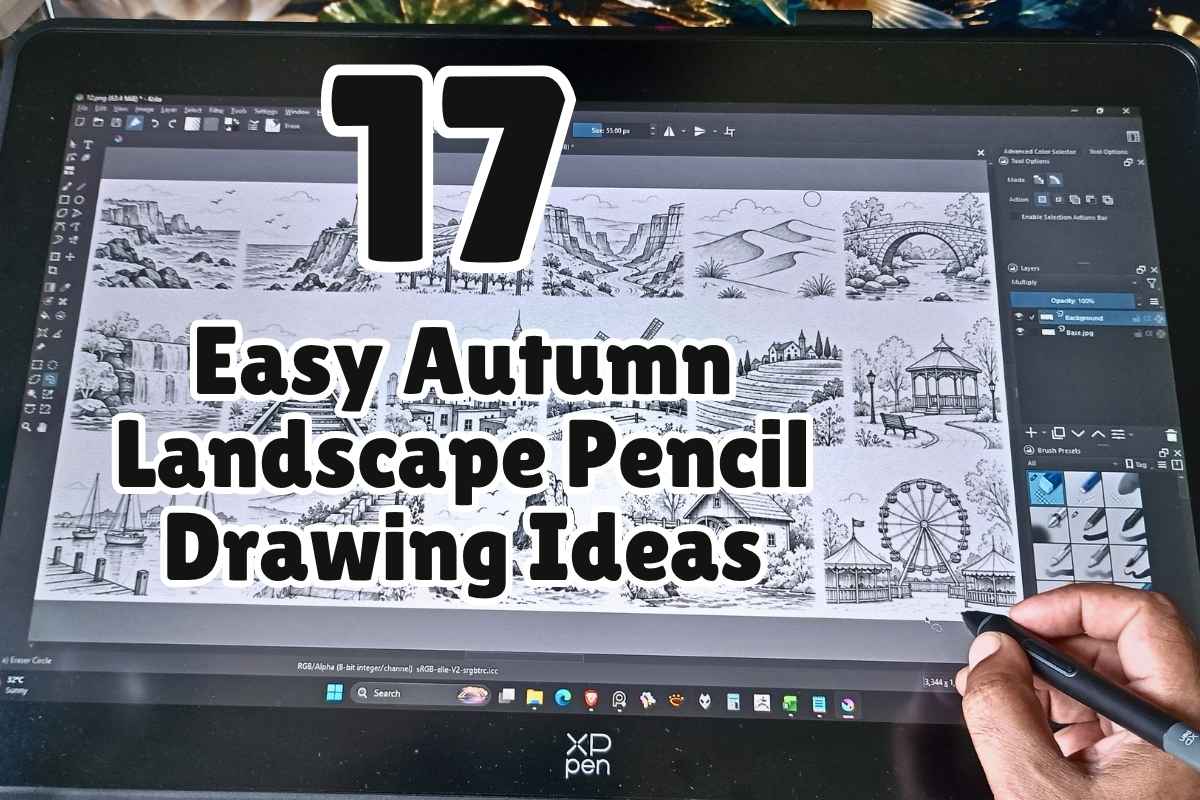
Autumn is a beautiful season for landscape drawing, with soft light, changing scenery, and endless opportunities to practice pencil shading. You don’t need advanced drawing skills to capture the feeling of fall; simple outlines, perspective, and a few carefully placed shadows can bring a landscape to life.
These 17 easy autumn landscape pencil drawing ideas are designed for beginners who want fresh sketchbook inspiration without repeating the usual forest paths, mountain ridges, lakes, or cozy cottage scenes. From dramatic coastal cliffs to winding vineyard rows and old stone bridges, each idea offers a different composition to explore.
Whether you’re practicing graphite shading, learning perspective, or building a collection of seasonal sketches, these autumn landscapes are a relaxing way to develop your drawing skills.
1. Rocky Coastline with Breaking Waves
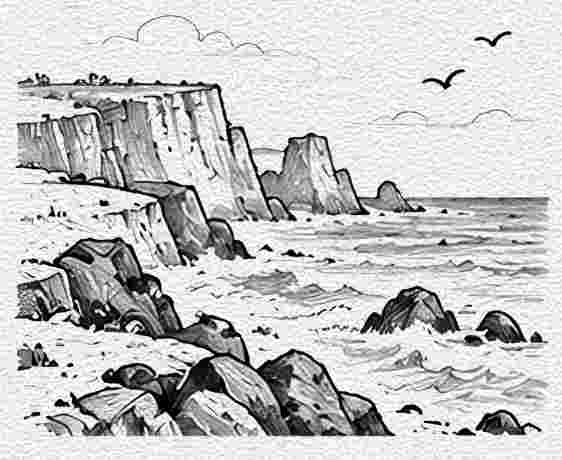
Draw a rugged coastline with large rocks in the foreground and waves breaking against the shore. Begin with the outline of the cliffs, then use curved lines to show the movement of the water. Add darker shading beneath the rocks and leave white areas for sea foam.
Use short, broken strokes for rough rock surfaces and longer curved lines for the waves. Keep the distant water lighter to create depth.
2. Lighthouse on a High Coastal Cliff
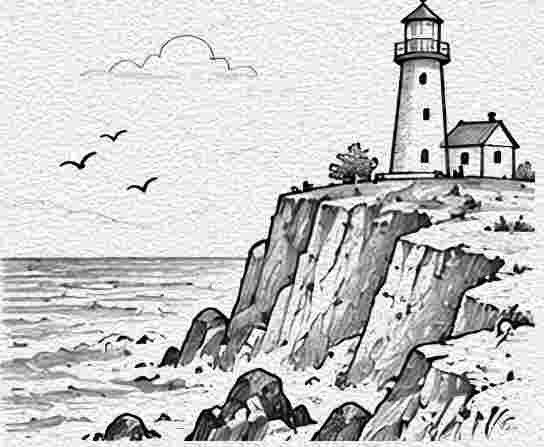
Sketch a tall lighthouse standing on a steep cliff above the sea. Use simple geometric shapes for the tower and lantern room, then build the cliff with irregular contours and layers of rock. Add a few distant seabirds as tiny silhouettes if you want extra detail.
Keep the lighthouse edges relatively clean and use varied shading on the cliff to contrast the smooth structure with the rough terrain.
3. Rolling Vineyard Rows
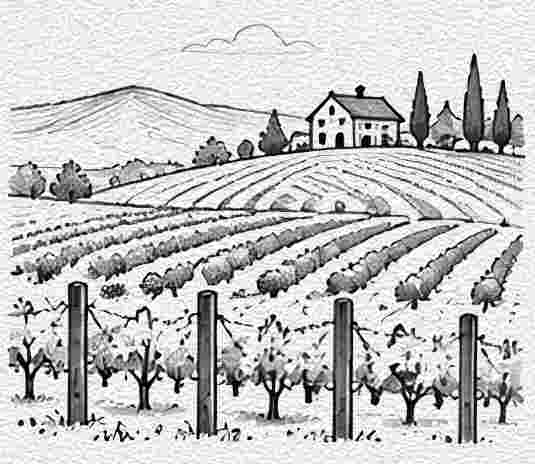
Create a landscape of vineyard rows stretching over gently rolling hills. Draw a few curved lines following the contours of the land, then add evenly spaced vine posts and simplified plant shapes. Make the foreground rows wider and the distant rows smaller.
Use perspective to guide the spacing between rows. Lighter, thinner lines in the distance will make the vineyard appear expansive.
4. Desert Canyon with Layered Rock Walls
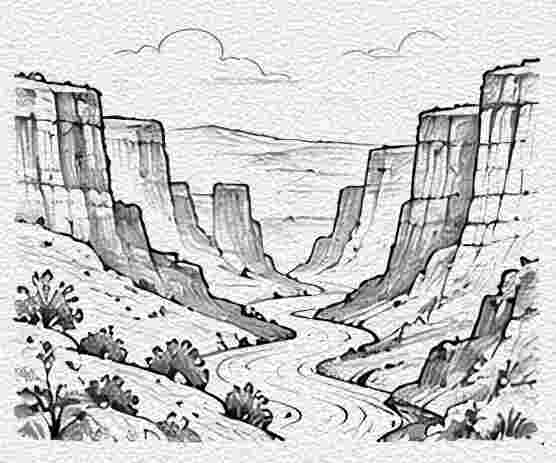
Draw a dramatic canyon with tall rock walls and a narrow opening toward the horizon. Start with large, angular shapes, then add horizontal bands and cracks to suggest layers of stone. Keep the deepest shadows inside the canyon and the distant opening lighter.
Use directional hatching that follows the rock formations. This helps describe the shape of the cliffs without outlining every surface.
5. Sand Dunes with Wind-Swept Patterns
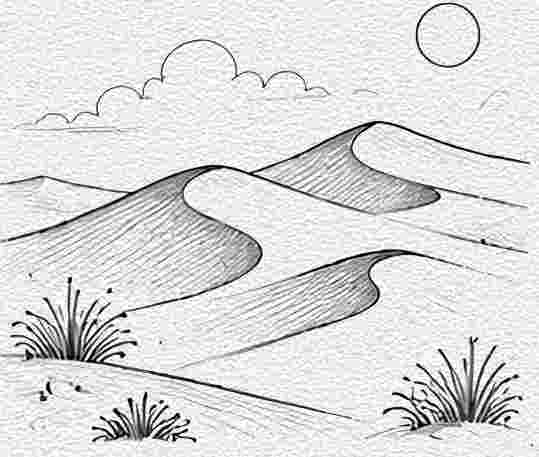
Sketch a series of smooth sand dunes with curved ridgelines that overlap one another. Add a few fine lines following the direction of the wind and darker shading on the sides facing away from the light.
Blend only selected areas softly. Leaving clean white paper along the dune crests creates natural-looking highlights.
6. Old Stone Arch Bridge
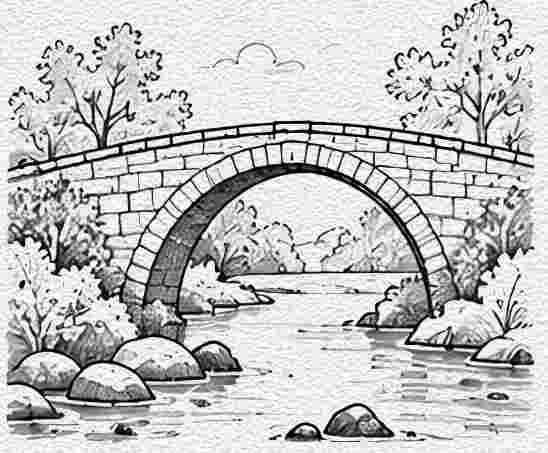
Draw an old stone bridge with a large arch spanning a rocky gap. Begin with the arch opening, then build the bridge deck and surrounding stonework around it. Use small, irregular rectangles to suggest individual stones, with darker shading beneath the arch.
Keep the stones near the foreground more defined and simplify the details farther away to avoid making the drawing too busy.
7. Waterfall Over Stepped Rock Ledges
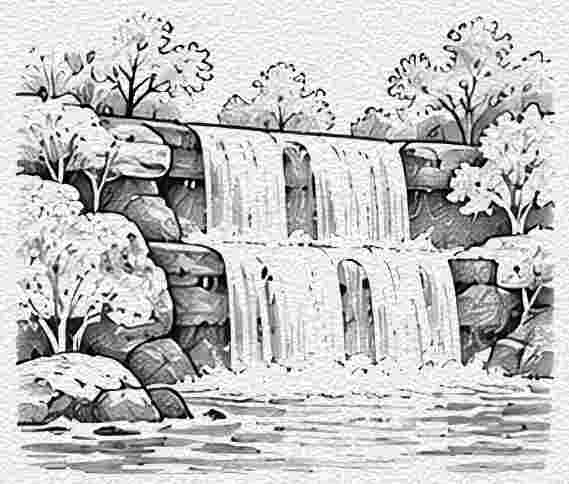
Create a waterfall flowing over several broad rock ledges into a small pool. Use vertical lines to suggest falling water and irregular horizontal shapes for the rock shelves. Leave narrow white streaks in the waterfall and shade the surrounding rocks more heavily.
Avoid outlining every strand of water. A combination of white gaps, soft shading, and a few vertical strokes will look more natural.
8. Old Railway Tracks Through Open Countryside
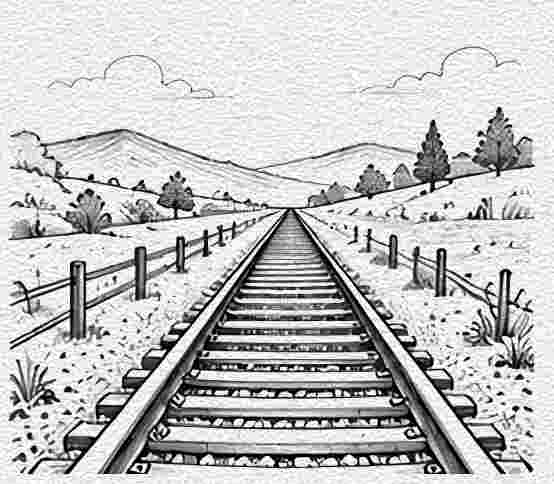
Sketch railway tracks running toward a distant vanishing point through open countryside. Draw the two rails converging in the distance, then add evenly spaced sleepers that become smaller farther away. Keep the surrounding land simple with low grassy banks and a distant horizon.
Establish the vanishing point before drawing the rails. This makes the perspective easier and gives the scene a strong sense of depth.
9. City Skyline from a Rooftop
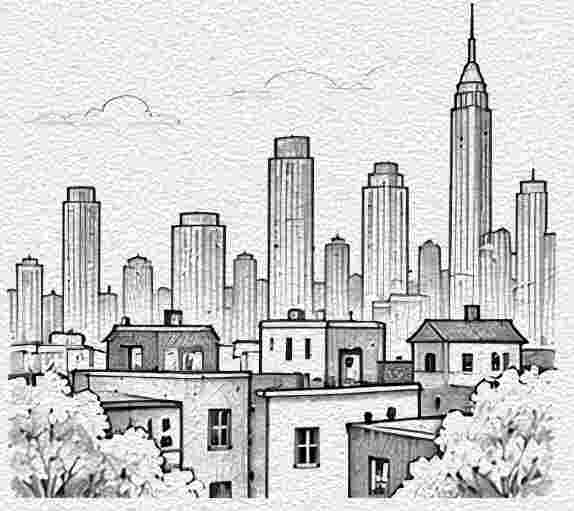
Draw a view across a city skyline from a slightly elevated rooftop. Begin with a row of overlapping building silhouettes, varying their heights and widths. Add a few windows and rooftop structures in the foreground while keeping the distant buildings lighter and less detailed.
Use straight construction lines for the buildings and reserve your darkest shading for a few foreground structures. This keeps the skyline readable.
10. Traditional Windmill on Rolling Hills
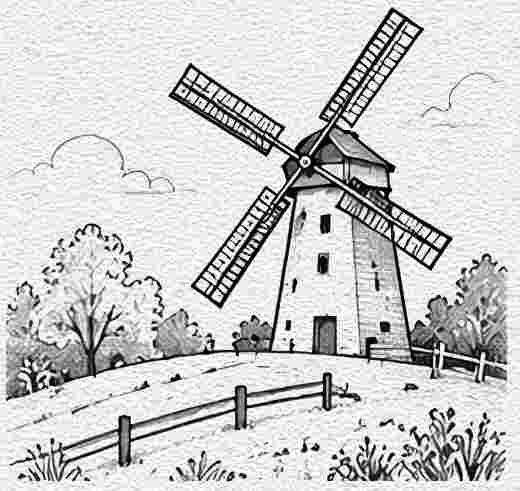
Sketch a traditional windmill standing on a gentle hillside. Use a simple tower shape and four large blades arranged around the central hub. Add curved contours to the surrounding hills and a few small marks for grass or stonework.
Lightly mark the center of the windmill before placing the blades. This helps keep the structure balanced and symmetrical.
11. Vineyard Estate with Terraced Slopes
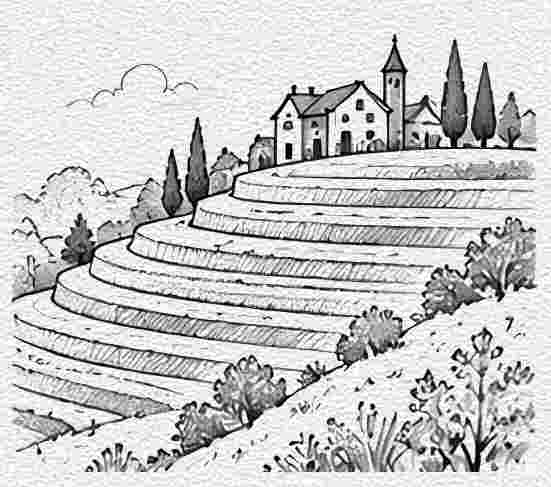
Draw a hillside estate with rows of terraced land stepping down the slope. Add a small distant building only as a secondary detail, keeping the terraces as the main focus. Use repeated horizontal lines and narrow retaining edges to establish the rhythm of the landscape.
Make the terrace lines follow the hill’s shape rather than keeping every line perfectly straight. This creates a more believable terrain.
12. Public Park with a Circular Gazebo
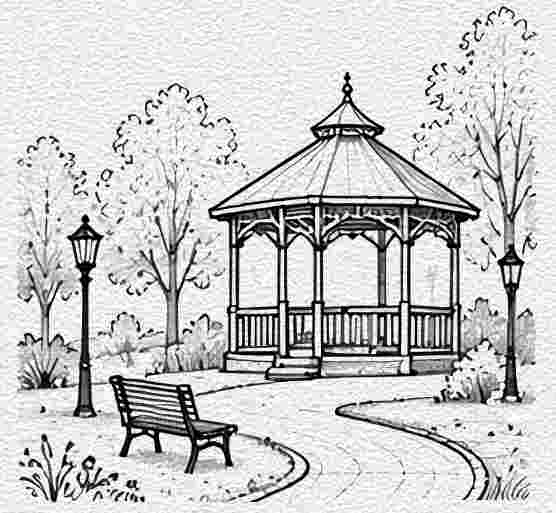
Create a quiet public park featuring a small open-sided gazebo surrounded by open lawn and curved walking paths. Start with the gazebo’s roof and supporting posts, then use sweeping lines to establish the paths and boundaries of the lawn.
Draw the gazebo lightly first and check the proportions before adding roof details. Keep the surrounding landscape simple so the structure remains the focal point.
13. Harbor Filled with Sailboats
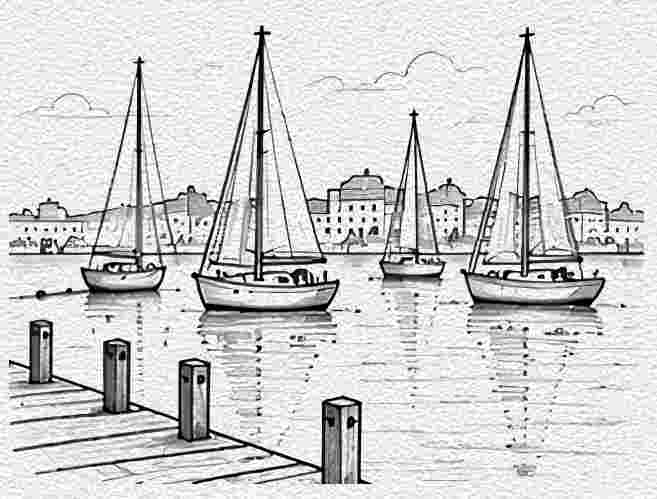
Sketch a peaceful harbor with several sailboats moored near the shore. Use simple triangular sails, narrow hulls, and thin mast lines. Add a few horizontal marks across the water and a distant shoreline with small building silhouettes.
Vary the size of the boats and leave more space between those in the foreground. Use lighter marks for distant boats to suggest atmospheric perspective.
14. Stone Staircase Climbing a Hillside
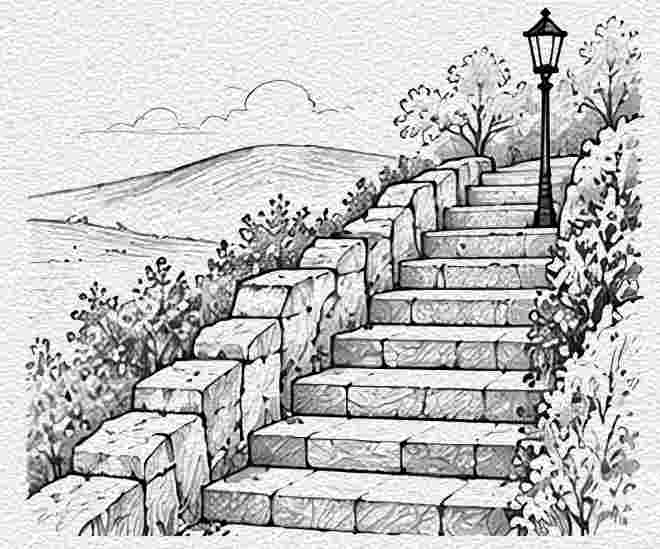
Draw an old stone staircase winding upward along a steep hillside. Make the steps wider near the bottom and progressively smaller as they rise into the distance. Add irregular stones along the edges and simple contour lines to show the surrounding slope.
Focus on the changing size and spacing of the steps. These perspective cues are more important than drawing every stone perfectly.
15. Rocky Sea Stack Rising from the Ocean
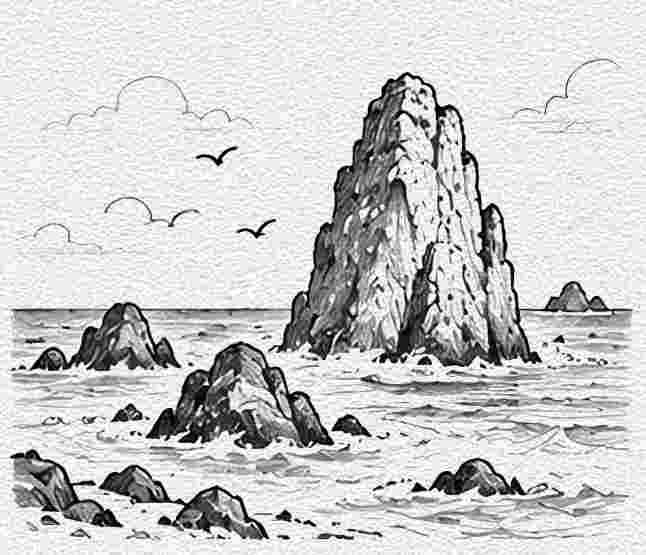
Create a dramatic seascape featuring a tall isolated rock formation rising from the water. Draw the main rock as an irregular vertical silhouette, then add cracks and ledges along its surface. Use curved horizontal strokes around its base to suggest waves and sea movement.
Contrast the dark rock with lighter water and sky. This makes the sea stack stand out clearly without requiring a complicated background.
16. Old Watermill Beside a Millrace
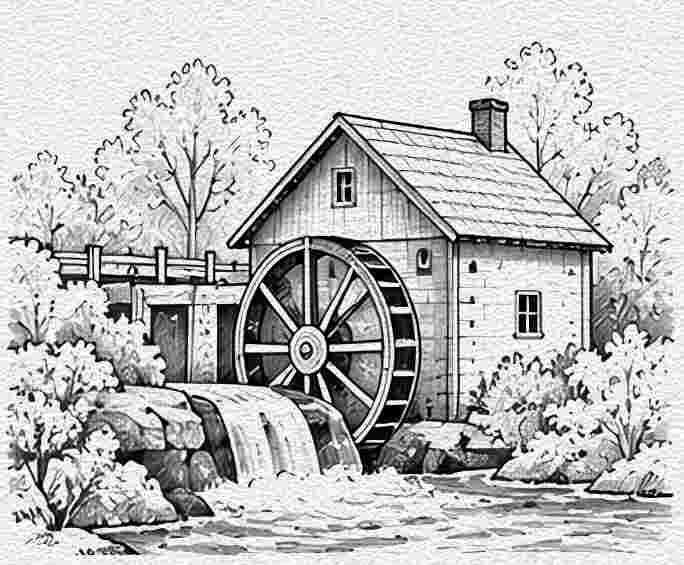
Sketch a traditional watermill with a visible wooden waterwheel beside a narrow millrace. Use simple rectangular forms for the building, circular construction lines for the wheel, and parallel strokes for the moving water. Keep the surrounding ground and distant structures understated.
Build the wheel from a circle, a central hub, and evenly spaced spokes. Add darker shading where the wheel meets the building to give it depth.
17. Autumn Fairground Ferris Wheel
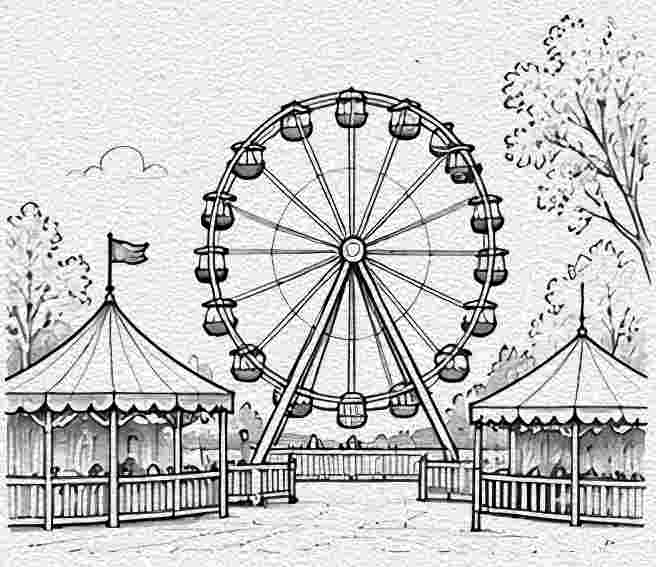
Draw a Ferris wheel rising above a simple fairground skyline. Start with a large circle, mark the central hub, and divide the wheel into evenly spaced sections. Add small passenger cabins and a low horizon with simplified booths or distant structures.
Use a light construction circle and a few guide lines to space the cabins evenly. Keep the background minimal so the wheel remains the main subject.
Autumn landscape drawing is a great way to practice perspective, shading, and composition while exploring a variety of scenery. From coastal cliffs and desert canyons to old bridges and harbor views, these 17 ideas offer fresh subjects beyond the familiar forest and lake scenes.
Choose one landscape that interests you, sketch its largest shapes first, and build the details gradually. With regular practice, you’ll develop stronger drawing skills and a sketchbook full of distinctive seasonal landscapes.