

Autumn is the perfect season to slow down, open your sketchbook, and enjoy the relaxing process of watercolor painting. Soft washes, muted colors, and gentle brushstrokes can turn everyday objects into beautiful seasonal artwork.
These 15 cozy autumn watercolor ideas for beginners focus on fresh subjects that feel warm, peaceful, and creative without repeating the familiar pumpkins, autumn leaves, woodland landscapes, birds, or Thanksgiving food illustrations found in many seasonal art collections.
From knitted mittens and rainy windows to charming bookshop scenes and handmade quilts, these watercolor painting ideas are perfect for anyone who enjoys cozy aesthetics, simple compositions, and creative hobbies. You can paint them in a sketchbook, create small seasonal art prints, or use them as inspiration for handmade cards.
1. Cozy Knitted Mittens

Paint a pair of soft knitted mittens in muted burgundy, dusty blue, or warm cream. Begin with simple mitten silhouettes, then use short, repeated brushstrokes to suggest the ribbed cuffs and knitted texture.
Keep the background mostly white so the mittens remain the focal point. A few soft shadows underneath will give them a little depth without requiring detailed shading.
Let the first color layer dry before adding darker lines to suggest the knit pattern. This helps prevent the details from spreading into the base wash.
2. Rainy-Day Umbrella

Create a watercolor illustration of a large open umbrella with curved panels in muted teal, mustard, or dusty rose. Use a simple curved handle and a few loose brushstrokes to suggest raindrops around it.
You can paint the umbrella against a pale gray-blue wash to create a calm, rainy autumn atmosphere. Avoid making the background too dark; the umbrella should remain the clearest shape.
Paint each umbrella panel with slightly different values of the same color to suggest folds and dimension.
3. Soft Wool Sweater
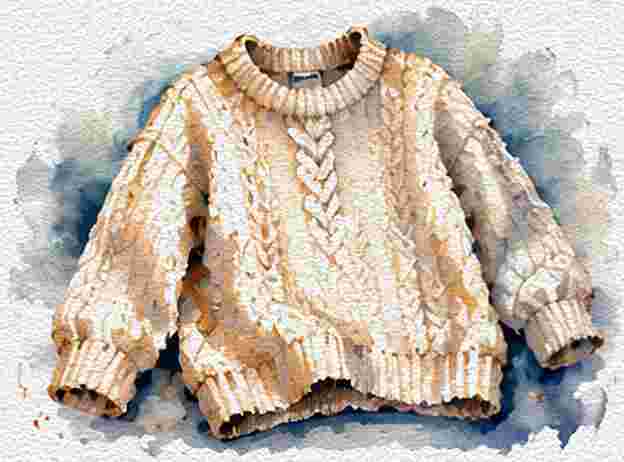
Paint an oversized wool sweater with relaxed sleeves, a rounded neckline, and ribbed cuffs. Choose a cozy color palette such as oatmeal, terracotta, muted plum, or sage green.
Start with a light outline, fill the sweater with a smooth wash, and add simple darker strokes around the neckline and cuffs once the paint dries.
Leave tiny areas of lighter paper visible to suggest soft highlights on the fabric.
4. Vintage Bicycle
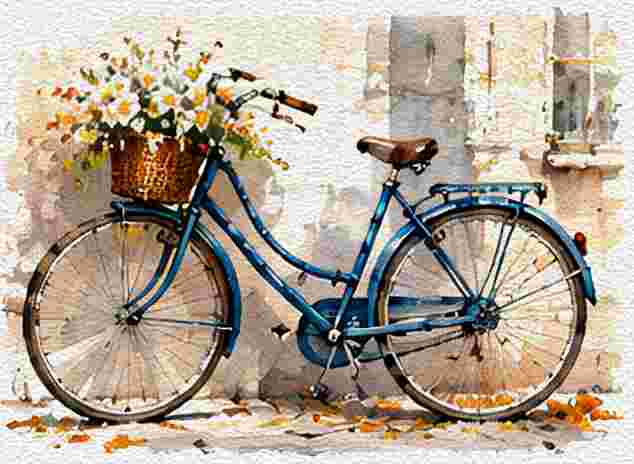
Paint a classic bicycle with a curved frame, thin wheels, and a simple saddle. Use a limited palette of faded blue, warm brown, and charcoal gray to create a slightly nostalgic autumn feel.
Keep the background minimal, perhaps with a pale wash suggesting an old wall or quiet street. Focus on the overall silhouette instead of painting every mechanical detail.
Use a fine brush for the frame and wheel spokes. Sketch the circles lightly in pencil first to help keep the wheels balanced.
5. Charming Little Bookshop

Create a cozy street-side bookshop with a large front window, a simple door, and a small sign above the entrance. Paint the building in muted brick red, cream, or dusty blue, then suggest books and shelves through the window using small blocks of color.
The scene can be simplified into a few clear shapes rather than a detailed architectural painting.
Paint the larger wall and window areas first. Once dry, use a smaller brush to add the door frame, shelf lines, and sign.
6. Rainy Window with Water Droplets
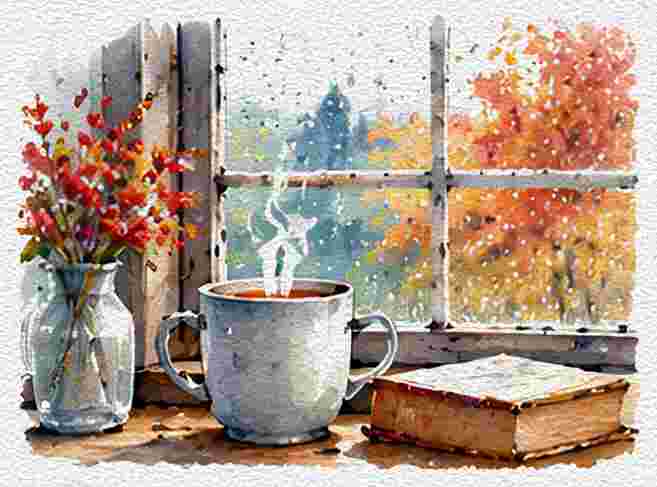
Paint a close-up view of a window covered with raindrops. Begin with a pale blue-gray wash, leaving a few small areas of white paper untouched to represent reflections. Add thin vertical streaks and scattered droplets once the background is dry.
You can suggest a blurred outdoor scene beyond the glass using soft, indistinct shapes rather than a recognizable landscape.
Try lifting small highlights with a clean, damp brush while the paint is still slightly wet. This creates soft, natural-looking reflections.
7. Warm Wool Scarf

Paint a long wool scarf arranged in loose folds, with fringed ends and a simple striped pattern. Use complementary autumn-inspired colors such as rust and cream, or dusty blue and warm beige.
Let the scarf curve across the page rather than lying perfectly straight. This creates a more relaxed composition and gives you an opportunity to practice fabric folds.
Paint the base color first, allow it to dry, and then add stripes with a smaller brush for cleaner edges.
8. Stack of Old Books

Create a small stack of vintage books with worn covers, visible page edges, and simple decorative spine details. Use faded green, burgundy, ochre, and brown for an aged, cozy look.
Vary the width and height of the books so the stack feels natural. Keep the lettering on the spines minimal; simple lines and small decorative marks are enough.
Use a slightly darker wash along the lower edges of the covers to suggest shadows and give each book a three-dimensional appearance.
9. Patchwork Quilt
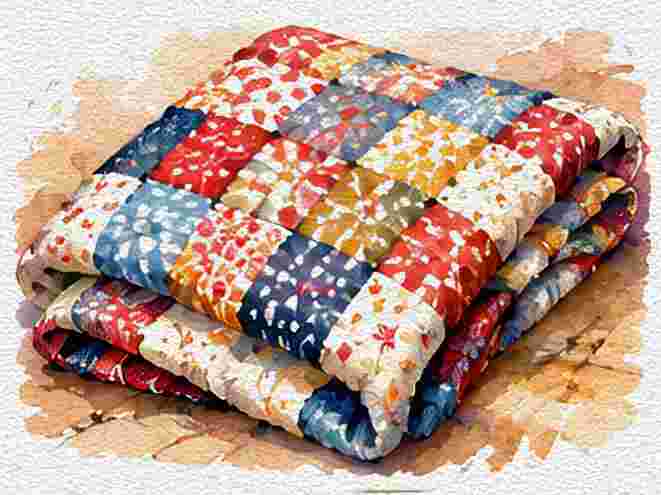
Paint a folded patchwork quilt made from simple square and rectangular fabric pieces. Fill each section with a different pattern, such as checks, stripes, dots, or small geometric shapes.
Choose a coordinated palette of cream, dusty rose, muted blue, and warm brown to keep the quilt visually harmonious.
Draw the patchwork grid lightly in pencil before painting. Let adjacent sections dry before adding neighboring colors to avoid unwanted color bleeding.
10. Knitting Basket with Yarn

Illustrate a small basket filled with balls of yarn and a pair of knitting needles. Use rounded shapes for the yarn, curved lines to suggest winding strands, and simple woven marks on the basket.
This subject is ideal for practicing texture while keeping the overall composition compact and beginner-friendly.
Paint each ball of yarn with a light base wash, then add a few curved darker lines after drying to suggest the strands without outlining every detail.
11. Ceramic Teapot on a Side Table
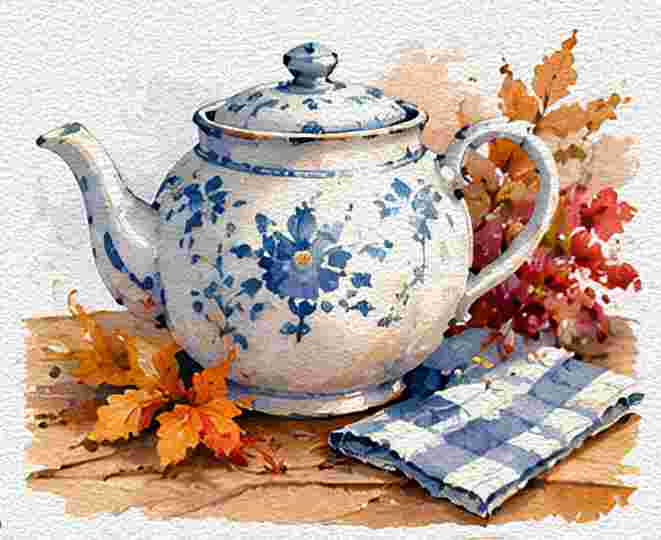
Paint a simple ceramic teapot with a rounded body, curved handle, short spout, and fitted lid. Choose a muted glaze color such as dusty blue, warm cream, or soft sage.
Add a gentle shadow underneath to anchor the teapot. You can include a small decorative pattern on the body, but keep the background simple.
Leave a narrow strip of white paper along one side of the teapot to create the impression of reflected light on a glazed surface.
12. Cozy Reading Nook
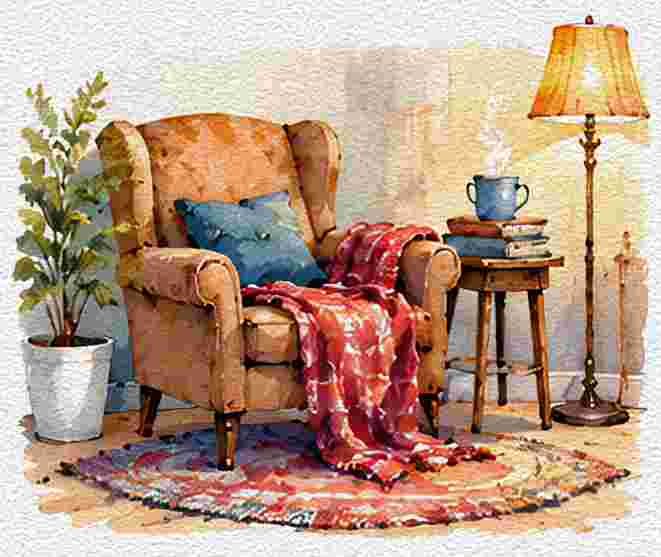
Create a small reading corner featuring a floor cushion, a folded throw, and a short stack of books. Use soft, simplified shapes instead of a full room interior.
A muted palette of warm neutrals, dusty rose, and deep blue can help create a peaceful autumn mood. Keep the arrangement slightly asymmetrical so it feels inviting rather than rigid.
Paint the largest shapes first and use soft edges for fabric. Reserve crisp edges for the books and other objects that need more definition.
13. Vintage Streetlamp at Dusk
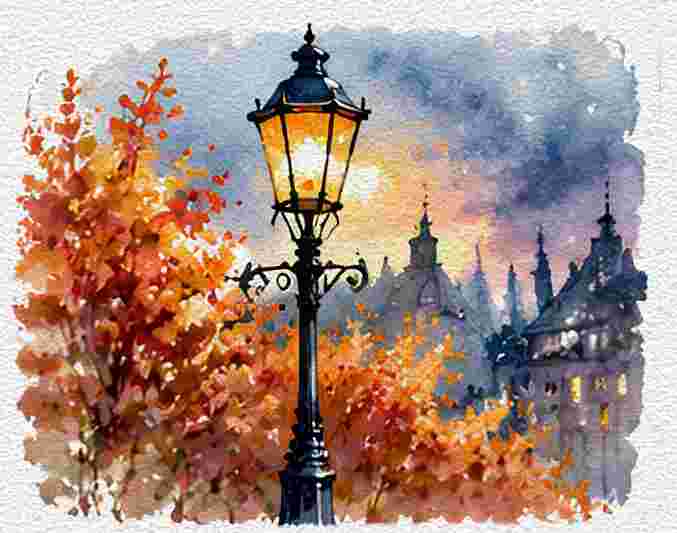
Paint an old-fashioned streetlamp with a simple metal frame and a softly glowing light. Use deep blue-gray and muted violet for the surrounding dusk atmosphere, with a warm golden wash inside the lamp.
Keep the silhouette clear against the background. A few loose horizontal brushstrokes can suggest the evening sky without adding a complex landscape.
Paint the darker background first, leaving the lamp area lighter. Add the golden glow with transparent layers after the surrounding wash has dried.
14. Handmade Ceramic Vase with Dried Flowers
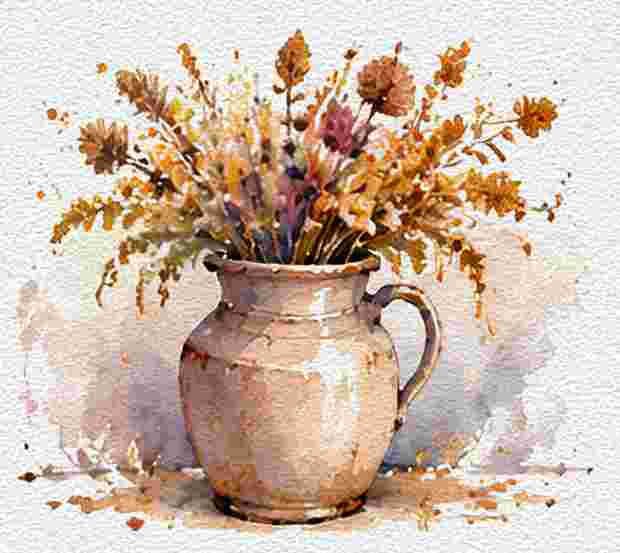
Paint a simple handmade vase with an irregular rounded shape and a narrow opening. Add a small arrangement of dried flower stems, delicate seed heads, or fine branching forms.
Use soft terracotta, muted lavender, cream, and dusty brown to create a calm, natural palette. Keep the stems loose and slightly uneven for a relaxed botanical appearance.
Paint the vase with a smooth wash and use a smaller brush for the thin stems. A few darker marks along one side can suggest the texture of handmade pottery.
15. Cozy Cottage Mailbox

Create a charming freestanding mailbox beside a simple wooden post. Give it a rounded or gently sloping top, a small front door, and a little raised flag. Use muted navy, faded red, cream, or forest green.
Add a subtle ground shadow and a few simple marks on the post to suggest weathered wood. Keep the surrounding area mostly blank so the mailbox remains the main subject.
Use a light base wash, then add darker edges and small hardware details once the paint is dry. This is a useful exercise in painting clean edges and simple shadows.
Cozy autumn watercolor painting doesn’t need to involve complicated landscapes or detailed illustrations. Everyday objects, handmade textures, and peaceful little scenes can be just as satisfying to paint.
These 15 cozy autumn watercolor ideas offer a fresh collection of subjects for beginners to explore, from soft knitted fabrics and vintage objects to intimate reading spaces and glowing evening scenes.
Choose one idea, begin with a light wash, and build your painting slowly. With practice, you can develop a collection of autumn artwork that feels warm, personal, and uniquely yours.