
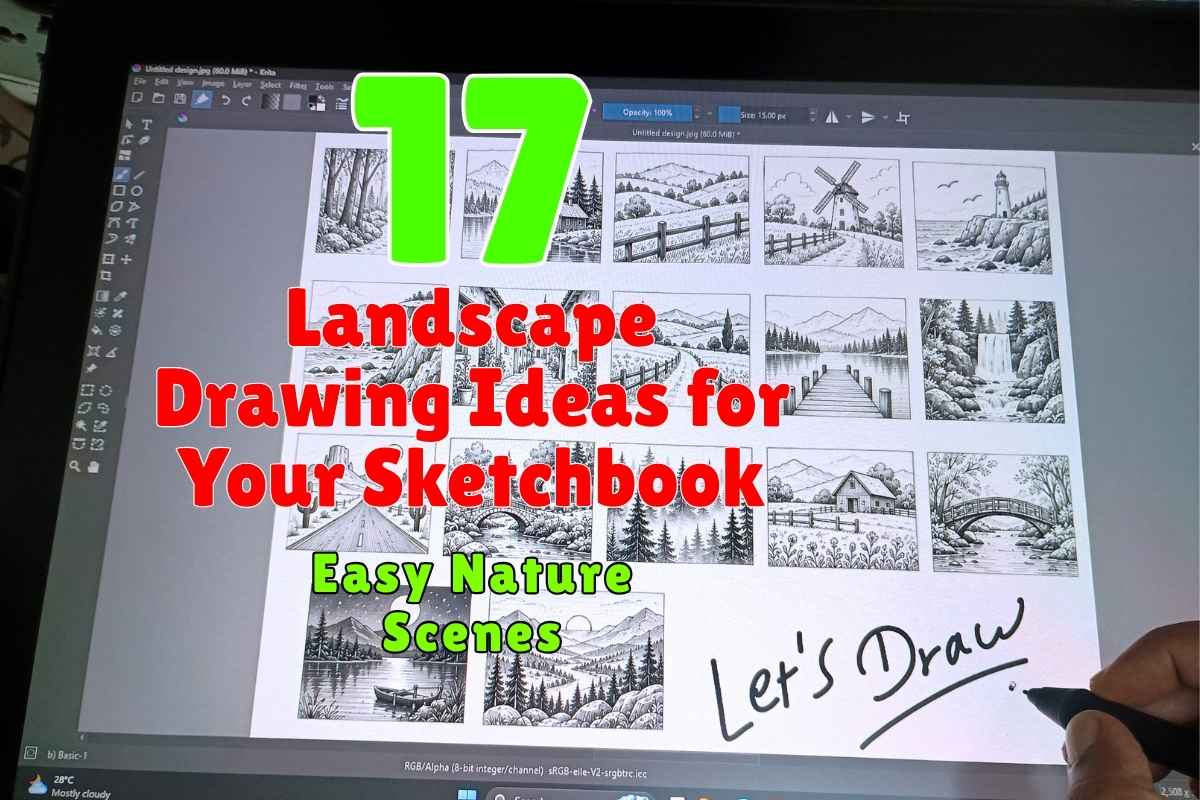
A landscape is more than a collection of trees, hills, water, and buildings. It is a chance to practice composition, perspective, depth, light, texture, and atmosphere while creating a scene that feels like a real place.
Landscape drawings are especially useful for a sketchbook because you can simplify a scene into a few major shapes and gradually add details. A good starting point is to establish the horizon and large forms first, then work from the foreground toward the background.
The 17 ideas below include peaceful countryside scenes, cozy buildings, coastal views, forests, waterways, and atmospheric landscapes. You don’t need to make them photorealistic—focus on the overall composition and choose the level of detail that feels comfortable for your drawing style.
1. Quiet Forest Path
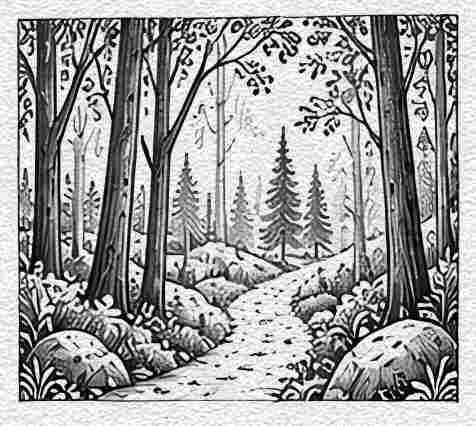
Draw a narrow path winding through a peaceful forest. Start by placing the path so it becomes narrower as it moves toward the distance, creating an immediate sense of depth.
Add a few large tree trunks in the foreground and gradually make the distant trees smaller and lighter. Keep the foreground darker and more detailed while simplifying the background to make the path feel deeper.
2. Lakeside Cabin
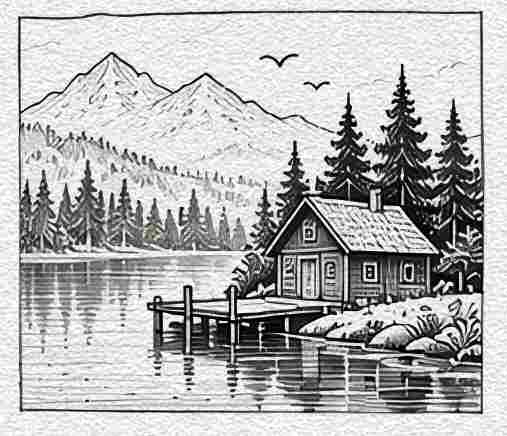
Create a small cabin beside a calm lake, with the building acting as the main focal point. Begin with the cabin’s basic geometric shapes before adding the roof, windows, door, and a small dock.
Use horizontal pencil strokes to suggest the lake and lightly reflect the cabin or surrounding trees in the water. Keep the reflection softer and less detailed than the actual objects.
3. Rolling Hills with a Fence
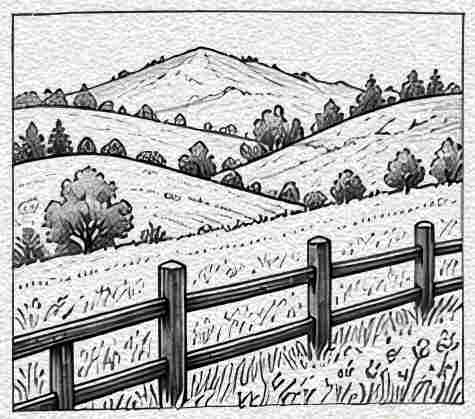
Draw several layers of gently rolling hills with a simple wooden fence crossing the foreground. Start with the largest hill shapes and overlap them to establish depth.
Make the fence posts larger and darker near the viewer, then gradually reduce their size as they move into the distance. This gives you an easy way to practice perspective without drawing a complicated scene.
4. Countryside Windmill
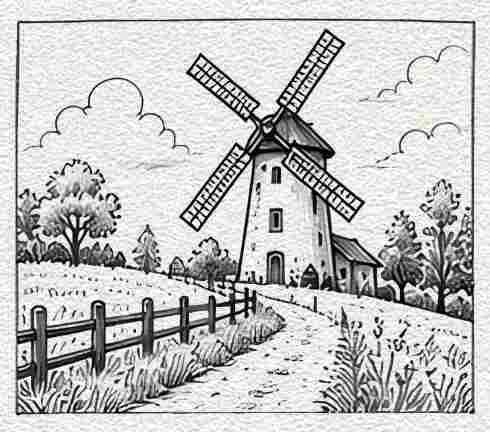
Place a traditional windmill in an open countryside setting. Start with the windmill’s tower and four blades, then build the surrounding fields and a winding path.
Keep the windmill relatively detailed because it is the focal point. The distant fields and trees can be simplified into soft shapes so the eye naturally moves toward the structure.
5. Coastal Lighthouse
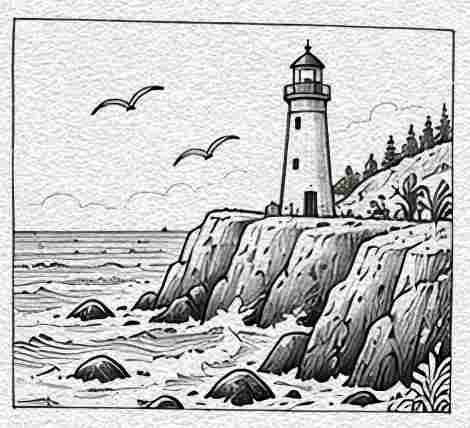
Draw a lighthouse standing on a rocky coastal cliff with the ocean stretching toward the horizon. Begin with the horizon line and the main lighthouse silhouette before adding the cliff and surrounding rocks.
Use darker lines for the foreground rocks and lighthouse while keeping the distant ocean relatively light. A few small birds in the sky can add scale without making the composition busy.
6. Seaside Cliff
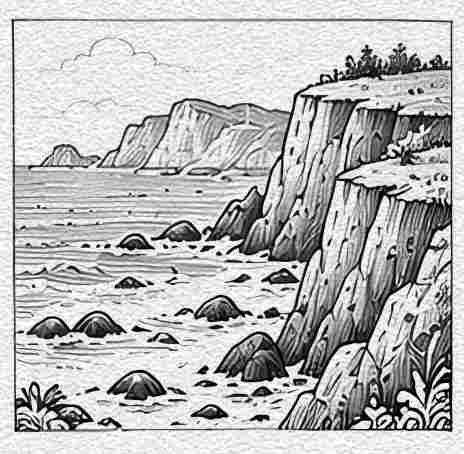
Create a landscape showing a tall cliff beside an open stretch of ocean. Focus on the contrast between the solid, textured cliff and the smooth horizontal water.
Use irregular lines and short strokes to describe the rocky surface. Keep the ocean simpler, using a few horizontal lines to suggest waves and distance.
7. Small Village Street
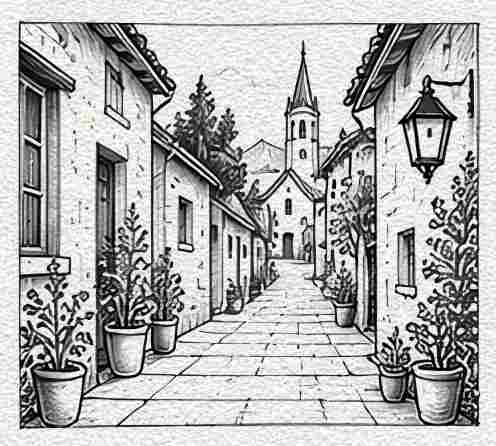
Draw a narrow village street surrounded by small houses. Use the buildings to create a strong perspective line leading toward a distant focal point.
Start with the road and major building shapes, then add simple windows, doors, lamps, and plants. Don’t detail every building equally—more detail in the foreground will make the street feel deeper.
8. Country Road Through Fields
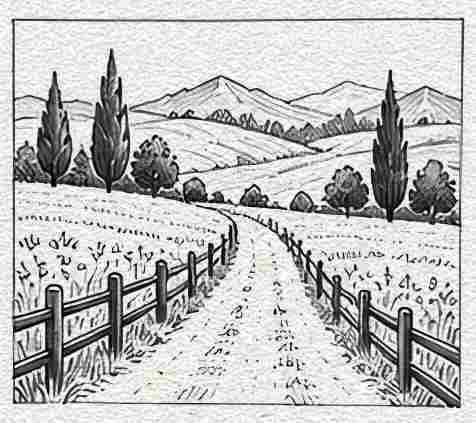
Sketch a quiet road disappearing through open fields. The road should gradually become narrower as it approaches the horizon.
Add simple field boundaries, grasses, and a few distant trees. Keep the horizon relatively open so the landscape feels spacious rather than crowded.
9. Wooden Pier on a Lake
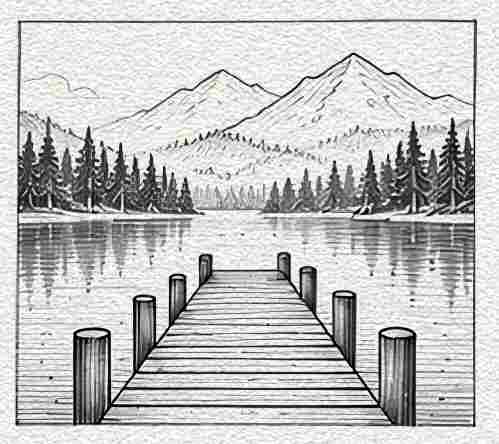
Draw a wooden pier extending from the foreground into a calm lake. The repeated boards and posts make this an excellent perspective exercise.
Start with the central direction of the pier, then place the boards so they become progressively smaller toward the distance. Add subtle horizontal reflections underneath and keep them softer than the actual pier.
10. Waterfall in a Forest
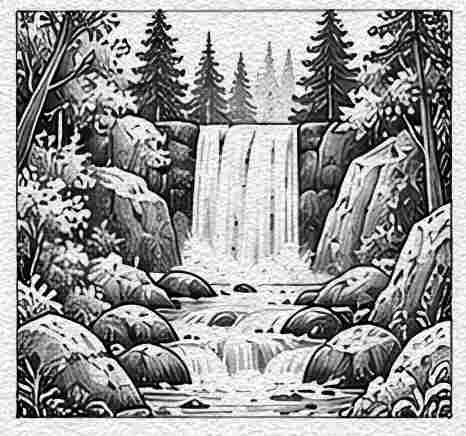
Create a waterfall surrounded by rocks and woodland. Start with the main vertical flow of the water and then build the rocks around it.
Use broken, flowing pencil strokes for the water rather than drawing one solid outline. Darker rocks and foliage around the waterfall will help the lighter water become the focal point.
11. Desert Road
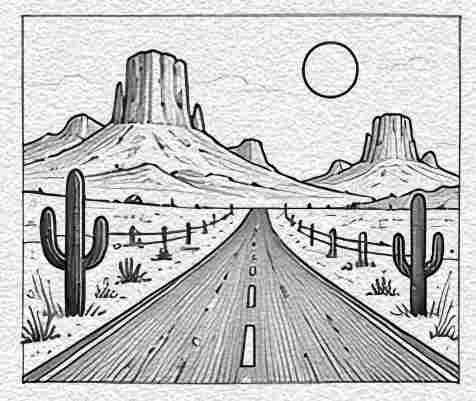
Draw a long road passing through a quiet desert landscape with distant rock formations. Begin with the road as two lines that converge toward the horizon.
Add a few simple cacti and rocky shapes in the foreground for scale. Keep the distant formations lighter and less detailed to create the feeling of a wide-open desert.
12. Cottage by a Stream
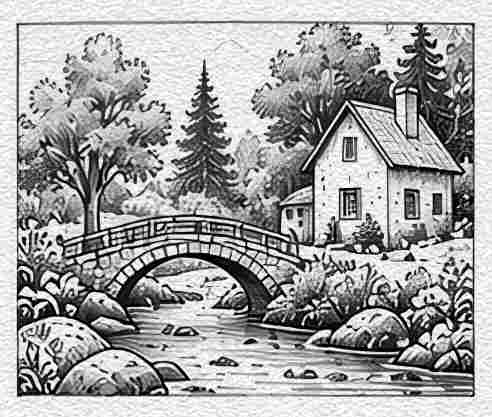
Create a cozy cottage beside a narrow stream. Start with the cottage as the focal point, then add the stream leading toward the foreground.
Use curved lines to suggest flowing water and irregular shapes for stones along the bank. A small bridge, trees, or shrubs can frame the cottage without overwhelming the main composition.
13. Foggy Forest
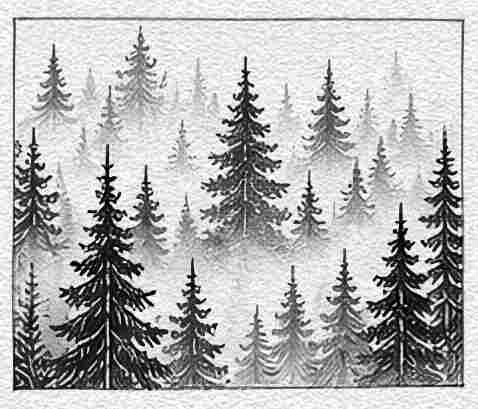
For a more atmospheric landscape, draw layers of trees disappearing into fog. Start with a few strong tree silhouettes in the foreground.
As the trees move farther away, make them lighter, thinner, and less detailed. This gradual reduction in contrast creates atmospheric depth and is a useful exercise for understanding value.
14. Meadow with a Barn
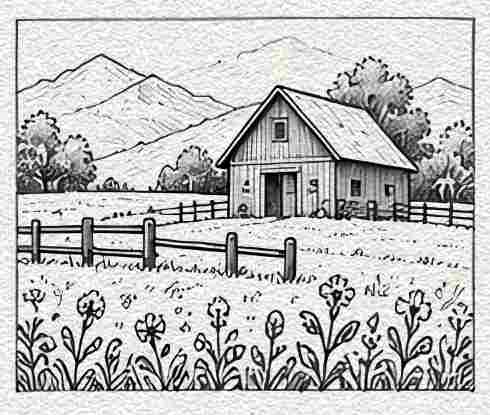
Draw a simple barn surrounded by an open meadow. Place the barn slightly away from the center so the surrounding landscape has room to breathe.
Use loose grass strokes in the foreground and keep the distant hills simple. A fence line leading toward the barn can help connect the foreground and background.
15. Riverside Footbridge
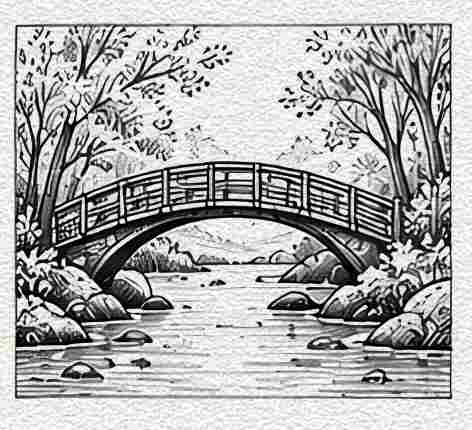
Create a small footbridge crossing a peaceful river. Start with the bridge’s overall arch or structure, then use the riverbanks to establish perspective.
Add stones, grasses, and a few trees around the water. Keep the bridge darker and more defined than the distant scenery so it becomes the visual anchor.
16. Moonlit Lake
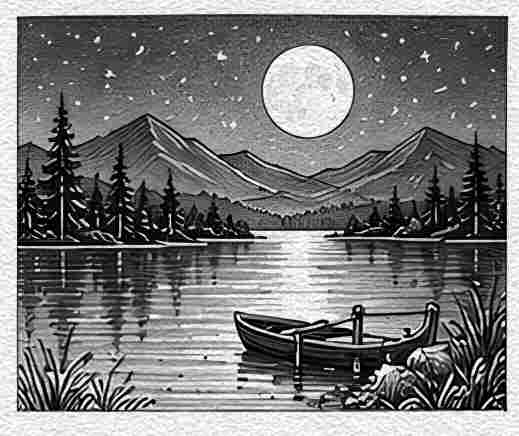
Draw a peaceful lake beneath a large moon. Begin with the horizon and the main silhouette of the distant hills or trees.
Use stronger graphite values in the sky and foreground while leaving a lighter area around the moon. Add a narrow reflection across the water to connect the moon visually with the lake.
17. Sunset Over a Valley
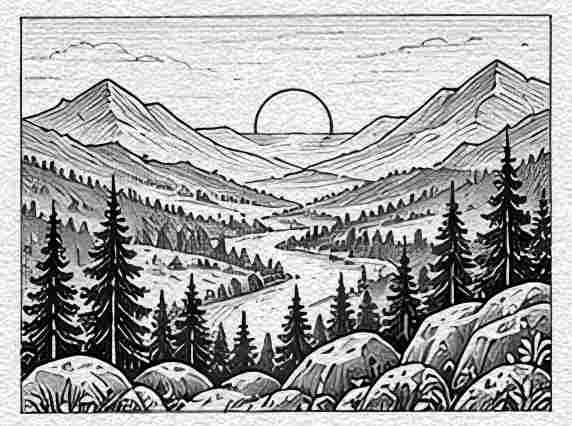
Finish your collection with a wide valley landscape beneath a setting sun. Start with several overlapping hill shapes and place the sun near the horizon.
Use progressively lighter lines for the distant hills and stronger details for rocks, trees, or grasses in the foreground. This layered approach creates depth while keeping the composition simple enough for a sketchbook page.
Landscape drawing gives you an almost endless supply of ideas for filling a sketchbook. You can draw a quiet countryside road one day, a coastal scene the next, and then experiment with fog, moonlight, or sunset to see how dramatically atmosphere changes the same basic landscape.
When starting a new scene, don’t try to draw every detail immediately. First identify the horizon, largest shapes, focal point, and foreground-to-background layers. Then gradually add the details that actually help tell the story of the scene. Thumbnail sketches are also useful for testing different viewpoints and compositions before committing to a larger drawing.
Most importantly, let your sketchbook be a place to experiment. Try the same landscape with different viewpoints, levels of detail, or lighting conditions. You don’t need every drawing to be perfect—the practice of observing shapes, depth, light, and atmosphere is what makes your landscape drawing skills stronger over time.