
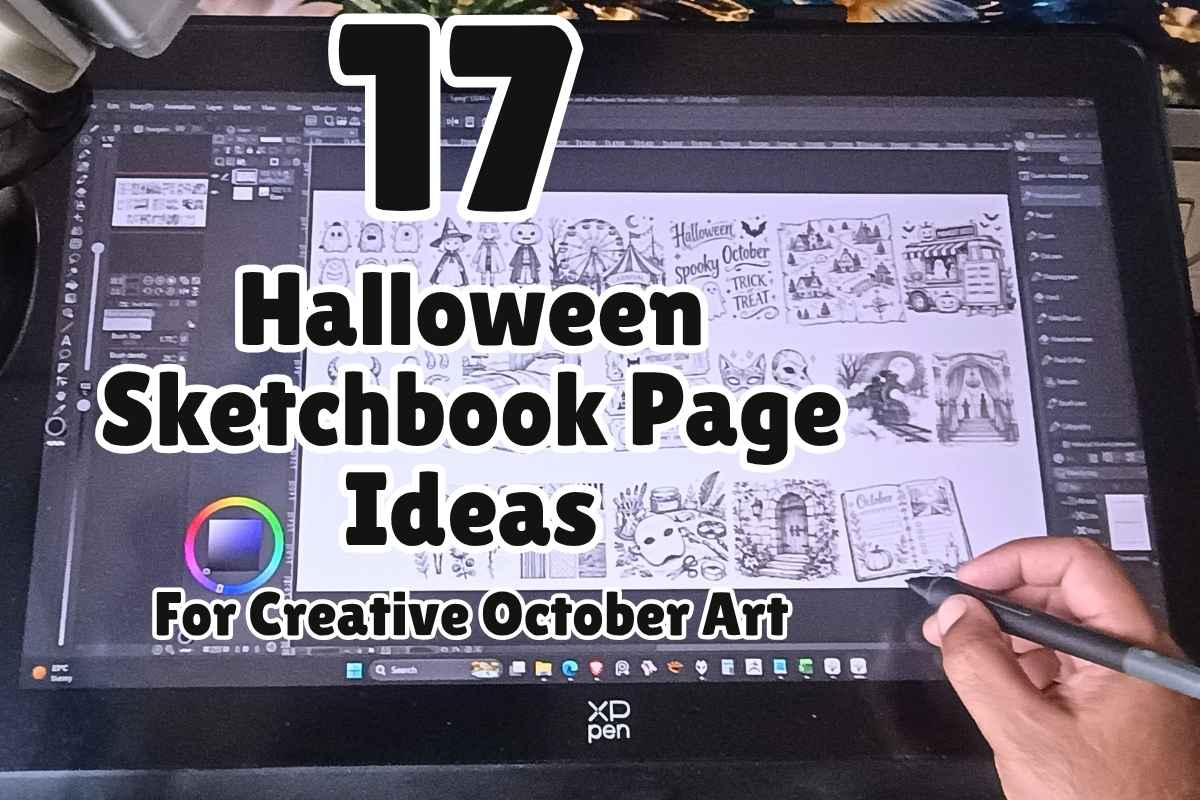
Halloween is the perfect time to fill your sketchbook with imaginative characters, mysterious scenes, playful designs, and creative October-themed illustrations. Whether you enjoy cute Halloween art, spooky ink drawings, or aesthetic journal layouts, a themed sketchbook page gives you the freedom to experiment with different styles without creating a complete, highly detailed artwork.
These 17 Halloween sketchbook page ideas combine creative drawing prompts, original character designs, decorative layouts, and atmospheric scenes. Each idea includes what to draw and how to approach the composition, making it easier for beginners to start drawing while giving experienced artists room to add their own details.
For a cohesive October sketchbook, try a palette of burnt orange, muted purple, deep burgundy, olive green, and black. Vintage-inspired details, dramatic shadows, and gothic accents can also give your pages a stylish seasonal look.
1. A Creepy-Cute Monster Mood Tracker
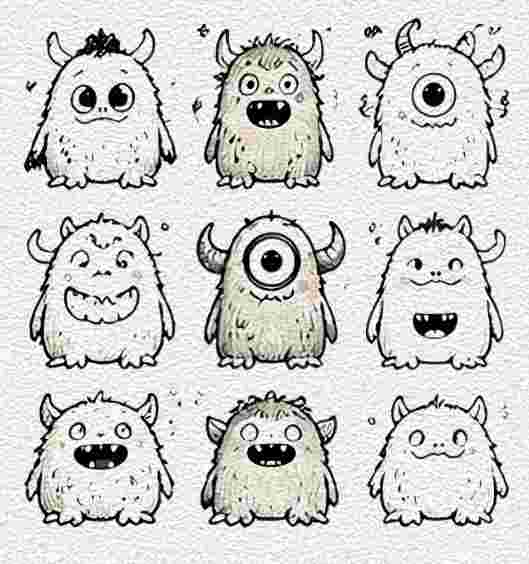
Create a sketchbook page filled with small, original monsters, each showing a different emotion. Draw one happy monster, one sleepy creature, one nervous character, one grumpy face, and one excited little monster.
Start by drawing simple rounded, triangular, or bean-shaped bodies. Change the eyes, eyebrows, mouths, and posture to communicate each emotion. Give every monster a different feature, such as tiny horns, uneven ears, or unusual teeth, so the designs feel distinct.
Arrange the characters in a neat grid and leave a little space beneath each one for a mood label. Use black fineliner outlines and just two or three accent colors to keep the page organized and easy to finish.
2. An Original Halloween Costume Design Sheet
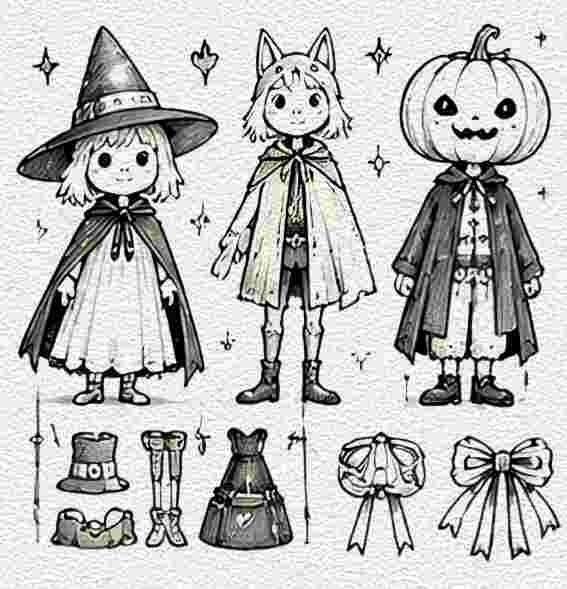
Turn your sketchbook into a miniature costume-design studio. Draw four or six original costume concepts, such as a moon explorer, a vintage ringmaster, a mysterious masked traveler, or a fantasy creature wearing oversized accessories.
Begin with simple body silhouettes instead of detailed anatomy. Sketch the overall shape of each outfit, then add the defining elements: collars, capes, boots, belts, masks, or unusual sleeves. Keep the poses simple so you can focus on the clothing design.
Add small accessory studies beside the main figures, such as a decorative mask or a patterned cape. Use pencil first, then strengthen the best lines with ink. This page is especially useful if you enjoy character design and want to develop your own Halloween-inspired style.
3. A Haunted Carnival at Midnight
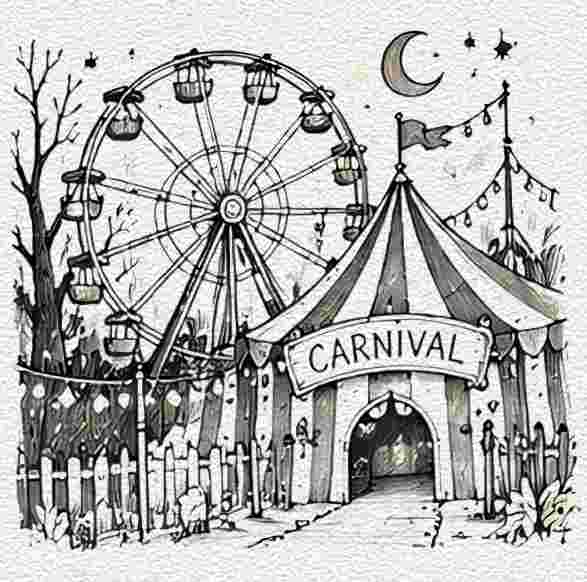
Draw an abandoned carnival with a crooked ticket booth, striped awnings, a distant Ferris wheel, and a row of dimly lit stalls. Instead of filling the page with lots of small objects, focus on the atmosphere of an empty amusement park after dark.
Begin with a horizon line and block in the largest shapes. Place the Ferris wheel in the background, then use converging lines to lead the viewer’s eye toward the central path. Add a few hanging banners, scattered leaves, and tiny lights to create depth.
Use heavier ink around the foreground structures and lighter lines for distant details. Leave some areas of the sky mostly empty so the scene feels quiet and mysterious rather than overcrowded.
4. A Collection of Halloween Lettering Styles
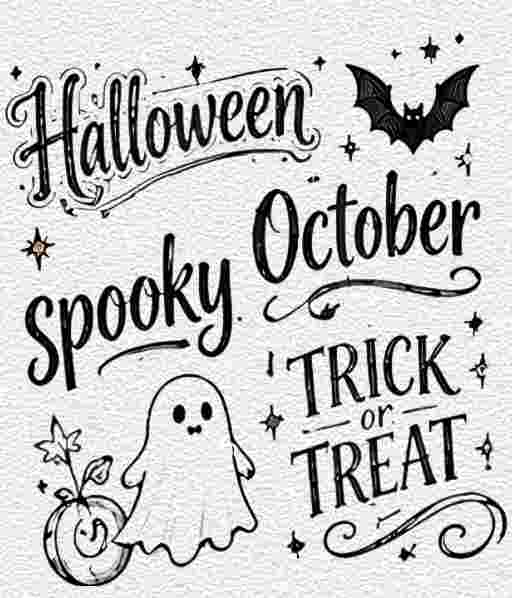
Make typography the main subject of your sketchbook page. Experiment with decorative lettering inspired by vintage Halloween posters, old book covers, mysterious invitations, and playful October signage.
Choose a few short words or phrases, such as “Midnight,” “Beware,” “October,” and “Strange Things.” Sketch each one in a different style: tall condensed letters, rounded bubble lettering, uneven hand-drawn capitals, or elegant serif lettering.
Build the letters lightly in pencil before adding outlines, shadows, or small decorative flourishes. Keep the lettering readable, and avoid decorating every empty space. A combination of bold typography and generous negative space creates a more polished result.
5. A Mysterious Halloween Neighborhood Map
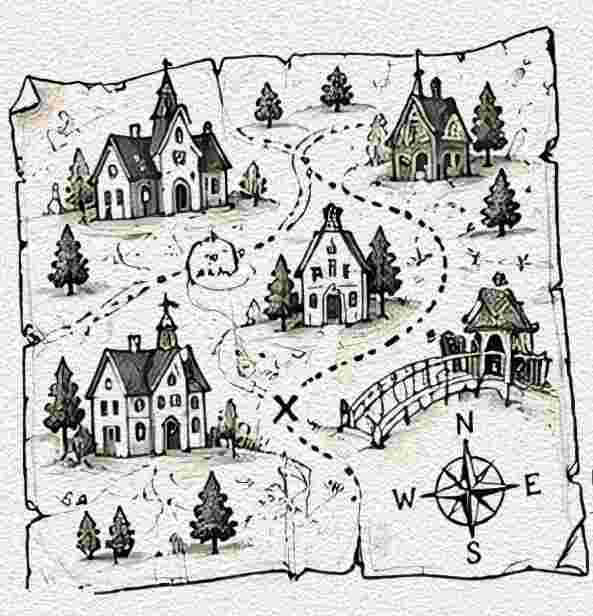
Draw a fictional neighborhood where every street leads to an unusual destination. Include a crooked alley, a closed-down theater, a strange mansion, a forgotten train station, and a narrow bridge crossing a dark stream.
Start by lightly drawing the main roads and dividing the page into several small locations. Use simple top-down shapes for buildings, then add tiny windows, fences, streetlights, and winding paths. Give each location a short, imaginative name written in your own lettering style.
Use dashed lines to suggest walking routes and small arrows to guide the eye around the page. A limited palette of gray, dark purple, and burnt orange will make the map feel like an old illustrated adventure guide.
6. A Spooky Food Truck Illustration
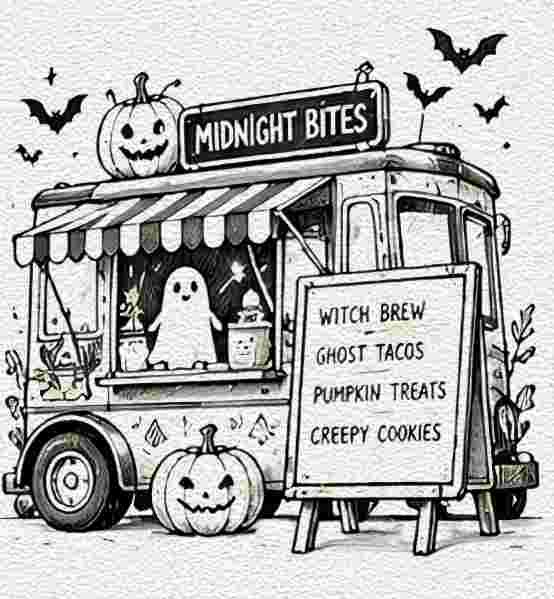
Create a Halloween-themed food truck with a playful design, striped serving awning, decorative wheels, and a large menu board. You could imagine a truck that serves mysterious midnight snacks or unusual treats to visiting monsters.
Begin with a long rectangular body and two circular wheels. Add the windshield, serving window, counter, and roof before drawing smaller decorative details. Use perspective lines to make the vehicle look three-dimensional without making the drawing too complicated.
Personalize the truck with a fictional name and a few tiny menu illustrations. Keep the lettering simple and readable, and use contrasting colors to make the vehicle stand out against a pale background.
7. A Monster Anatomy Study Page
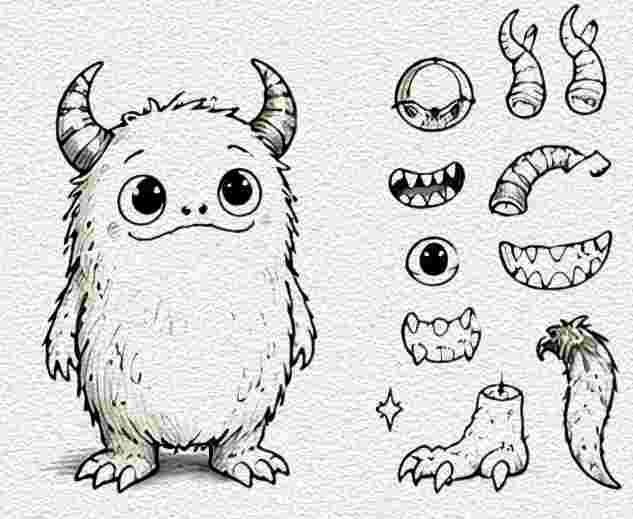
Turn your sketchbook into a playful creature-design workbook. Instead of drawing finished characters, explore how imaginary monsters might be constructed from different shapes and body parts.
Divide the page into small studies of unusual eyes, mouths, hands, feet, horns, tails, and ears. Combine these features in unexpected ways—for example, a creature with tiny feet and enormous hands, or one with a long neck and a compact body.
Use basic geometric shapes to build each feature, then add overlapping lines to show volume. Include a few construction lines rather than erasing everything; they help the page look like a genuine artist’s study sheet.
8. A Monster Hiding Under the Bed
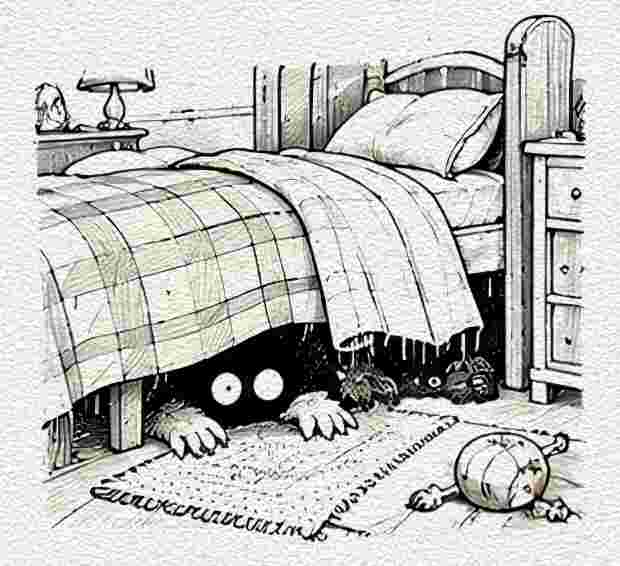
Draw a bedroom scene in which a curious creature peeks out from underneath a bed. The scene can be spooky without being frightening, especially if the monster looks more curious than threatening.
Start with the bed as the largest shape, using simple perspective to show the mattress, blanket, and legs. Keep the underside dark and place the creature’s eyes, hands, or silhouette within that shadow. Add a bedside rug, slippers, or a fallen pillow to make the room feel lived-in.
Use thicker outlines in the dark space and lighter lines around the bedding. A small lamp or moonlit window can provide a contrasting area of light and make the focal point clearer.
9. A Vintage Halloween Ticket Collection
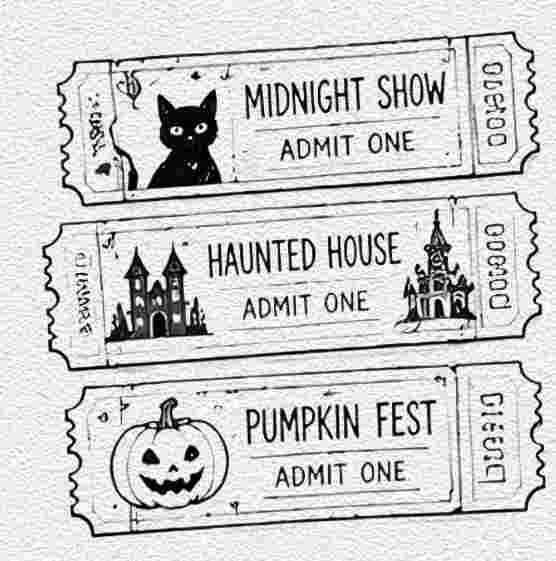
Design a page of imaginary admission tickets for a mysterious Halloween event. Each ticket could have a different shape, decorative border, number, and vintage-inspired lettering.
Draw several horizontal and vertical rectangles, then experiment with scalloped edges, perforated lines, corner ornaments, and small symbols. Give each ticket its own title, such as “Midnight Show,” “After Dark,” or “One Night Only.”
Use pencil to plan the layout before outlining the borders with a fineliner. Add muted burgundy, mustard, charcoal, or faded green for an aged-paper effect. This idea works well as a graphic-design exercise as well as a seasonal sketchbook page.
10. A Halloween Mask Design Collection
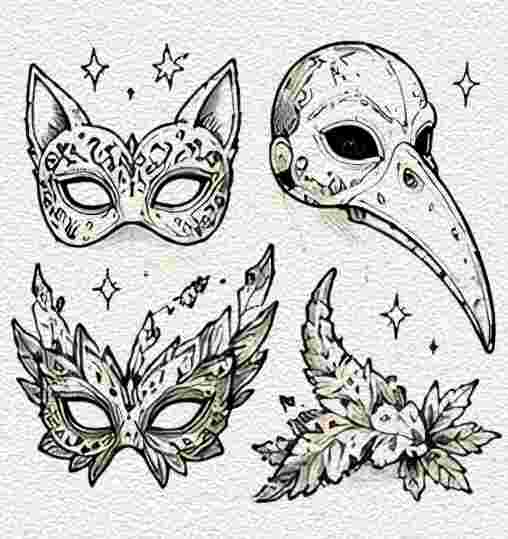
Fill a page with original mask concepts inspired by masquerades, folklore, fantasy, and gothic fashion. Try a long-nosed mask, an asymmetrical half-face design, a feathered mask, or a geometric mask with decorative cutouts.
Begin with the basic outline of each mask, then establish the eye openings and centerline. Build the decoration around the structure rather than adding random details. Curves, repeated shapes, and symmetrical patterns can make the designs look intentional.
You can draw all the masks from the front to keep the page consistent. Add small swatches beside each design to test possible color combinations before choosing your favorite.
11. A Phantom Train Through the Fog
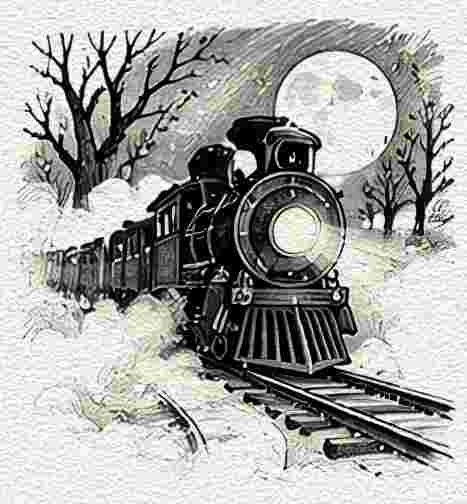
Illustrate an old-fashioned train moving through a mysterious landscape at night. Focus on the locomotive, its glowing windows, the curved railway tracks, and layers of fog drifting across the scene.
Sketch the locomotive using simple cylinders and rectangular forms. Draw the circular front, headlamp, wheels, and connecting rods, then reduce the amount of detail as the train recedes into the distance.
Use horizontal strokes for the fog and darker shading around the lower part of the train. Keep the sky relatively simple, allowing the silhouette and headlamp to become the main focal points.
12. A Gothic Ballroom Invitation
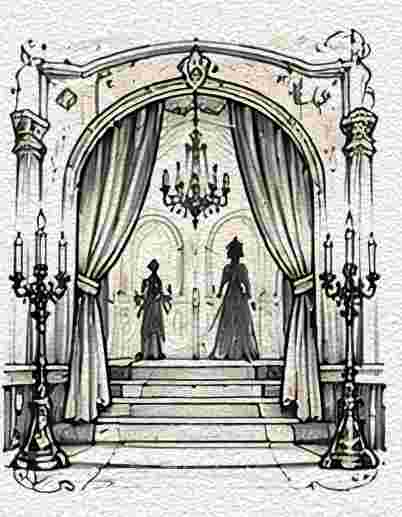
Design a sketchbook page inspired by an invitation to a mysterious midnight ball. The main drawing can feature an ornate doorway, elegant decorative borders, hanging fabric, and a small chandelier.
Begin with a centered layout. Draw the doorway or architectural frame first, then build symmetrical details around it. Add delicate curls, repeated motifs, and a few dramatic shadows to create a vintage gothic atmosphere.
Leave a clean central area for decorative lettering. If you want to include a fictional event name, make it part of the illustration rather than filling the entire page with text. Fine-line ink and a restrained palette will help the design feel elegant.
13. A Spooky Botanical Specimen Journal
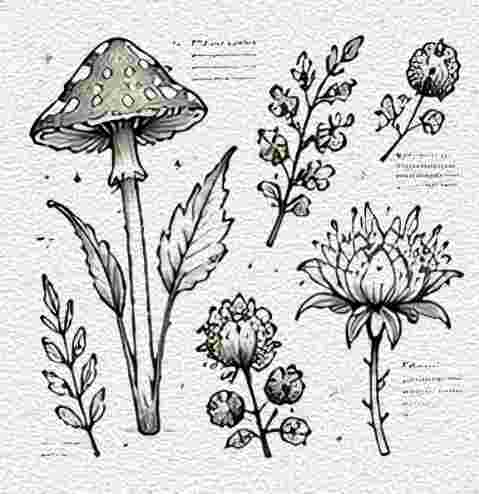
Create a page that resembles an old naturalist’s notebook documenting imaginary Halloween plants. Invent unusual leaves, curled tendrils, spiky seed pods, strange roots, and flowers with unexpected shapes.
Draw each specimen separately, leaving enough room for its silhouette to remain clear. Begin with the main stem or central axis, then attach leaves and smaller structures. Vary the leaf shapes and directions so the page doesn’t look like the same plant repeated several times.
Add small handwritten labels with fictional botanical names and tiny observation notes. Use thin ink lines, light crosshatching, and a few muted green or brown accents for an antique field-journal look.
14. A Halloween Pattern and Texture Sampler
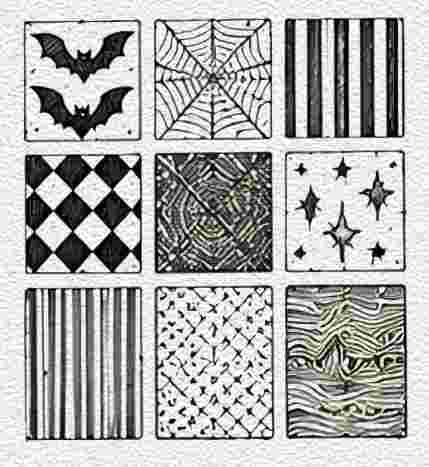
Use a full sketchbook page to experiment with patterns that could decorate Halloween artwork. Instead of drawing complete scenes, create small squares filled with different textures and repeating designs.
Try checkerboards, wavy stripes, diamond patterns, scalloped borders, irregular dots, tangled line patterns, and decorative crosshatching. Give each square a different combination of line weight and spacing.
Work in pencil first to establish the boundaries of each sample. Then use a ruler where necessary and freehand the more organic patterns. Keep the spacing reasonably consistent within each square, but allow the individual samples to have different personalities.
This is an easy way to build a personal reference library for future Halloween drawings, lettering, costume designs, and journal spreads.
15. A Halloween Mask-Making Workshop
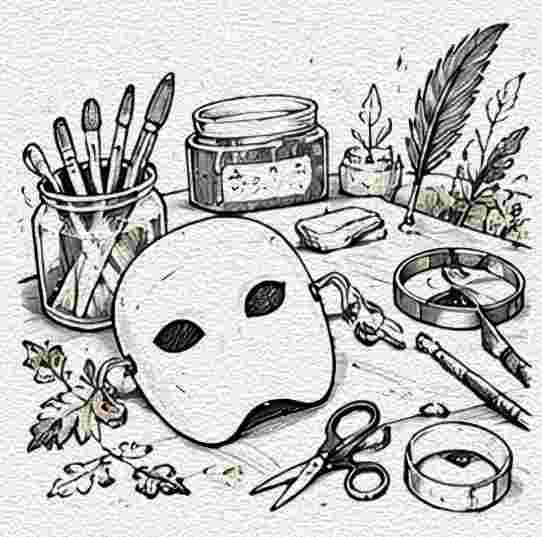
Draw an imaginative artist’s workspace dedicated to designing and making Halloween masks. Include a worktable, a few blank mask shapes, paper patterns, scissors, ribbons, decorative feathers, and small containers of craft materials.
Begin with the largest forms: the tabletop and the arrangement of tools. Use overlapping objects to create depth, and vary the angles of the paper templates so the workspace feels natural instead of rigid.
Add details gradually, focusing on a few recognizable tools rather than drawing every item in full detail. Use short directional strokes to suggest paper, fabric, and other materials. Leave a little empty space around the edges to avoid making the scene too busy.
16. A Secret Door in an Ancient Wall
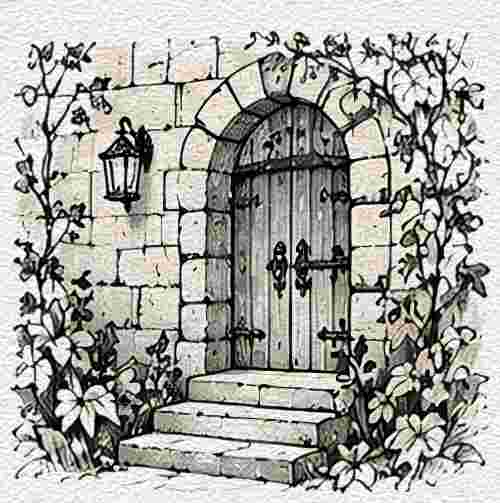
Illustrate a hidden doorway concealed inside a massive stone wall. The door might have unusual geometric carvings, an old metal handle, narrow steps, or a tiny light shining through its edges.
Start with the overall wall shape and establish the door as the central focal point. Use uneven stone blocks to create an aged surface, varying their sizes to avoid a repetitive brick pattern. Add cracks, chipped corners, and a few creeping vines for extra character.
Use perspective on the steps and doorframe to give the scene depth. Shade the area around the entrance more heavily so the doorway appears mysterious without needing lots of additional objects.
17. A Personal October Art Journal Spread
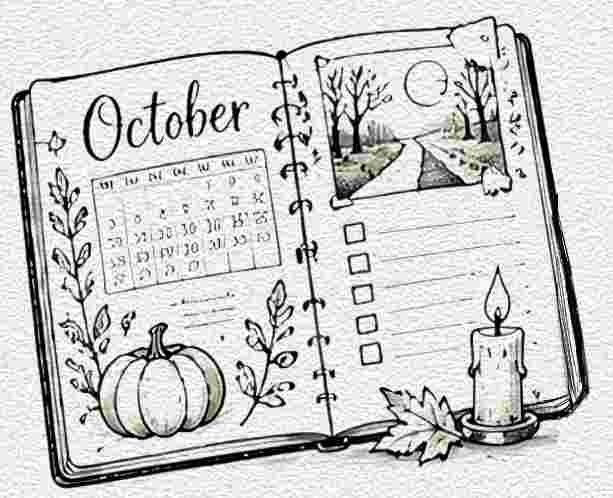
Finish your collection with a Halloween-themed October journal spread that combines drawing, lettering, small decorative elements, and space for personal notes.
Divide the page into a few clear sections: an October heading, a small illustration, a creative checklist, and a box for favorite seasonal moments. Decorate the margins with simple geometric accents, tiny stars, or hand-drawn borders rather than repeating the same Halloween characters throughout the page.
Lightly sketch the layout before adding the lettering. Use two or three consistent colors and leave enough blank space for the page to remain readable. You can use the finished spread to record drawing progress, creative goals, or ideas you want to explore throughout October.
These 17 Halloween sketchbook page ideas offer a variety of ways to explore creative October art, from original monster designs and vintage lettering to mysterious locations and imaginative journal layouts. You don’t need advanced drawing skills or a large collection of art supplies to get started; a pencil, an eraser, and a fineliner are enough for many of these projects.
Choose one idea that interests you, sketch the main shapes, and gradually add the details that make it unique. Whether you prefer cute illustrations, gothic-inspired designs, or experimental ink drawings, your sketchbook can become a personal collection of seasonal artwork that reflects your style.
Most importantly, enjoy the process of experimenting. A few small drawings completed consistently throughout October can become a more rewarding creative project than waiting for one perfect finished illustration.