
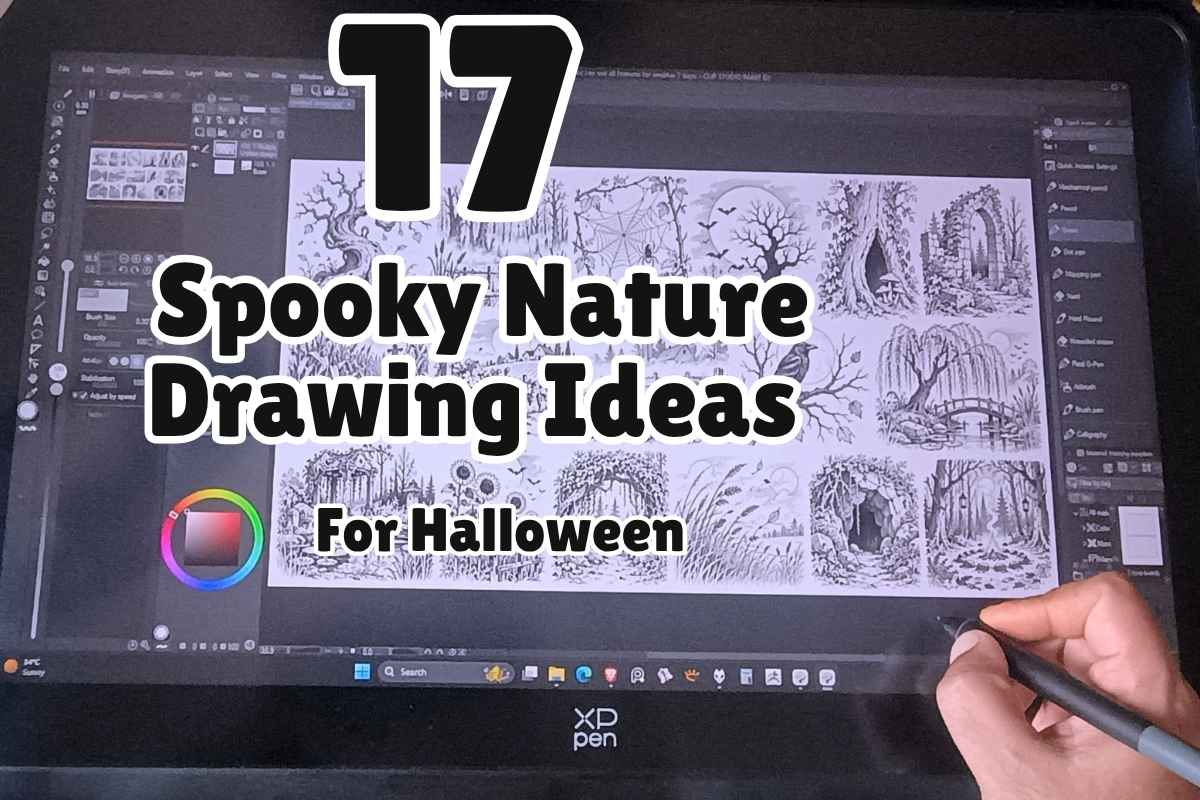
Halloween is a great excuse to take your Sketchbook outdoors—or simply bring the feeling of the outdoors onto the page. Twisted trees, foggy wetlands, moonlit fields, tangled vines, old stonework, and mysterious forest spaces can create a spooky atmosphere without needing complicated characters or elaborate details.
This collection focuses on nature drawing ideas with a Halloween mood, rather than repeating the usual pumpkins, ghosts, and monsters. Each idea can be approached with simple shapes and gradually developed with texture, shadows, foliage, and atmospheric details, making the projects suitable for beginners as well as artists looking for new seasonal Sketchbook inspiration.
1. Twisted Halloween Tree
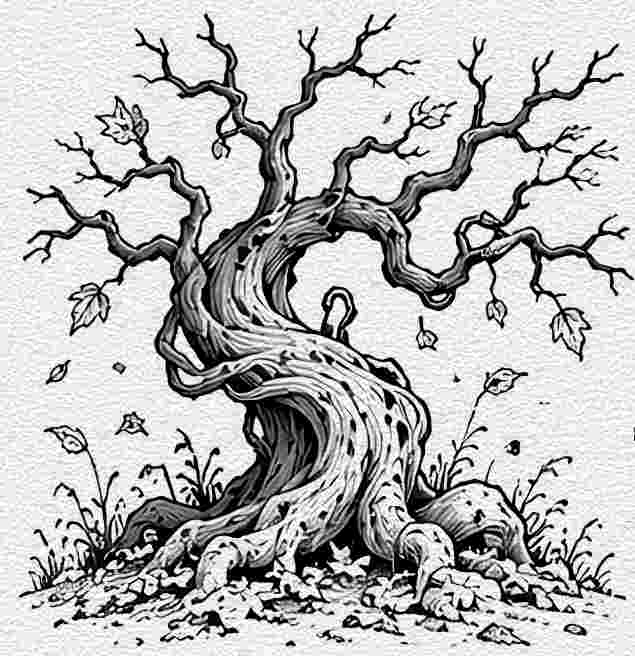
Draw an old, dramatically twisted tree with a crooked trunk and branches spreading in unusual directions.
Start with the trunk as one large irregular shape rather than two perfectly straight lines. Let the branches become progressively thinner as they extend outward. Add a few sparse leaves and exposed roots around the base.
For the Halloween atmosphere, place a small moon or cloudy sky behind the tree.
Focus on the silhouette first. Once the overall shape feels interesting, add bark texture using short curved lines. Keep some areas of the trunk lighter so the tree doesn’t become a solid black shape.
2. Foggy Swamp at Midnight
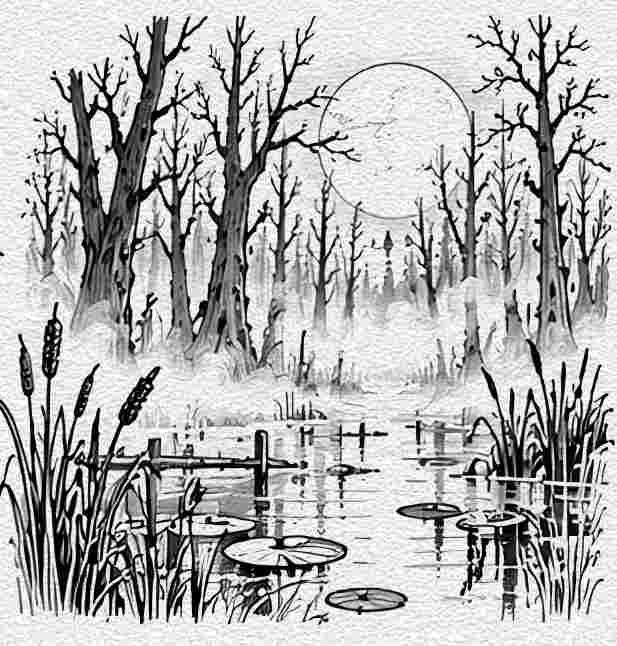
Create a quiet swamp scene with still water, reeds, distant trees, and a layer of fog.
Begin with a low horizon and a simple irregular shoreline. Add groups of tall reeds around the edges rather than drawing every individual plant. Behind them, use faint tree silhouettes disappearing into the mist.
A small moon reflected in the water can become the focal point.
Keep the distant elements very simple and gradually make the foreground darker and more detailed. This creates depth without requiring complicated perspective.
3. Spiderweb Between Autumn Branches
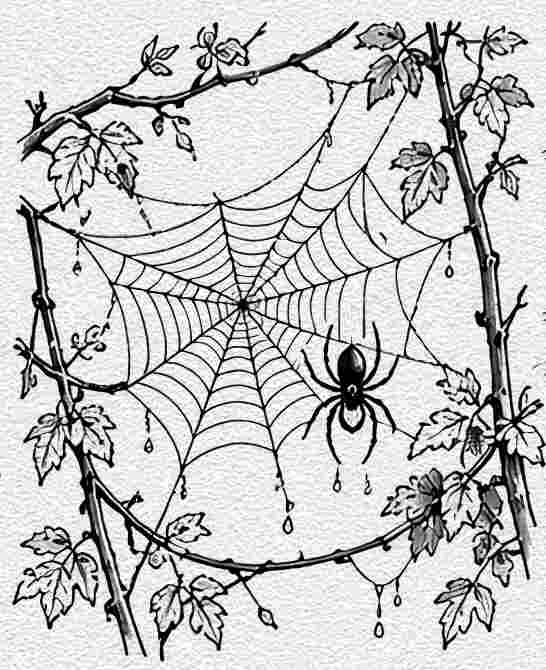
Draw a large spiderweb stretched between two or three thin autumn branches.
Start with the main supporting threads, then add the curved connecting lines moving toward the center. Add a small spider or a few dew drops if you want additional detail.
Surround the web with a handful of leaves.
Don’t try to make every section perfectly symmetrical. Slightly uneven lines make the web feel more natural. Leave plenty of white space around it so the delicate structure remains easy to see.
4. Moonlit Dead Tree Silhouette
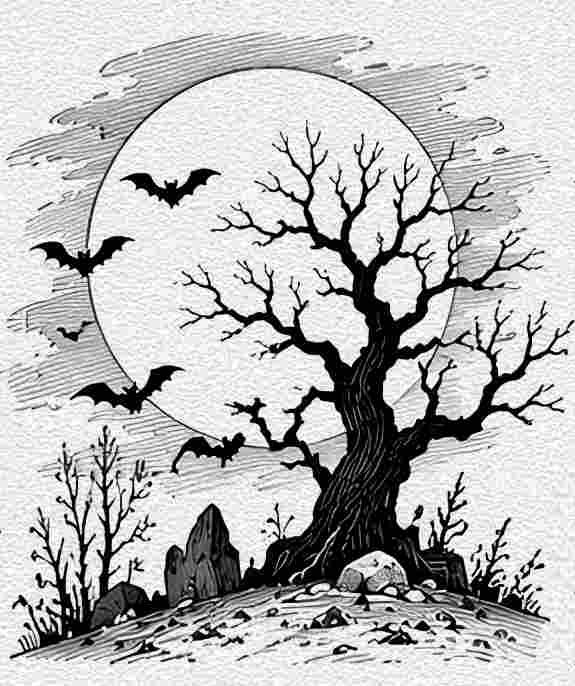
Draw a completely bare tree standing in front of a large full moon.
Begin with the circular moon and then place the tree silhouette across it. Use a thick, irregular trunk that divides into increasingly thin branches.
A few flying bats can add a subtle Halloween touch.
This drawing is mostly about positive and negative shapes. Keep the tree dark and the moon area open so the silhouette becomes immediately recognizable.
5. Creepy Hollow Tree
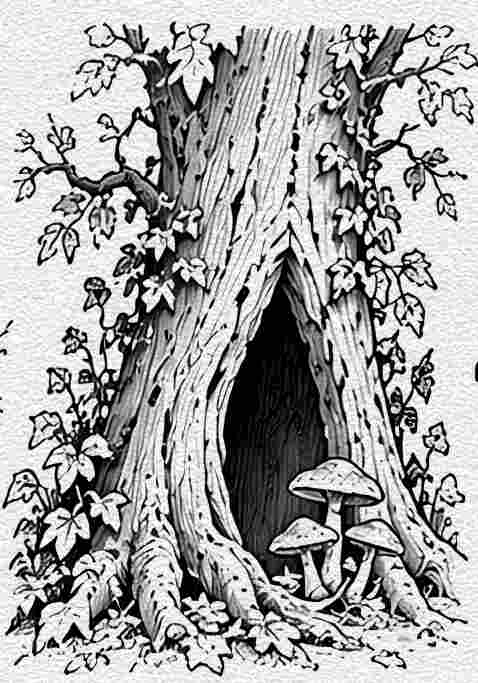
Draw an old tree with a large dark opening in its trunk.
Start with a wide, irregular trunk and exaggerate the roots at the bottom. Make the hollow opening an uneven organic shape rather than a perfect oval.
Add mushrooms, moss, fallen leaves, or small plants around the base.
Use the darkest values inside the hollow and lighter marks around the bark. This contrast makes the opening appear deep without requiring detailed shading.
6. Overgrown Stone Ruins
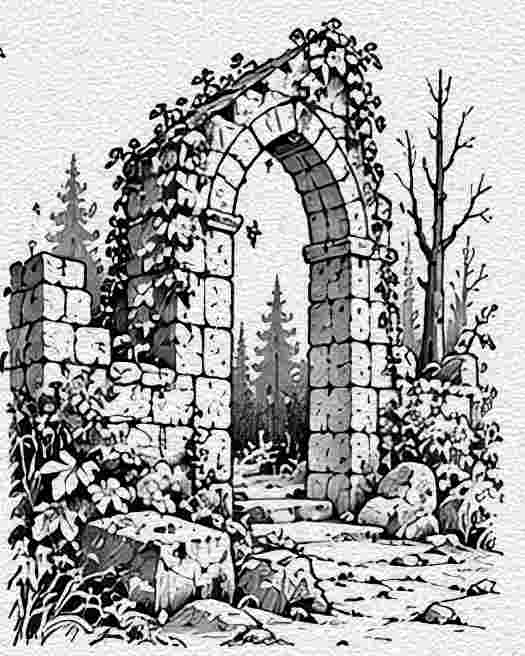
Create a small section of forgotten stone ruins surrounded by vines, moss, and wild plants.
You could draw an old stone arch, broken wall, or partially collapsed structure. Build it from individual irregular blocks rather than using perfectly even rectangles.
Let vines climb over the stones and allow plants to grow through cracks.
Draw the major stone shapes first. Add only a few cracks and texture marks afterward. Too much detail can make a small Sketchbook drawing look crowded.
7. Winding Path Through Tall Corn
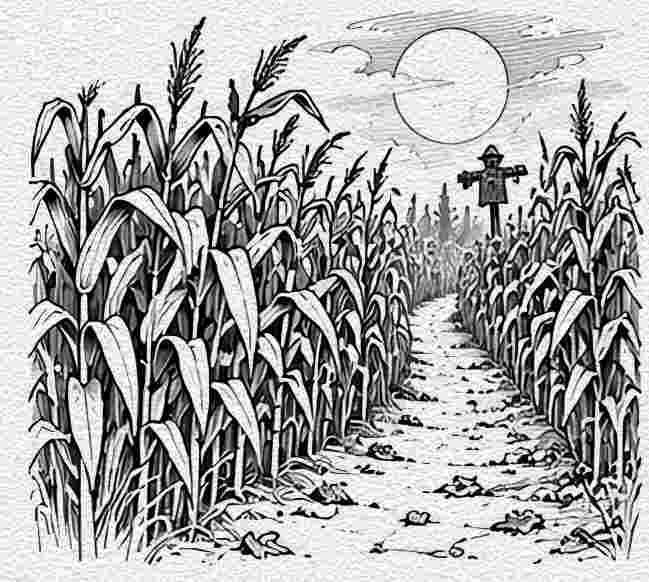
Draw a narrow path disappearing between tall rows of corn.
Begin with two rows of large corn plants that gradually become smaller toward the background. Leave the path open in the center so it naturally leads the viewer’s eye into the scene.
A distant moon, farmhouse, or tiny silhouette can create a mysterious ending point.
You don’t need to draw every corn leaf. Create clusters of leaves and vary their heights. The repeated shapes will communicate the cornfield quickly.
8. Autumn Vineyard Under a Full Moon
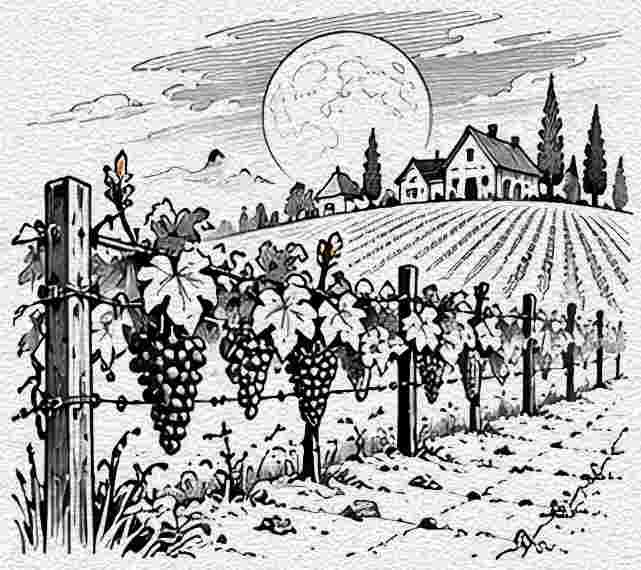
Draw rows of grapevines stretching across a gently sloping field beneath a large autumn moon.
Start with several curved rows that become closer together as they move toward the horizon. Add grape clusters and sparse autumn foliage to the foreground vines.
Keep the moon large but relatively simple.
Use overlapping rows to create depth. Make the nearest vines darker and more detailed while keeping the distant rows lighter and simpler.
9. Foggy Pumpkin Field
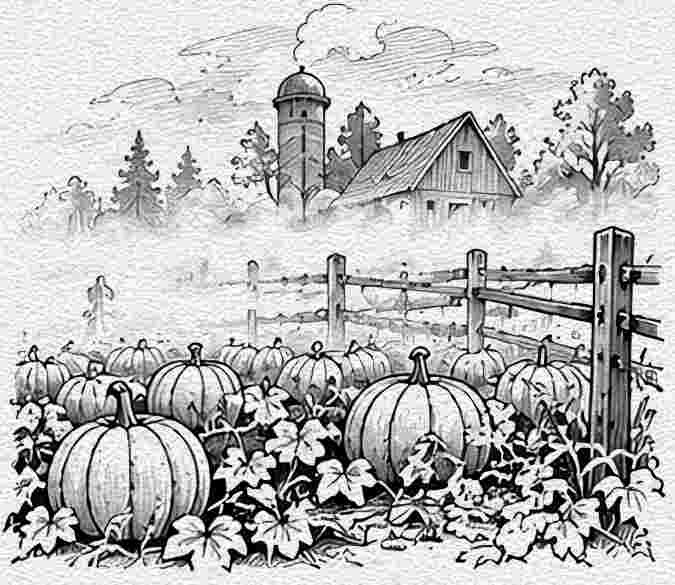
Create a pumpkin field where the rows of pumpkins gradually disappear into mist.
Place a few larger pumpkins in the foreground, then make the pumpkins smaller and less distinct as they move toward the background.
Add stems, vines, and a few scattered leaves.
Don’t outline every pumpkin equally. Use stronger lines and shadows in the foreground and lighter marks in the distance to create the foggy effect.
10. Raven on a Bare Branch
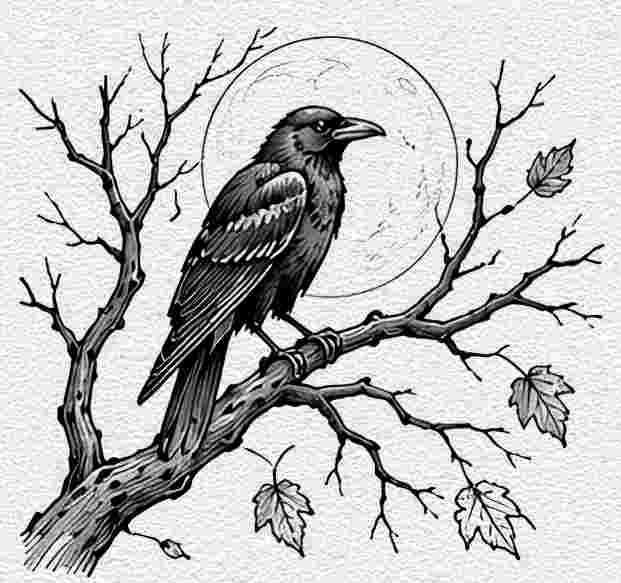
Draw a raven perched on a crooked branch against a large autumn or moonlit sky.
Begin with the bird’s overall silhouette. Pay particular attention to the beak, head, body angle, and tail because these shapes make the bird recognizable.
Add a few thin branches around the main one.
Keep the raven mostly dark and use a few small highlights to suggest feathers. The surrounding negative space is just as important as the bird itself.
11. Creepy Willow Tree
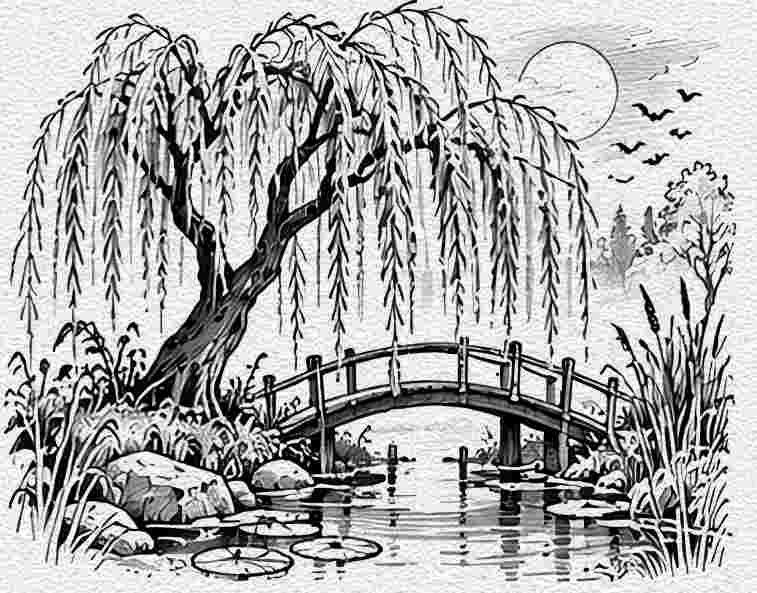
Draw a large willow tree with long branches hanging toward a quiet patch of ground.
Start with a thick curved trunk and then create groups of long, flowing branches. Let some branches overlap each other instead of drawing every strand separately.
You can place fallen leaves beneath the tree to anchor it.
Think of the hanging branches as large flowing shapes first. Add smaller lines only after the overall silhouette is working.
12. Abandoned Garden Pond
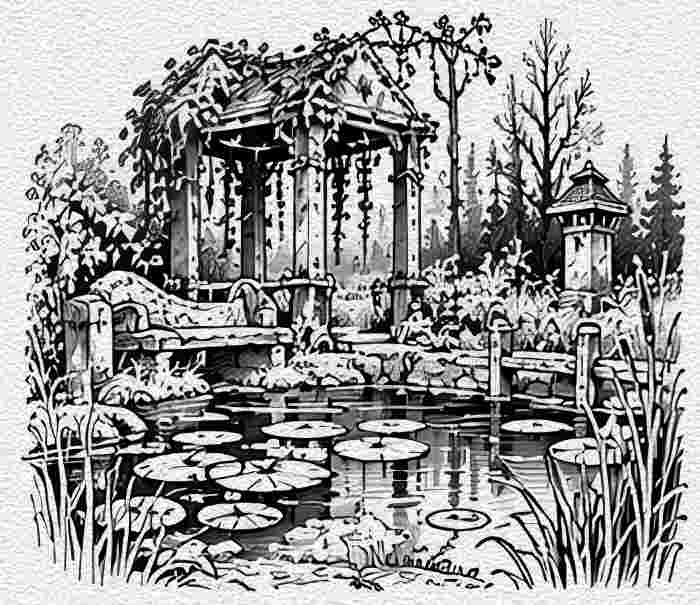
Create an old garden pond that has been left untouched for years.
Include overgrown plants, lily pads, tall grasses, stones, and perhaps an old wooden bench or broken garden feature.
The water should remain relatively open so the reflection can become part of the composition.
Use overlapping plants around the edges and keep the center of the pond simpler. A few horizontal reflection lines are enough to suggest calm water.
13. Moonlit Sunflower Field
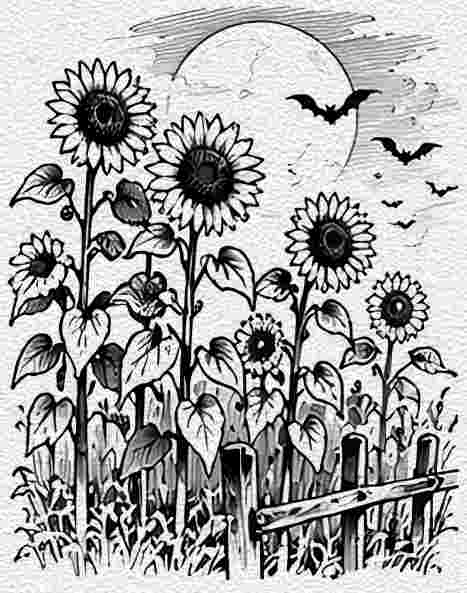
Draw tall sunflowers silhouetted against a large Halloween moon.
Place several large flowers in the foreground and gradually reduce their size toward the background. Let some flower heads face different directions to avoid a repetitive pattern.
Add a few leaves and stems between them.
You don’t need to draw every petal. Use the circular flower centers and distinctive petal silhouettes to make the flowers readable while keeping the drawing manageable.
14. Mossy Forest Archway
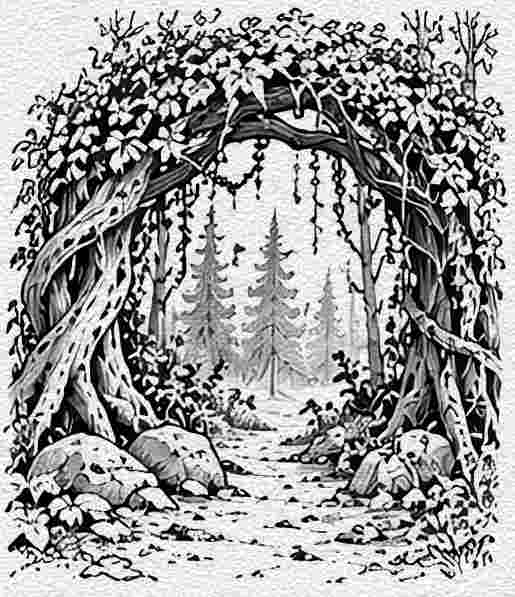
Create a natural arch formed by twisted tree roots, vines, and moss.
The arch should frame a small section of forest visible through the opening. Add rocks, mushrooms, leaves, or tiny plants around the base.
This gives you a natural frame-within-a-frame composition.
Draw the arch as the main dark shape first. Keep the scenery beyond it lighter and less detailed so the viewer’s attention stays on the opening.
15. Autumn Windblown Meadow
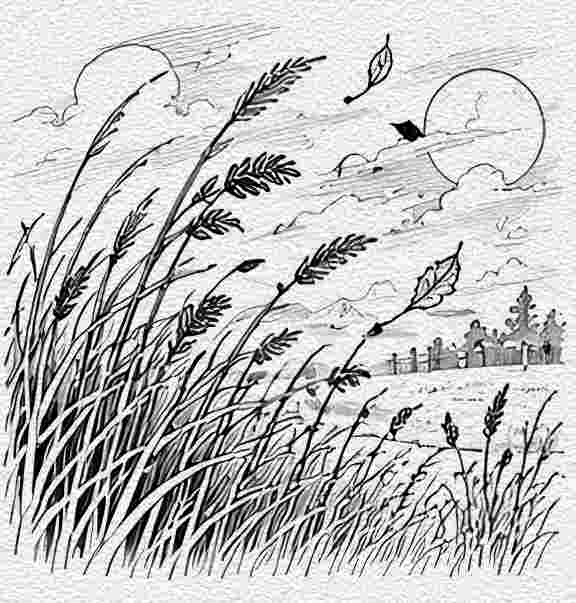
Draw a wide meadow with tall grasses bending dramatically in the wind.
Use long curved grass stems that lean in a consistent direction. Add seed heads and a few scattered leaves moving through the air.
A cloudy moonlit sky can make the scene feel more mysterious.
Instead of drawing hundreds of blades of grass, create several overlapping clusters. Vary their height and direction while keeping the overall wind direction consistent.
16. Dark Woodland Cave Entrance
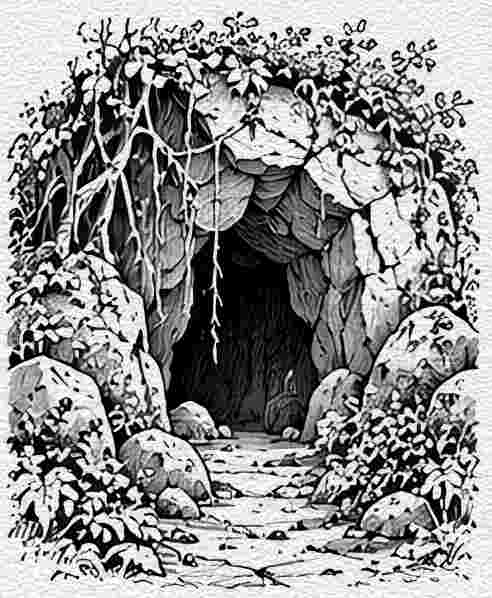
Draw a rocky cave entrance hidden among trees, roots, moss, and fallen leaves.
Start with the large irregular cave opening and surround it with rocks of different sizes. Add twisted roots and plants around the entrance.
Keep the inside of the cave very dark.
Use strong contrast between the dark opening and lighter rocks around it. A few small plants or mushrooms near the entrance can give the scene scale.
17. Haunted Forest Clearing
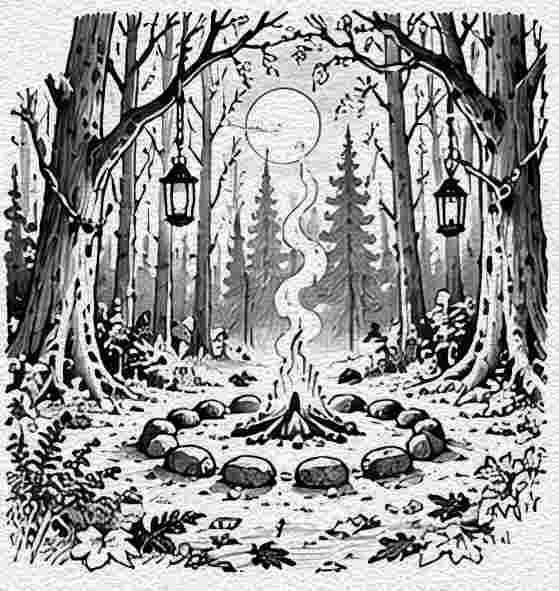
Finish with a mysterious circular clearing surrounded by tall trees.
Place a small open area in the center and frame it with tree trunks and branches around the edges. You can add scattered leaves, stones, a tiny lantern, or a simple ring of stones to suggest that something happened there.
Keep the distant forest relatively quiet.
Think about the composition as a natural frame. Darker trees around the edges guide the viewer toward the lighter clearing in the center.
These 17 spooky nature drawing ideas for Halloween are designed to help you create atmospheric Sketchbook pages without relying on complicated characters or highly detailed scenes. Twisted trees, foggy swamps, spiderwebs, ravens, moonlit fields, old ruins, caves, and mysterious forest spaces can all create a Halloween mood while giving you useful practice with composition, silhouettes, texture, and depth.
Start with a simple silhouette and build the scene gradually. You can keep the drawing completely monochrome, add watercolor washes, or combine pencil and ink for a more expressive result.