
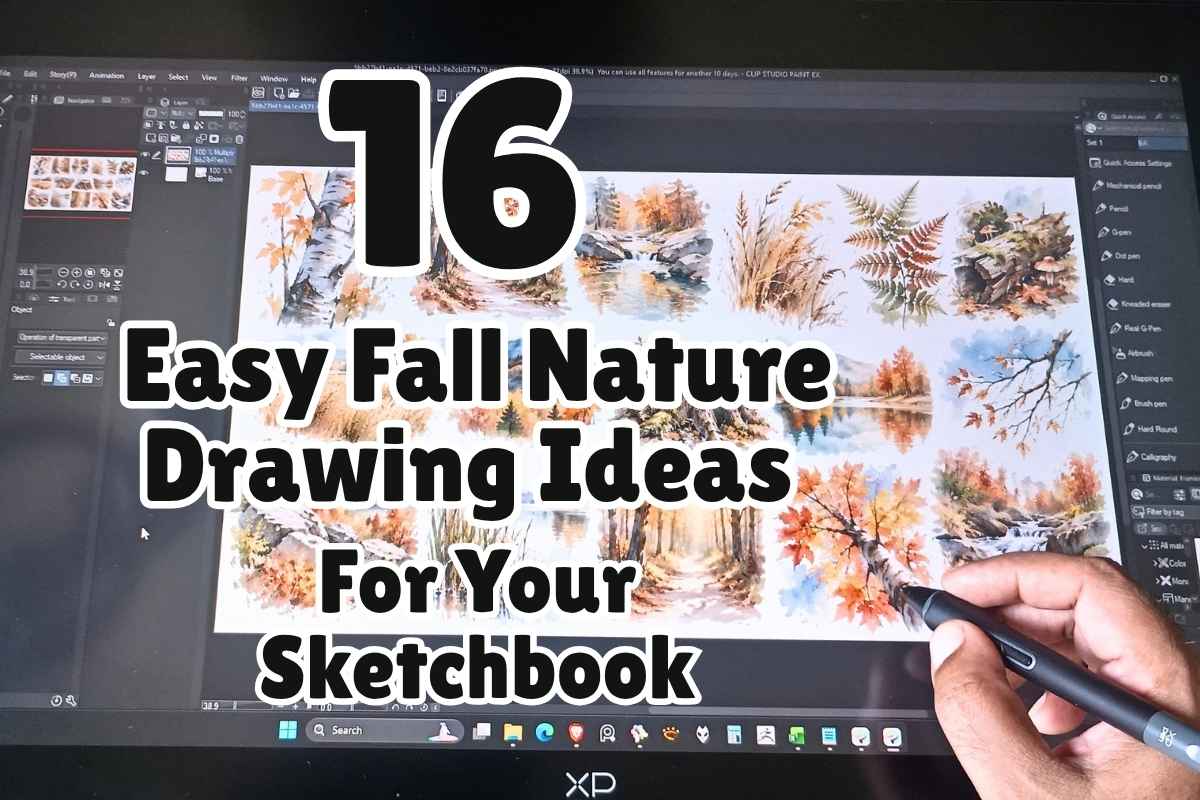
Fall is one of the best seasons for nature sketching. Golden trees, quiet woodland paths, reflective ponds, mountain views, grasses, rocks, and changing leaves offer simple subjects that can turn into beautiful sketchbook pages without requiring advanced drawing skills.
If you enjoy relaxing, nature-inspired art, these 17 fall nature drawing ideas are designed to give you a mix of small studies and simple landscape scenes. You can work with pencil, fineliner, colored pencil, or watercolor depending on the style of your sketchbook.
The ideas also focus on subjects that are visually strong for Pinterest: peaceful landscapes, natural textures, seasonal scenery, and cozy outdoor scenes. Pinterest’s current trend research is based on billions of searches and visual interactions, while its 2026 trends continue to highlight aesthetic, atmospheric, and nature-inspired visual interests.
The goal isn’t to make every drawing highly detailed. Start with simple shapes, establish the main silhouette, and then add just enough seasonal detail to make the scene feel like fall. This people-first approach also aligns with Google’s guidance to create useful, original content for readers rather than writing primarily to manipulate search rankings.
1. Autumn Birch Tree Trunk
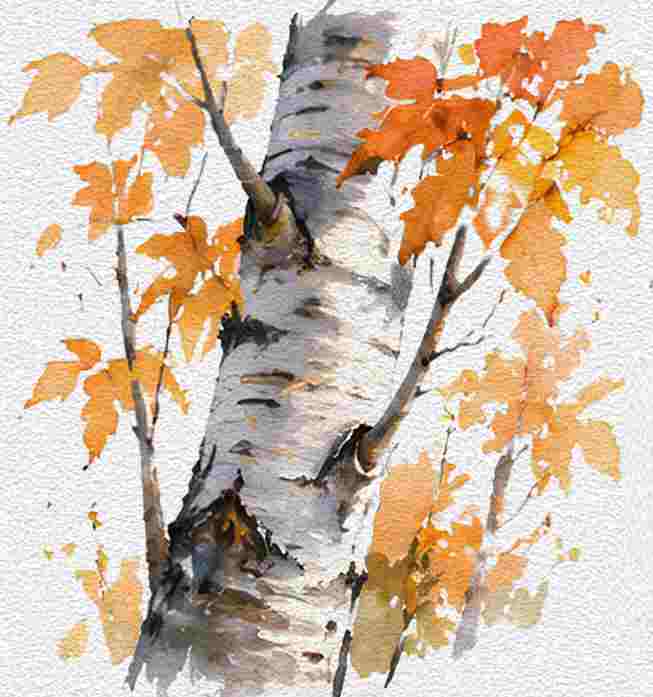
Draw a close-up birch tree with pale bark, dark markings, thin branches, and a few golden autumn leaves. Start with two slightly irregular lines for the trunk, then add broken bark patterns rather than making the surface perfectly smooth. Keep the surrounding background minimal so the distinctive birch texture remains the focus.
2. Fall Forest Path
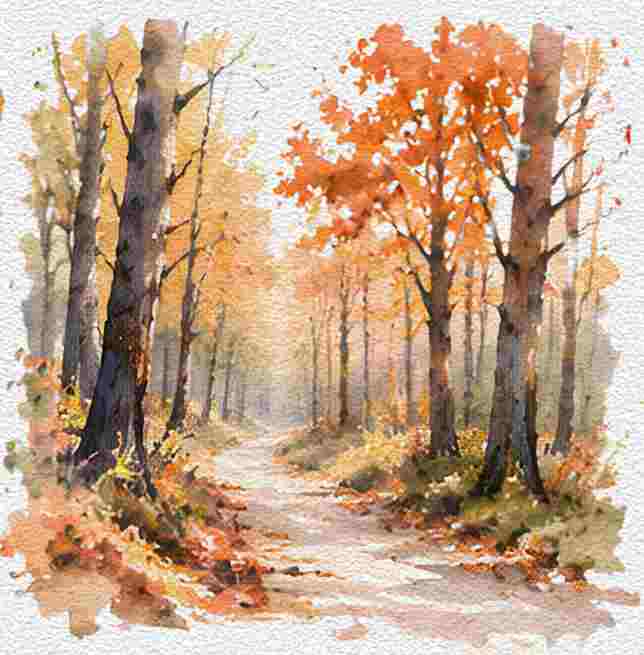
Draw a narrow path winding through tall autumn trees. Begin with two curved lines that become closer together toward the distance, then add tree trunks of different sizes on both sides. Use loose clusters of leaves instead of drawing every individual leaf.
3. Quiet Autumn Creek
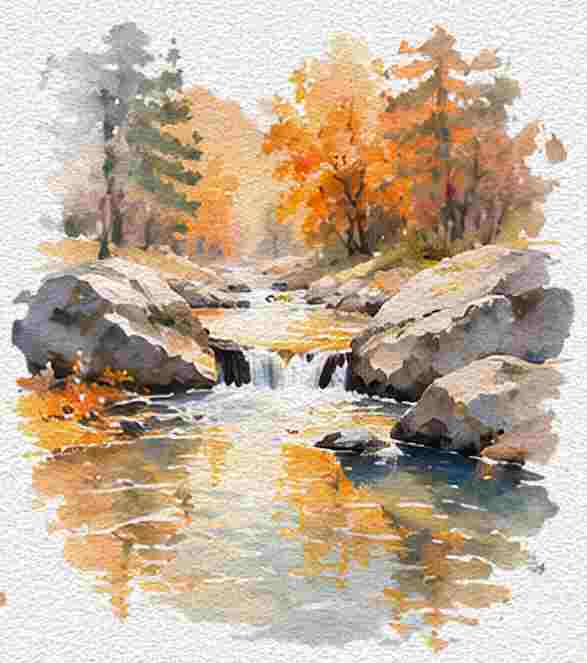
Create a small creek flowing between rocks and autumn trees. Establish the water shape first, then add rocks along the edges and simple reflections. Use broken horizontal strokes to suggest movement in the water.
4. Cluster of Wild Grasses
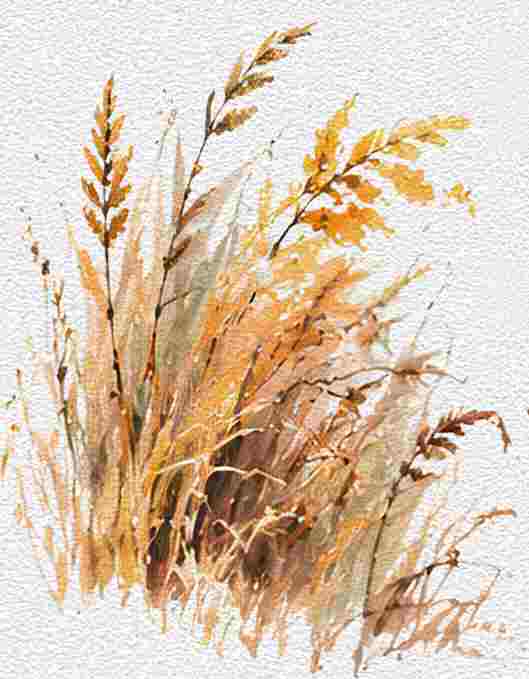
Draw a group of tall dry grasses with delicate seed heads. Start with long curved stems and add smaller leaves branching from them. Vary the height and direction of each grass blade to keep the drawing natural.
5. Autumn Fern Fronds
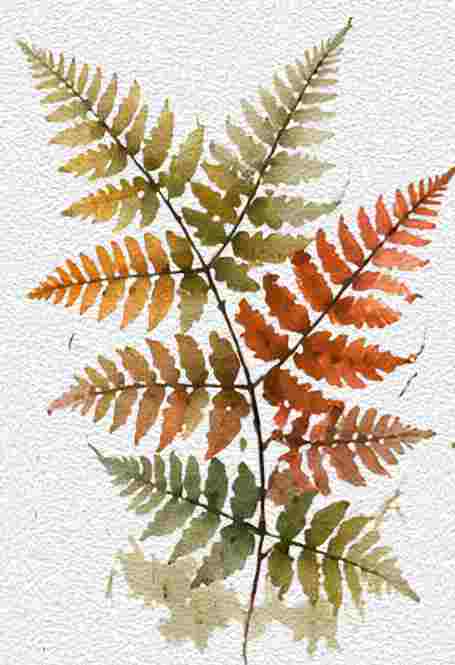
Draw several fern leaves with long curved stems and repeating leaflets. Begin with the central stem, then add pairs of smaller leaves along each side. Keep some fronds overlapping and leave plenty of white space around them.
6. Fallen Tree With Moss
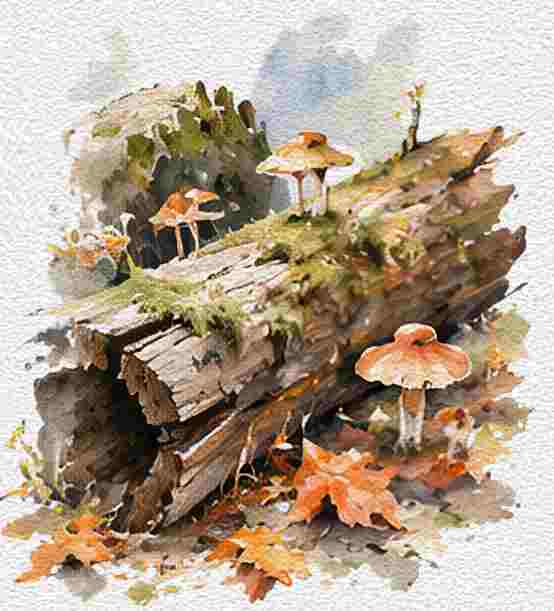
Draw an old fallen log surrounded by leaves, moss, and a few small mushrooms. Start with the main cylindrical shape, then add rough bark marks and soft moss patches. Keep the small mushrooms simple so they complement rather than overpower the log.
7. Golden Meadow in Fall
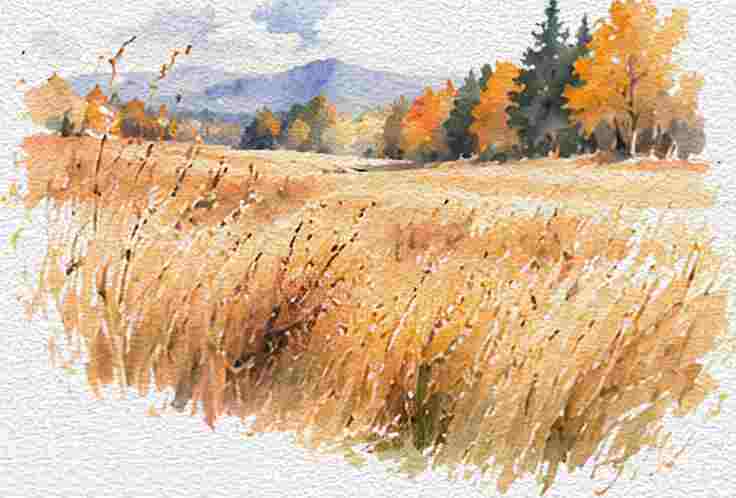
Create a wide meadow filled with tall golden grasses and a distant tree line. Start with the horizon and broad grass shapes, then add small clusters of trees in the background. Use shorter and lighter marks as the landscape moves farther away.
8. Autumn Hillside Landscape
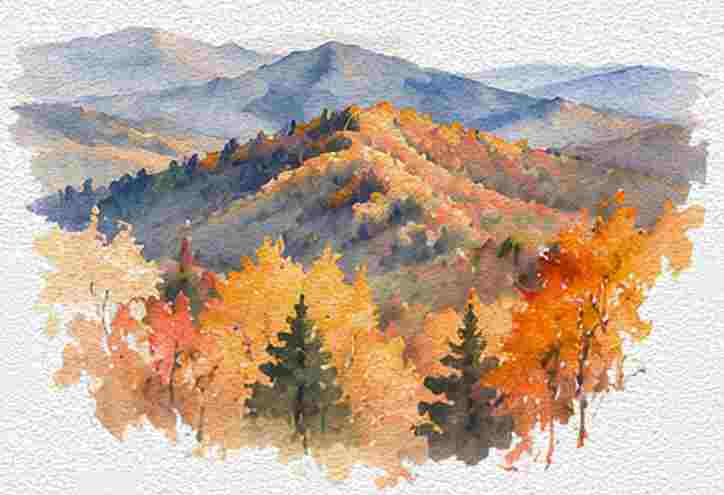
Draw rolling hills covered with patches of autumn trees. Begin with two or three large curved hill shapes, then add clusters of orange, yellow, and muted green foliage. Keep the distant hills softer and less detailed.
9. Tree Stump With Growth Rings
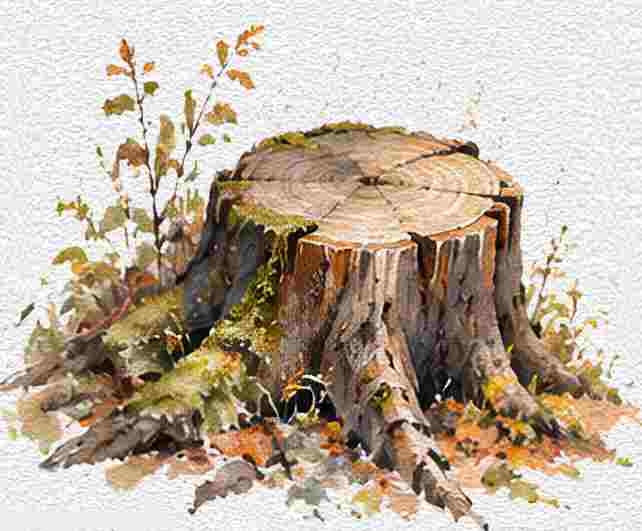
Draw a weathered tree stump surrounded by fallen leaves and small plants. Focus on the circular growth rings on top and the rough bark around the sides. Add a little moss and a few leaves around its base for seasonal character.
10. Distant Autumn Mountain Ridge
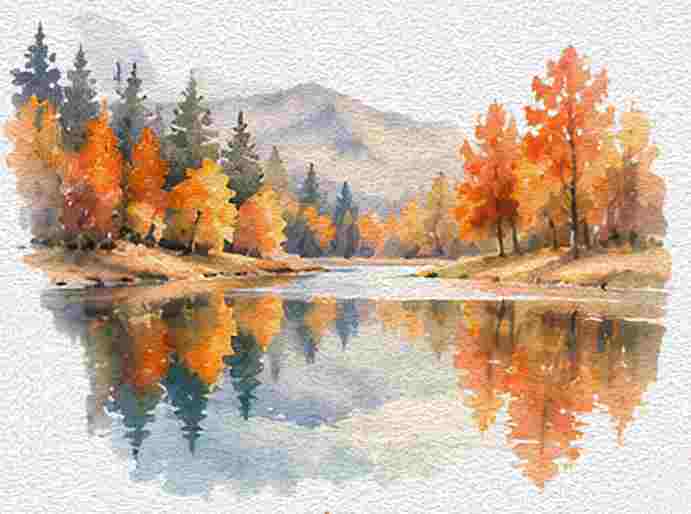
Draw layered mountains fading into the distance behind an autumn forest. Start with the farthest ridge using very light lines, then gradually make the foreground mountains darker. This is a good sketchbook exercise for practicing atmospheric perspective.
11. Bare Branches Against the Fall Sky
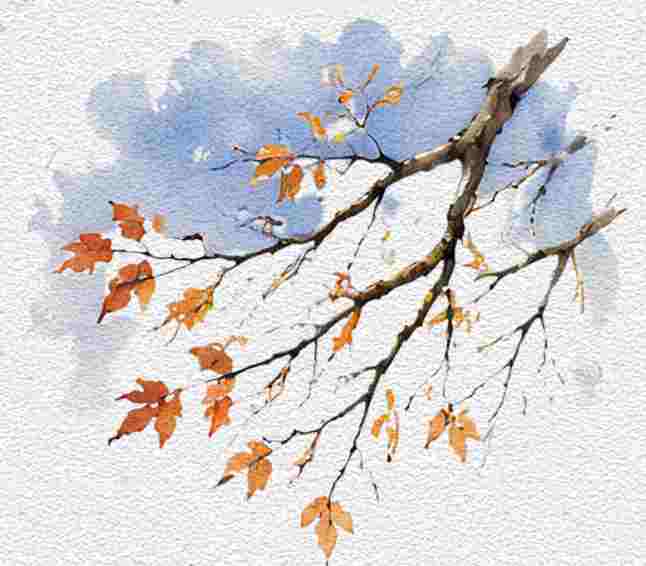
Draw a long, twisting branch reaching across an open sky with only a few remaining leaves. Start with the main branch and gradually divide it into thinner branches. Leave plenty of empty paper around it for a peaceful minimalist sketchbook composition.
12. Autumn Woodland Rocks
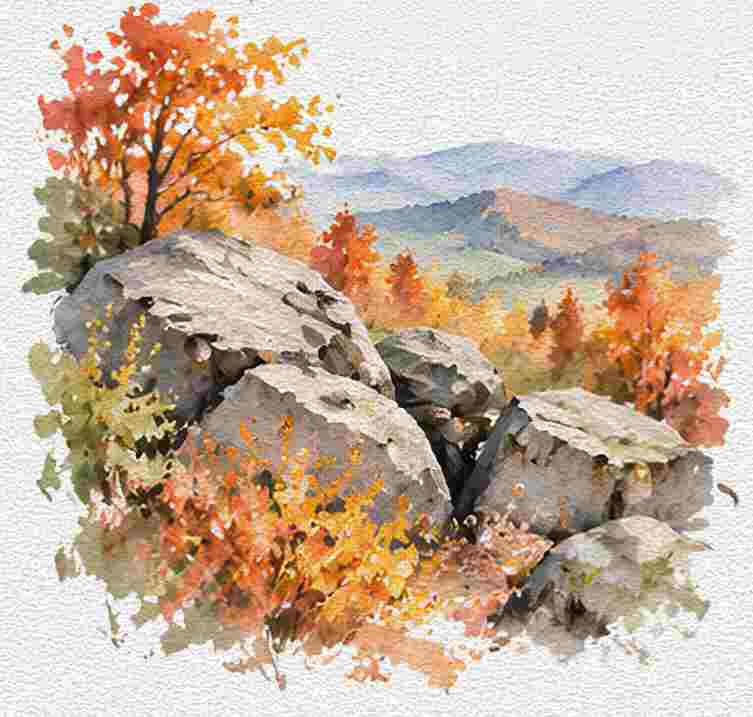
Draw several irregular rocks surrounded by low plants and autumn foliage. Begin with overlapping rock shapes and use darker marks underneath to give them weight. Add a few cracks, moss patches, and leaves without overworking the texture.
13. Tall Reeds Beside a Pond
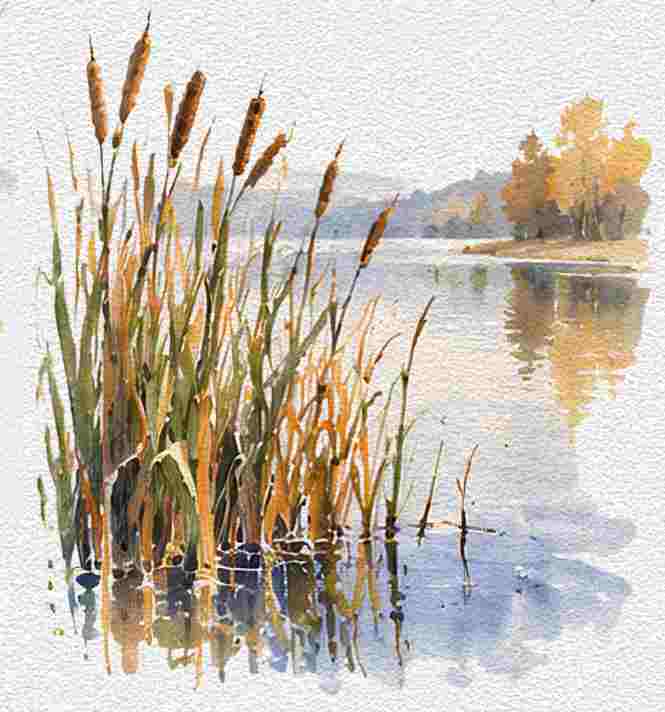
Draw tall reeds growing from the edge of a quiet pond. Use long curved stems, narrow leaves, and small seed heads. Add a simple water reflection beneath them to connect the plants with the landscape.
14. Forest Clearing With Sunlight
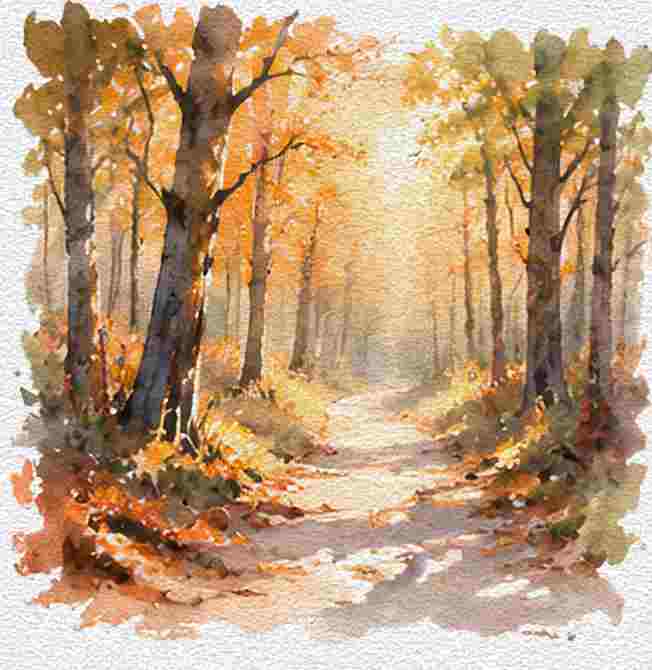
Draw a peaceful clearing surrounded by autumn trees, with sunlight filtering through the branches. Establish the open center first, then frame it with darker tree trunks on both sides. Use soft diagonal patches of light across the ground to create the sunlit effect.
15. Autumn Tree Canopy From Below
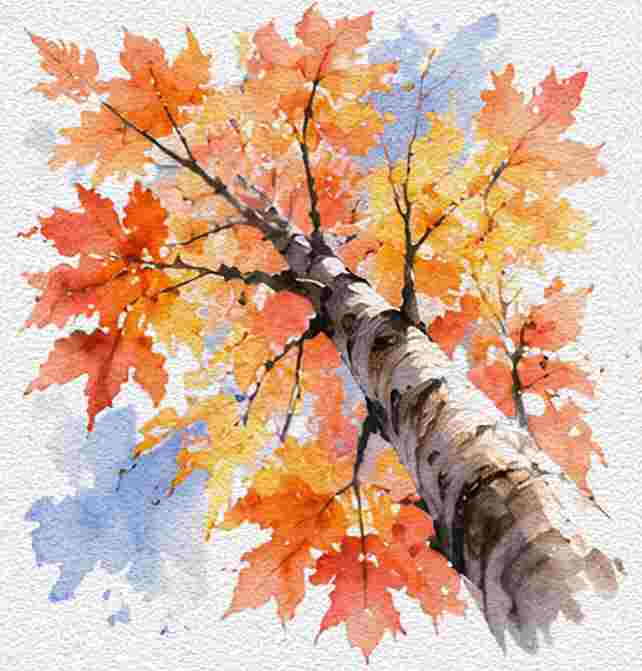
Draw the view looking upward through an autumn tree canopy. Let branches enter from the edges of the page and fill them with overlapping leaves while leaving small areas of sky visible. This works especially well as a relaxing full-page sketchbook study.
16. Quiet Woodland Waterfall
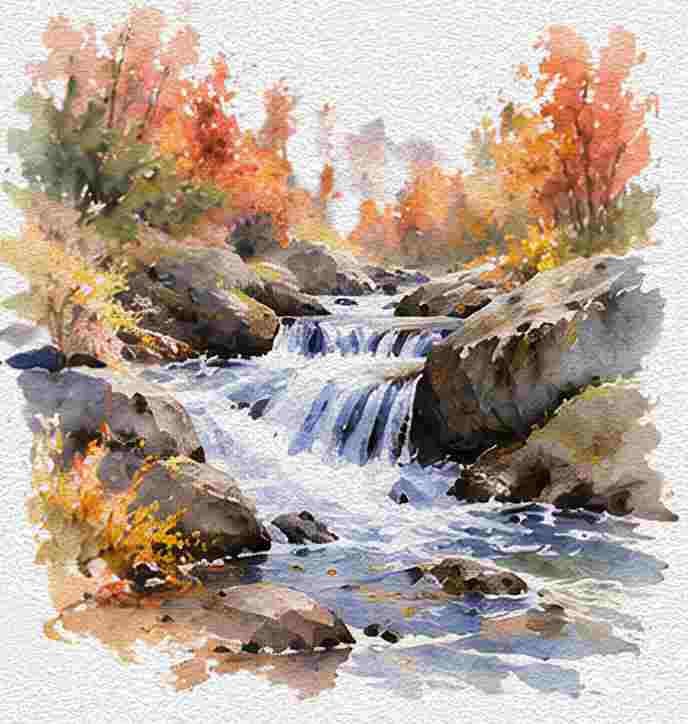
Draw a small waterfall flowing between rocks in an autumn forest. Start with the large rock shapes and establish the direction of the water, then add white gaps and loose horizontal strokes to suggest falling and moving water. Finish with a few trees and autumn foliage around the edges while keeping the waterfall as the focal point.
These 17 easy fall nature drawing ideas give you plenty of ways to explore autumn without relying on the same familiar seasonal subjects. From a simple birch tree study and fern fronds to peaceful creeks, mountain ridges, forest paths, reflections, and woodland streams, each idea can become a standalone sketch or part of a larger seasonal sketchbook spread.
If you’re a beginner, start with the smaller studies such as the grasses, ferns, tree stump, rocks, or branches. Once you’re comfortable with those shapes, try combining several elements into a complete landscape.
You can also mix different approaches on one sketchbook page—use pencil for tree textures, loose ink for branches, and watercolor washes for larger landscapes. This gives your fall sketchbook a more personal and varied appearance without making every drawing equally complicated.