
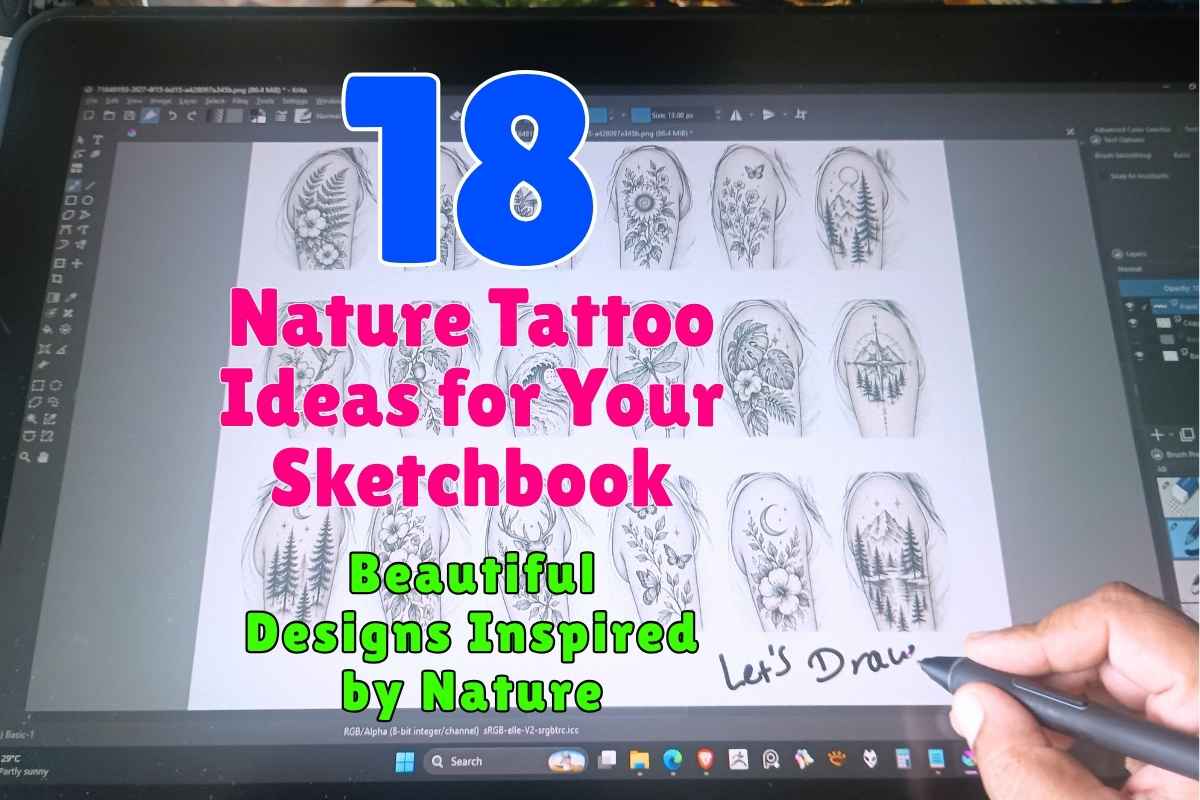
Nature-inspired tattoos bring together some of the most timeless elements of drawing—flowers, leaves, mountains, animals, water, and celestial shapes. They can be developed as delicate fine-line pieces, botanical illustrations, minimalist compositions, or larger upper-arm designs.
Fine-line botanical and nature tattoos continue to appear prominently in current tattoo inspiration, with shoulder and upper-arm placements offering enough space for detailed compositions and natural flowing shapes.
Before committing to a tattoo, your sketchbook is a great place to explore different layouts, line weights, proportions, negative space, and placement ideas. The following nature tattoo ideas are designed as drawing prompts you can sketch, modify, and personalize.
1. Fern and Flowers
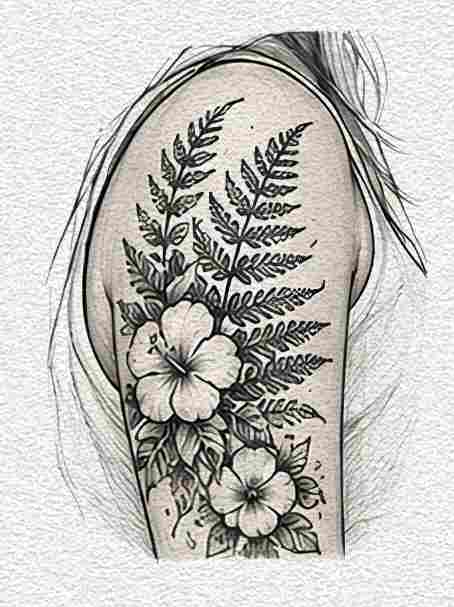
Draw a graceful fern surrounded by a few small flowers. Start with the main fern stem and build the leaves gradually along both sides. Add two or three flowers near the base rather than filling every empty space.
For a fine-line tattoo concept, keep the outlines delicate and use minimal interior shading. Leave enough negative space between the fern leaves and flowers so the design remains clean and readable.
2. Tropical Bloom
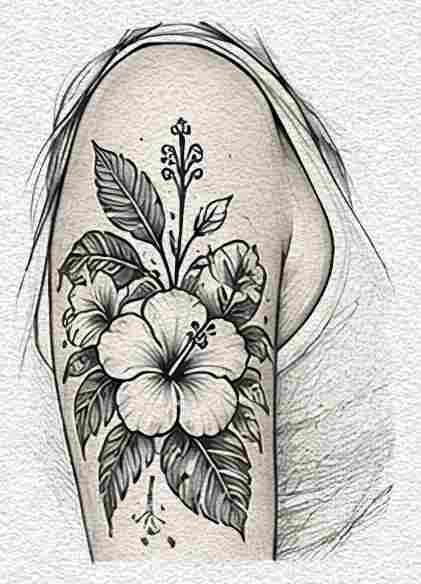
Create a large tropical flower as the central focus, surrounded by a few broad leaves. You can experiment with flowers such as hibiscus-inspired blooms while keeping the design as an original illustration.
Begin with the flower’s overall silhouette, then build the petals from the center outward. Add curved leaf shapes behind the bloom to create depth without making the design too dense.
For your sketchbook study, try both a compact upper-arm composition and a slightly elongated version that follows the natural curve of the shoulder.
3. Forest Mushrooms
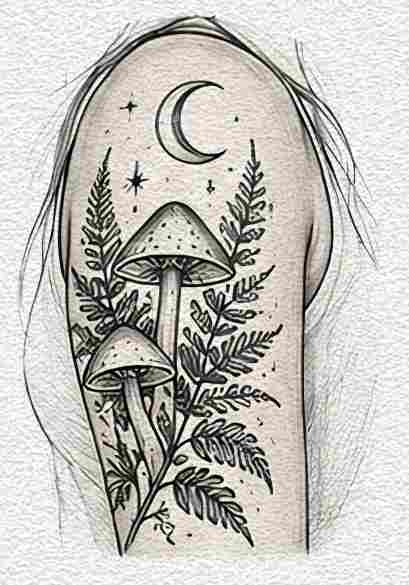
Draw a small group of mushrooms surrounded by tiny grasses and woodland details. Vary the mushroom sizes so the composition feels like a miniature forest scene rather than a collection of identical shapes.
Use thin outlines for the stems and caps, then add a few short strokes to suggest texture. Keep the background mostly open so the mushrooms remain the focal point.
4. Sunflower Garden
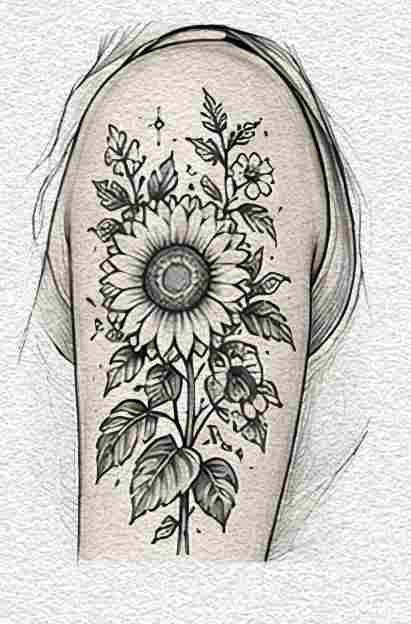
Create a sunflower-inspired composition with one large bloom and several smaller flowers and leaves around it.
Start with the central seed area and arrange the petals evenly around it. Instead of making every petal identical, introduce small variations in shape and direction to make the drawing feel more organic.
For a tattoo sketch, use restrained shading inside the petals and leaves while allowing plenty of skin or paper to remain visible between elements.
5. Wildflower Bouquet
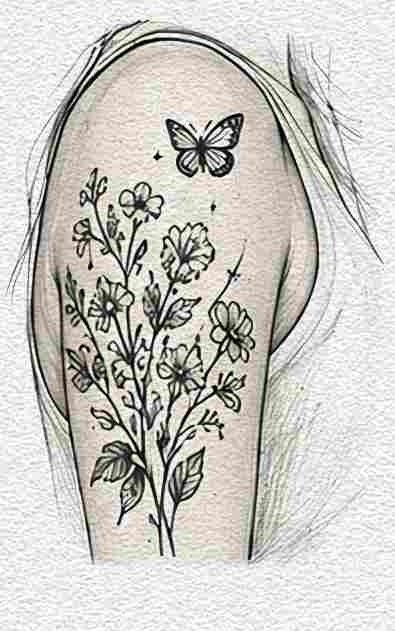
Sketch a loose bouquet made from several different small flowers and delicate stems. The key is to create variation in height and direction rather than arranging everything symmetrically.
Begin with the stems, crossing a few naturally, and then add the flower heads at different heights. Small leaves can be used to connect the composition without filling every gap.
This idea works particularly well as a vertical sketchbook design that can later be adapted to the upper arm.
6. Mountain Landscape
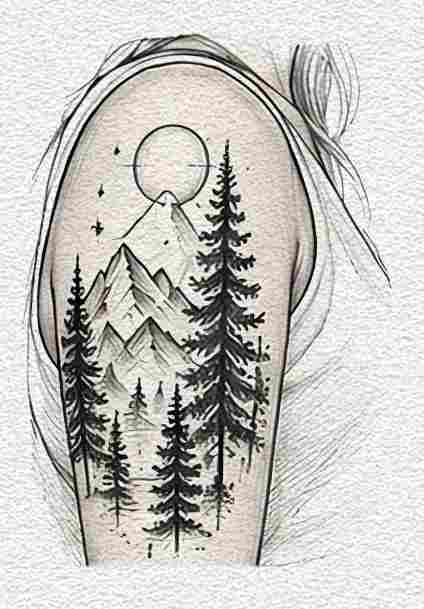
Turn a small mountain scene into a compact tattoo composition. Draw two or three mountain peaks, a simple foreground, and a few trees or clouds.
Keep the mountain outlines clean and avoid adding too many tiny details. Use selective line weight and light hatching to separate the foreground from the distant peaks.
A vertical arrangement can make the design feel taller and work naturally with the shape of an upper arm.
7. Bird and Blossoms
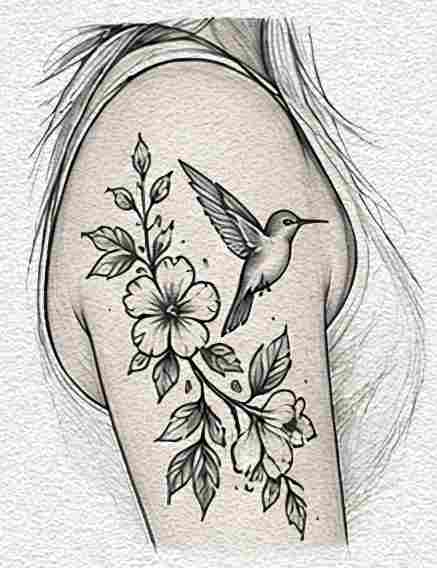
Draw a small bird surrounded by flowering branches. The bird should remain the focal point, while the blossoms frame it without overwhelming the silhouette.
Start with a simple bird shape and establish its pose before adding feathers. Use thin curved lines for the wings and tail, then build the surrounding flowers and branches.
For a fine-line look, keep the feather details minimal and let the overall silhouette do most of the work.
8. Oak Leaves and Acorns
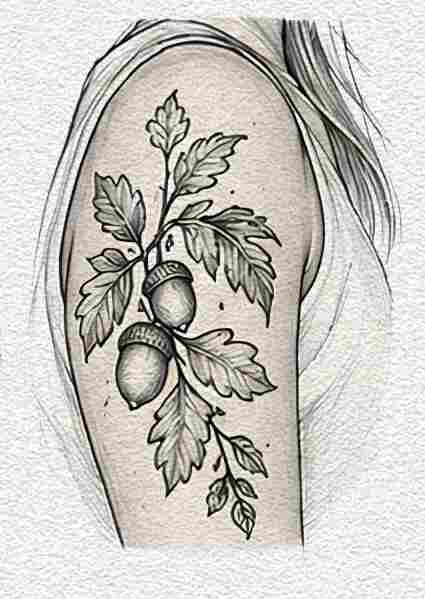
Create a botanical composition featuring oak leaves and a few acorns connected by thin branches.
Pay attention to the distinctive lobed shape of the leaves. Rather than drawing every vein heavily, use a central vein with a few delicate secondary lines.
Place the acorns at different heights to create visual movement. This can become a beautiful vertical nature study for an upper-arm tattoo concept.
9. Ocean Wave and Moon
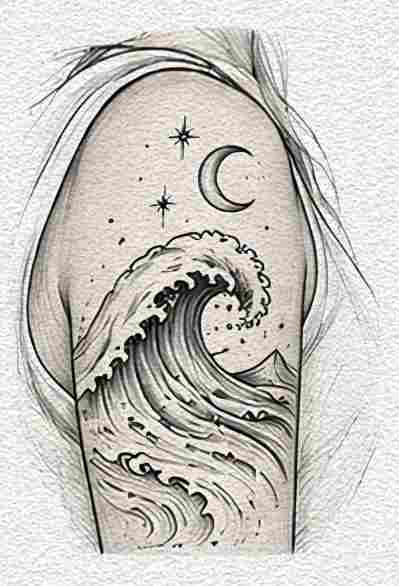
Combine a flowing ocean wave with a crescent moon above it. The contrast between the curved wave and circular moon creates a simple but recognizable composition.
Use long sweeping lines to define the wave and smaller curved strokes to suggest water movement. Keep the moon relatively simple so the composition does not become too busy.
In your sketchbook, experiment with placing the moon inside the wave’s negative space or floating above it.
10. Dragonfly
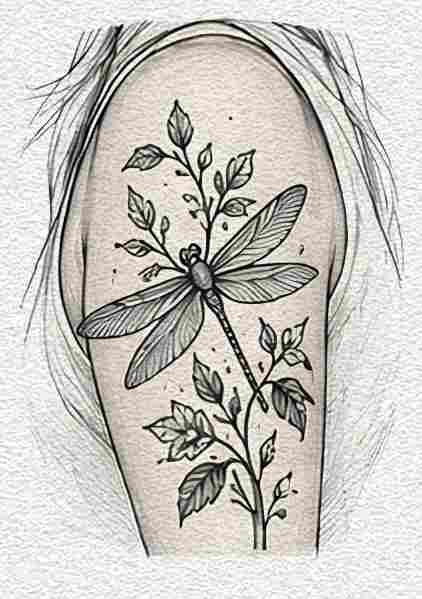
Draw a dragonfly with delicate wings and a slender body. Because the subject is naturally symmetrical, begin with a central vertical guideline before developing the wings.
Use simple geometric shapes to establish the four wings, then refine their edges with thin lines. A few internal wing patterns can add detail without requiring heavy shading.
For a minimalist tattoo design, the surrounding area can remain completely open.
11. Tropical Leaves
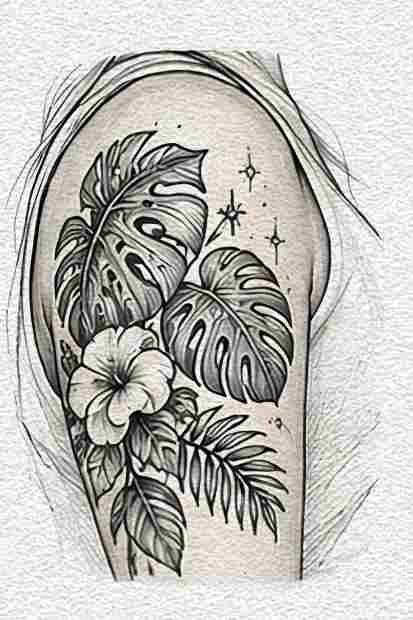
Create a composition using several large tropical leaves arranged around a central stem.
Instead of drawing a dense cluster, overlap only a few leaves and vary their angles. This creates a layered botanical effect while maintaining clear silhouettes.
Use thin contour lines and selective veins to give each leaf character. A curved arrangement can also be explored in your sketchbook to see how the leaves might follow the shoulder or upper-arm contour.
12. Nature Compass
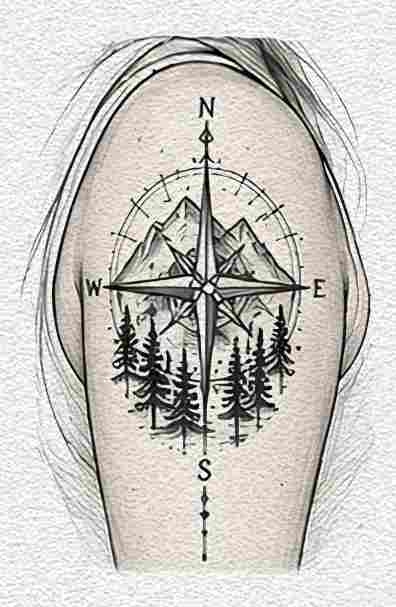
Combine a simple compass with small nature elements such as leaves, branches, or mountain silhouettes.
Start with the compass as the main geometric structure. Then introduce organic elements around or behind it to soften the straight lines.
Keep the compass clean and symmetrical while allowing the natural elements to remain slightly irregular. This contrast between geometry and nature can create an interesting tattoo composition.
13. Pine Forest
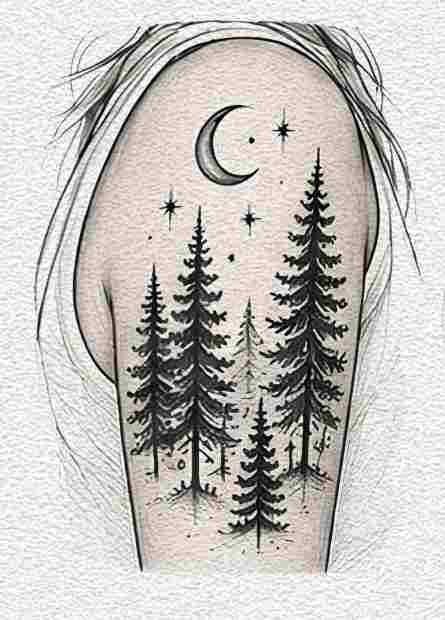
Draw several pine trees arranged from large to small to create a sense of distance.
Place the tallest trees in the foreground and gradually reduce the size of the trees behind them. Use lighter and simpler linework for the distant trees.
For a fine-line design, avoid filling the entire forest with dark shading. Strategic negative space will help individual trees remain recognizable.
14. Floral Sleeve
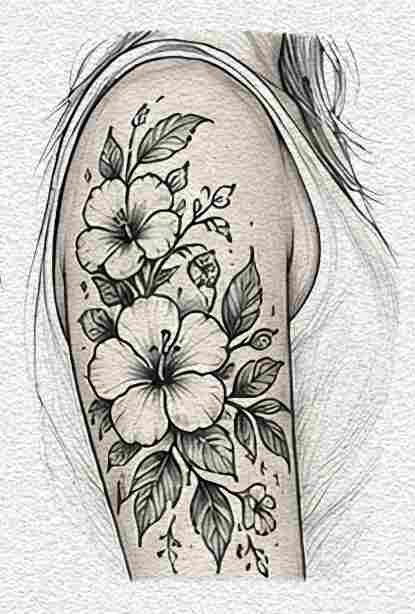
Create a larger floral composition designed to flow around the upper arm rather than functioning as a single isolated flower.
Begin with two or three major flowers and establish their positions first. Then connect them using leaves, stems, and smaller botanical elements.
The important part of the sketch is flow. Let the stems follow the natural curve of the arm instead of forcing the artwork into a rigid rectangle. Contemporary botanical tattoo designs commonly use flowing arrangements across the shoulder and arm.
15. Deer and Leaves
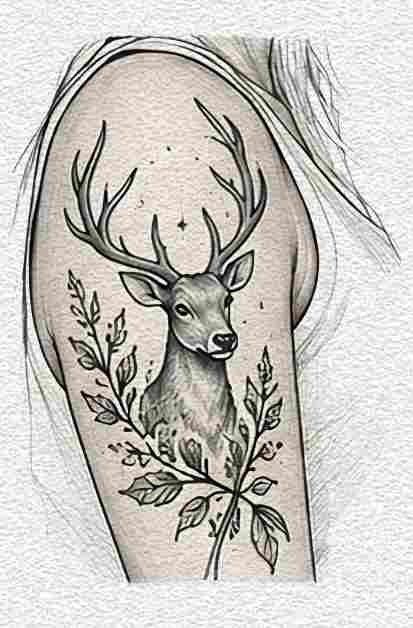
Draw a graceful deer head surrounded by leaves and small botanical elements.
Start with the basic shape of the head and antlers before adding any decorative details. Keep the face relatively simple so the silhouette remains recognizable.
The leaves can be arranged around the antlers to create a natural frame. For a fine-line sketch, use controlled contour lines and only a small amount of shading around the eyes, nose, and antlers.
16. Leaves and Butterflies
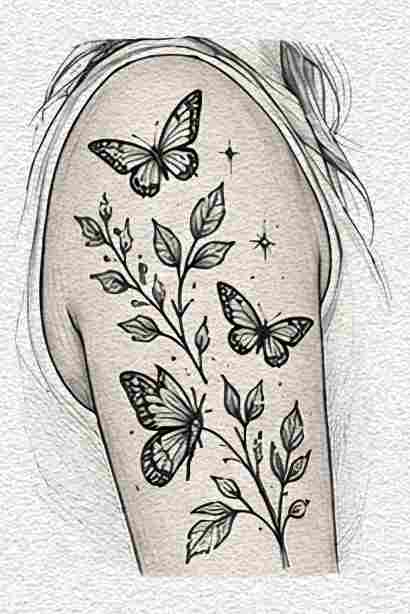
Create a botanical composition where several butterflies appear to move around a group of leaves.
Vary the butterfly sizes and positions so they do not look like repeated symbols. One butterfly can be larger and closer to the leaves, while smaller ones can trail outward.
Use the leaves to establish the main structure and let the butterflies provide movement around it. Keep enough open space between each element for a clean fine-line appearance.
17. Moon and Florals
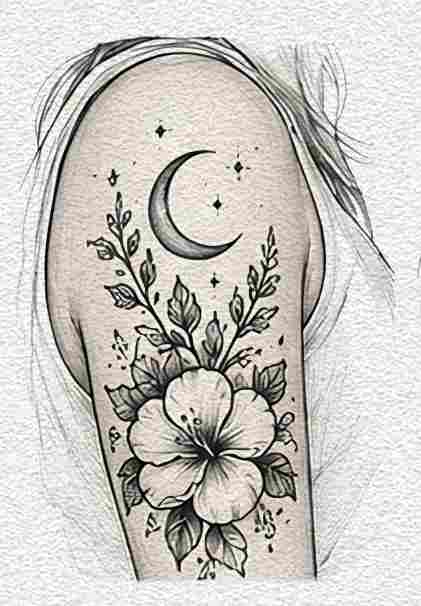
Combine a crescent moon with flowers and delicate botanical branches.
Place the moon as the central shape and allow the flowers to partially frame it. You can experiment with flowers appearing beneath the moon or growing around its outer curve.
Use thin outlines and subtle dotwork or hatching for depth. The combination of botanical and celestial elements is also being used in contemporary fine-line shoulder and upper-arm compositions.
18. Mountains and Trees
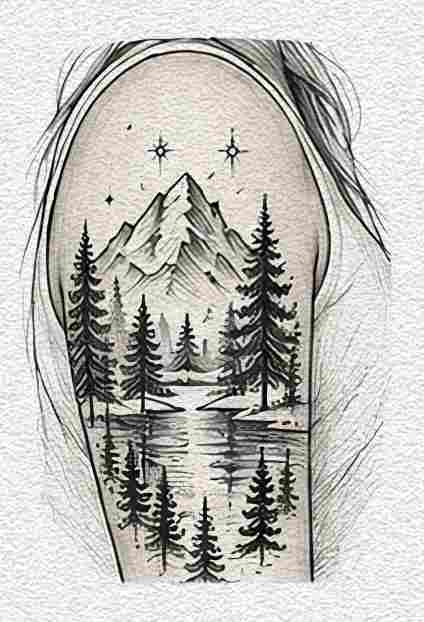
Create a compact landscape featuring mountain peaks surrounded by a few foreground trees.
Start with the mountain silhouette and then add two or three trees in the foreground. Avoid adding too many elements; the simplicity is what makes the composition work as a tattoo design.
Use different line weights to create depth. The foreground trees can have slightly stronger outlines, while distant mountains remain lighter and simpler.
These 18 nature tattoo ideas give you a starting point for creating original designs in your sketchbook. From delicate botanical compositions and wildflowers to mountains, forests, animals, waves, and celestial elements, each concept can be adapted to different sizes and arrangements.
When developing a tattoo sketch, focus on clear silhouettes, balanced composition, intentional negative space, and controlled linework. Fine-line designs especially benefit from giving individual elements enough room to remain visually distinct.
Use your sketchbook to create several variations before settling on a final composition. Try changing the size of the main subject, moving supporting elements, simplifying details, and testing how the design flows vertically or around the upper arm and shoulder.
Most importantly, treat these ideas as starting points. A strong nature tattoo design can take inspiration from the natural world while still developing into something personal and uniquely yours.